
You searched for "funding"
Back-to-back congresses in Africa highlight international collaboration to advance eye health
The ISOO Africa 2023 Congress The first International Society of Ocular Oncology (ISOO) [1] conference to be held in Africa took place in Mombasa, Kenya, from 21-23 August 2023. Participants came from all over Africa, as well as the US,...Through the bubble: A patient’s perspective on macula hole surgery pre- and postoperatively
The evolution of ophthalmic surgical practice over the past seven decades has been extraordinary. Within this period, the first vitrectomy was performed, establishing a foundation for what is now an operation performed thousands of times per year in the UK...Imaging without a slit-lamp, more Google Glass news and strabismus humour
Pinterest Many of you will know about this site that organises collections of mostly graphical information. It’s used heavily for fashion, recipes and cupcakes. Well, it seems it has also become quite a useful resource for ophthalmology, optometry and related...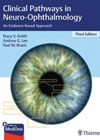
Clinical Pathways in Neuro-Ophthalmology: An evidence based approach (Third edition)
This is a fairly comprehensive textbook with 20 chapters covering the most common neuro-ophthalmic problems you are likely to encounter in clinical practice. The chapters each comprise several sections, the titles of which are often phrased as questions the reader...Resurfacing the ocular surface
The ocular surface (OS) is an anatomical and functional unit made of the tear film, the conjunctival, limbal and corneal epithelium, the lacrimal, mucous and meibomian glands and the lids and blink reflex. The tear film is composed of a...
Risk factors for NTG in a young Korean population
Previously known ocular and systemic risk factors for normal tension glaucoma (NTG) include myopia, peripapillary atrophy, disc haemorrhage, migraine, obstructive sleep apnoea, thyroid disease and cerebral infarction. However, most NTG risk factor studies have examined patients aged 40 years and...Doctor in the House
“What’s the bleeding time?”“10 past 10 sir”. These are the famous lines uttered by Chief Surgeon Sir Lancelot Spratt (James Robertson Justice) and Medical Student Simon Sparrow (Dirk Bogarde) on a pre-op ward round at the fictional St Swithin’s Hospital,...
Treat-and-extend regimen in treatment of patients with type 3 neovascularisation
Type 3 neovascularisation, also known as retinal angiomatous proliferation is a distinct subtype of neovascular AMD characterised by intraretinal neovascularisation. This retrospective study included 17 eyes diagnosed with type 3 neovascularisation who were changed from pro-re-nata (PRN) based treatment regime...What’s trending? Dec/Jan 2018
A round-up of the eye related hot topics that have been trending on social media over the last few weeks. #scleratattoo Yes, you read that correctly. Scleral tattoos are a relatively new form of extreme body modification. Oddly enough, ‘sclera...England Women’s Blind Football Captain credits Royal Blind School for helping her score an MBE in the King’s Birthday Honours
Samantha Gough, an inspirational visually impaired athlete from Edinburgh, has been awarded an MBE in the 2026 King’s Birthday Honours for services to sport and to the visually impaired community. Sam’s journey to becoming one of Britain’s most accomplished visually...Commonwealth nations join forces to prevent blindness from diabetes
More than 70 representatives from 10 Commonwealth countries (in the African, Caribbean and Pacific regions) and Indonesia gathered at a five-day workshop in November 2014 to establish district or national plans to reduce blindness from diabetic retinopathy (DR). The event...


