
You searched for " cornea"
Corneal Tissue Addition Keratoplasty
Corza Medical has launched a dedicated CTAK (Corneal Tissue Addition Keratoplasty) instrument set, developed in partnership with CorneaGen, to support surgeons performing this approach to keratoconus treatment. CTAK is an intrastromal lamellar keratoplasty procedure using preserved donor corneal tissue, custom...The results of the last survey Aug22
The first question really highlights how we can become enshrined in the way we do things. I genuinely thought that everyone was using a cohesive viscoelastic for their cataract surgery. It was what I was taught, and I believe everyone...Mastering clinical skills in ophthalmology
To young junior doctors, and some senior doctors who may not have had much exposure to ophthalmology, the specialty can seem very foreign. Not only are the conditions and examination findings specific to the eyes, but the skill set required...Preview: ISD-DE 2024
A preview of the 14th Congress of the International Society of Dacrylogy and Dry Eye, in London 29–31 May 2024.Applanation tonometry in the pandemic era: Are facial masks an obstacle to a correct intraocular pressure measurement?
Current recommendations in the UK advise on wearing any facial covering to prevent the spread of the coronavirus [1]. Whilst this is vital for patient and hospital staff safety, it has led to several changes in the approach to a...United Kingdom and Eire Glaucoma Society (UKEGS) Conference: Last chance for Early Bird tickets!
The United Kingdom and Eire Glaucoma Society (UKEGS) invites you to its annual conference, hosted by Consultant Ophthalmologist Nishani Amerasinghe, on 9 and 10 October 2024 at the National Oceanography Centre in Southampton.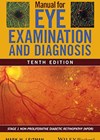
Manual for Eye Examination and Diagnosis (Tenth Edition)
This is a single author published manual which aims to equip the novice reader with a short, yet comprehensive introduction to ocular examination and diagnosis. This book has a substantial history, having been first published 48 years ago, and is...
Ocular surface in donor eyes after CLAU
This retrospective study examined ocular surface stability of donor eyes following conjunctival limbal autografts (CLAU). Forty-five eyes underwent CLAU with chemical burns being the most common indication. All but two eyes had just over 4 o’clock hours of CLAU segment...
Femto-DMEK – a solution for high re-bubbling rates?
This retrospective study examined results of patients that underwent femtosecond laser enabled descemet membrane endothelial keratoplasty (DMEK) (FE-DMEK) and manual DMEK (M-DMEK) for Fuch’s endothelial dystrophy. In FE-DMEK femtosecond laser was used to create 8.25mm descemetorhexis, whereas during M-DMEK- descemetorhexis...
Keratolimbal allograft and tumour transmission
This case report describes tumour transmission from keratolimbal allograft donor to recipient. A 68-year-old woman underwent keratolimbal allograft (KLAL) for limbal stem cell failure from a donor, who died of invasive breast carcinoma that had metastasised to multiple levels of...
DSEK – five year results
This UK based study examined long-term descemet stripping endothelial keratoplasty (DSEK) results, looking at graft survival and endothelial cell losses. Data on 210 grafts were included in analysis. Most frequent indication for DSEK was Fuch’s endothelial dystrophy (81.4%) and 46.3%...


