You searched for "simulation"
A case of retinal cavernous haemangioma – don’t let it slip through the grapevine
We present a case of a seven-year-old male who presented to the emergency eye referral clinic with red eye. He was diagnosed and treated for allergic conjunctivitis, however, on clinic review, wide field retinal imaging was performed (as has been...25 years of OCT
David Huang first described optical coherence tomography (OCT) in 1991, in his seminal paper on the subject in Science. This method developed the work of others on ophthalmic interferometry, which essentially showed that measuring reflected light could be used to...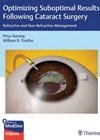
Optimizing Suboptimal Results Following Cataract Surgery: Refractive and Non-Refractive Management
This is a great book with contributions from well-known figures in the world of ophthalmology. It would be a beneficial read for any ophthalmology trainee or consultant as it covers something that is quite essential in ophthalmic surgery – giving...
Evaluation of keratometry with a novel colour LED corneal topographer
The Cassini topographer (i-Optics), which analyses corneal shape based on the reconstruction of specular reflections on 679 coloured LEDs, generates keratometry and is the new machine being compared in this study with other keratometry devices. The prospective comparative study included...
Relationship between nocturnal intraocular pressure elevation and diurnal intraocular pressure level in NTG patients
This group studies Korean normo-tension glaucoma (NTG) patients over a 24-hour period to assess if there was a relationship between nocturnal intraocular pressure (IOP) and diurnal IOP. They have previously suggested differences in diurnal IOP may have varying mechanisms of...
Retinal ischaemia on OCTA and diabetic retinopathy grade
The authors quite rightly point out that quantification of retinal ischaemia has the potential to serve as a biomarker for diabetic retinopathy disease progression. They set out to investigate the relationship between area of ischaemia on a swept source OCTA...
Aspirin and upper lid surgery
This is a double-blind randomised controlled trial of preoperative aspirin versus placebo in patients undergoing upper lid blepharoplasty or ptosis surgery. All enrolled patients were already taking aspirin and no other anti-platelet or anticoagulant drugs. All patients either had no...