
You searched for "Cataract surgery"
Preventing refractive surprises by real time biometry during cataract surgery
A few months ago a retired lady presented for second eye cataract surgery. I noted on the pre-op ward round that the outcome of her first eye’s surgery looked like a refractive surprise as her spherical equivalent in that eye...Anisometropia following cataract surgery and its non-surgical treatment
The desired result of cataract surgery is improved visual acuity without the use of spectacles. In practice most patients following initial cataract extraction are likely to be symptomatic of anisometropia giving rise to prismatic effects (anisophoria) and unequal retinal image...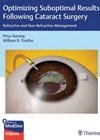
Optimizing Suboptimal Results Following Cataract Surgery: Refractive and Non-Refractive Management
This is a great book with contributions from well-known figures in the world of ophthalmology. It would be a beneficial read for any ophthalmology trainee or consultant as it covers something that is quite essential in ophthalmic surgery – giving...Practice tips: Directions in cataract surgery services and preventing postcataract endophthalmitis
Future directions in the delivery of high quality cataract surgery services and approved intracameral prophylactic approaches to lowering the risk of postcataract infective endophthalmitis were debated by consultant ophthalmic surgeons in a recent London seminar, held at the Royal Society...Changing the post cataract surgery review pathway – is patient safety compromised?
Cataract surgery continues to be the most commonly performed elective surgical procedure in the UK, with an annual rate of approximately 4150/100,000 people over the age of 65 accounting for a significant proportion of the surgical workload of most ophthalmologists...How effective is nurse-led telephone preassessment for cataract surgery?
Cataract surgery is the most frequently performed surgical procedure in the UK [1]. The demand for cataract surgery is projected to increase with ageing population, and the recent pandemic has further contributed to the extended waiting times in the UK....Restoring sight and embracing culture: A voluntary cataract surgery experience in Morocco
It all came from networking Doing volunteer work is an integral part of being a doctor. Helping and treating those in need without financial recognition embodies righteousness and a pure spirit. As healthcare providers, we have an unwritten duty to...
Impact on the corneal and anterior chamber characteristics after femtosecond laser cataract surgery
Femtosecond laser cataract surgery (FLACS) is being increasingly used in the preparation for cataract surgery. Benefits of circular capsulorrhexis and reduced phacoemulsification energy have been shown in the literature. This study was designed to assess the anterior chamber characteristics and...
Incidence and factors associated with complication of sutured and sutureless cataract surgery following PPV
This is a retrospective review of 485 patients who had undergone phacoemulsification and IOL implantation after previous pars planar victrectomy (PPV) surgery between May 2000 and May 2014. The incidence and factors contributing to complications were studied. The most common...
Intravitreal bevacizumab vs. triamcinolone in patients with DMO at the time of cataract surgery
This prospective, single masked randomised control trial (RCT) compared visual and anatomical outcomes when either intravitreal bevacizumab (BVB) or triamcinolone (TA) was administered at the time of cataract surgery and at subsequent review, if required, in patients with diabetic macula...
A population based follow-up study on pseudoexfoliation and cataract surgery
n association between pseudoexfoliation (PEX) and cataracts has been shown in many previous studies. Recently, the Australian Blue Mountains Eye Study, using the Wisconsin Cataract Typing and Grading System, observed an increased prevalence of nuclear cataract in eyes with PEX....


