
You searched for "regenerative"

Risk factor for surgical failure in consecutive XT
This study was designed to determine the success rate among patients with consecutive exotropia after choosing an appropriate surgical method based on medial rectus function and level of exo deviation. The authors conducted an interventional case series study of 40...
Strabismus in high myopia
The authors report the occurrence of exotropia-hypotropia complex in 15 cases of high myopia. The mean age at presentation was 23.5 years (10-35 years). Only two patients had high bilateral myopia. The mean axial length of the deviating eye was...
Stereopsis changes with cataract
Stereoacuity was compared preoperatively to six weeks postoperative after cataract extraction and intraocular lens (IOL) implant. The authors evaluated the association of postoperative stereoacuity with visual acuity, age and duration of preoperative symptoms. This prospective study recruited 142 patients: 92...
Horizontal angles in Brown’s syndrome
The purpose of this study was to determine the incidence of horizontal strabismus needing surgical management in Brown’s syndrome. This was a retrospective review of 19 eyes (eight right and 11 left) of 16 patients (seven male and nine female)....
Infections related to strabismus surgery
This review considers the range of infections occurring with strabismus surgery. Extraocular infections include conjunctiva, sub Tenon’s abscess and orbital cellulitis. Intraocular infection includes endophthalmitis. Prevention of infection and risk factors includes the issue of scleral penetration and use of...
Sickle cell maculopathy
This paper reports the result of a prospective study to analyse the prevalence of sickle cell maculopathy (SCM) and its associations with age, sex, genotype, proliferative sickle cell retinopathy (PSR) stage, and the impact on visual acuity (VA). This study...
AI-Based devices in national screening programmes: barriers and challenges
Diabetic retinopathy (DR) may have long-term complications and is recorded as a leading cause of blindness. National DR screening programmes have effectively reduced severe visual loss by timely detection and subsequent treatment of sight-threatening proliferative DR and diabetic macular oedema....What’s next in retinal imaging? Faster, deeper and full-on
Fast-evolving technological leaps are opening the way toward clinically useful ocular coherence angiography, generating 3-dimensional microvasculature maps without intravenous dye injection, as well as whole-eye imaging, handheld patient-operated optical coherence tomography (OCT) devices and, for challenging vitreoretinal procedures, integrated intraoperative...Sustainability in eyecare: Climate action in eyecare
Climate change will cause disruption to critical eyecare services and increases in rates of eye disease around the world. The International Agency for Prevention of Blindness has recommended 10 key areas of action on how the eyecare sector can address...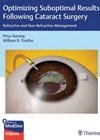
Optimizing Suboptimal Results Following Cataract Surgery: Refractive and Non-Refractive Management
This is a great book with contributions from well-known figures in the world of ophthalmology. It would be a beneficial read for any ophthalmology trainee or consultant as it covers something that is quite essential in ophthalmic surgery – giving...
Outcomes and complications of supramaximal levator resection
This is a report of 35 children with unilateral congenital ptosis who underwent a supramaximal levator resection, involving extensive dissection of levator including cutting Whitnall’s ligament. The average preoperative margin reflex distance to the upper lid (MRD1) was 0.5mm, and...


