
You searched for "screening"
Inherited retinal disorders now the leading cause of blindness
The recent paper in BMJ Open, from the UCL Institute of Ophthalmology, ‘A comparison of the causes of blindness certifications in England and Wales in working age adults (16-64 years), 1999-2000 with 2009-2010’ concludes that inherited retinal disorders (IRD) such...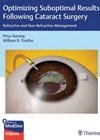
Optimizing Suboptimal Results Following Cataract Surgery: Refractive and Non-Refractive Management
This is a great book with contributions from well-known figures in the world of ophthalmology. It would be a beneficial read for any ophthalmology trainee or consultant as it covers something that is quite essential in ophthalmic surgery – giving...Imaging within clinical research trials
Clinical research is essential to the future of healthcare and the wellbeing of patients, no matter what health condition they face. Many patients who choose to participate in clinical research studies in ophthalmology find optimism in discovering novel medicines to...A window to 2024 and beyond?
The connection between the eye and systemic diseases has been acknowledged for millenia. Historical records suggest that ancient civilisations had some understanding of the eye’s significance beyond its primary function in vision. For instance, in ancient Egypt, the ‘Eye of...A message from the editors
Right now you may be self-isolating, self-learning about Covid-19 and / or selflessly looking after family, friends or folk next door who need supplies, meds or general cheering up, albeit at a distance. Some of us might be redeployed, frantically...
Management of congenital NLD obstruction
The authors evaluated changes in management of congenital nasolacrimal duct obstruction (CNLDO) by surveying 1495 Association for Paediatric Ophthalmology & Strabismus (AAPOS) members. The survey consisted of 21 multiple choice questions with anonymised return. Responses were received from 127 members...
Temporal versus nasal clear corneal incisions
This is a prospective randomised study of 100 patients’ left eye having undergone phacoemulsification either by a 2.4mm nasal clear corneal incision (CCI) group or temporal CCI group. The corneal astigmatic changes were compared between groups by power vector analysis,...
Corneal crosslinking in pellucid marginal degeneration
Fourteen studies were included in this first review examining the use of corneal-crosslinking (CXL) to treat pellucid marginal degeneration (PMD). PMD is a bilateral, non-inflammatory corneal thinning disorder characterised by inferior peripheral corneal thinning 1-3mm from the limbus in the...


