
You searched for "presentation"
Greater Manchester residents asked to share views on eyecare services
NHS Greater Manchester is calling on residents to share their experiences of using eye care (ophthalmology) services as part of a region-wide evaluation aimed at improving care for people with eye disorders. This eight-week listening exercise, running from today, Monday,...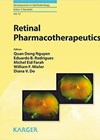
Retinal Pharmacotherapeutics (Developments in Ophthalmology)
Retinal Pharmacotherapeutics is volume 55 in the ‘Developments in Ophthalmology’ series released by Karger. As the name of the series suggests it aims to explore current and future developments in retinal therapeutics. The book itself is split into six main...
The Eye: A Very Short Introduction
I am a big fan of the ‘Very Short Introductions’ series and find them a great way to gain a basic understanding of several topics, ranging from science to philosophy. The Eye: A Very Short Introduction is no exception. It...
Ginko bilboa extract affects hypoxic retinal pigment epithelial cells
Wet age-related macular degeneration (AMD) is characterised by choroidal neovascular membrane (CNVM) formation. It is thought that localised hypoxia within the retina results in overexpression of growth factors such as vascular endothelial growth factor (VEGF), which induces CNVM formation. VEGF...
RPE atrophy onset in treated nAMD
In this study the authors aim to evaluate the role of various factors for the development of retinal pigment epithelium (RPE) atrophy over a period of five years in patients with nAMD. Fifty-two newly diagnosed nAMD patients with complete absence...
Evaluation of Optive® in ocular discomfort after anti-VEGF intravitreal injection
In this study the authors prospectively evaluated the efficacy of Optive® eye drops after in full, then abbreviation - intravitreal injection (IVT). Patients naïve to IVT were included in the study. No artificial tear treatment was prescribed after the first...
Traumatic macular holes: reconstructive changes in foveal microstructures and visual predictor analysis, following surgical repair
The purpose of this paper was to investigate the reconstructive changes in foveal microstructures postoperatively and analyse the visual predictors in eyes with surgically closed traumatic macular holes (TMHs). This retrospective study analysed the data collected from 71 eyes of...MacuMira and Keeler announce strategic partnership to expand dry AMD therapy
Keeler, a global leader in ophthalmic innovation with more than a century of heritage, and MacuMira Medical Devices Inc, a pioneering Canadian company, has announced a strategic partnership. Under the agreement, Keeler will manufacture the MacuMira device and lead its...Everyday diabetes medicine could treat common cause of blindness
Doctors have found that metformin, an everyday medicine for diabetes, is associated with less progression of age-related macular degeneration (AMD), the commonest cause of blindness in western countries. People with diabetes over the age of 55 years taking metformin were...Bus drivers swap with blind passengers
Drivers at the Xplore Dundee depot took part in a hands-on session today [Wednesday 6 May] to better understand the experiences of blind and partially sighted passengers. The company held a ‘Swap With Me’ event in which volunteers from national...
Treatment of progressive keratoconus
This study aimed to analyse the clinical results of accelerated iontophoresis-assisted epithelium corneal cross-linking (i-ON CXL) to evaluate the risk factors for keratoconus progression after treatment, and the safety and efficacy of re-treatment using epithelium-off CXL protocol in paediatric patients....


