
You searched for "clinics"
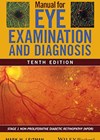
Manual for Eye Examination and Diagnosis (Tenth Edition)
This is a single author published manual which aims to equip the novice reader with a short, yet comprehensive introduction to ocular examination and diagnosis. This book has a substantial history, having been first published 48 years ago, and is...
Ocular surface in donor eyes after CLAU
This retrospective study examined ocular surface stability of donor eyes following conjunctival limbal autografts (CLAU). Forty-five eyes underwent CLAU with chemical burns being the most common indication. All but two eyes had just over 4 o’clock hours of CLAU segment...
Chronic lymphocytic leukaemia (CLL) of the lacrimal sac
The authors present a case series of three patients with known CLL, two of which presented with mass and epiphora and one case with epiphora alone. All three patients had initially being diagnosed and were treated for chronic dacryocystitis. Histopathological...
OCT angiography in PAMM secondary to CRVO
Paracentral acute middle maculopathy (PAMM) is a recently described manifestation presenting with hyperreflective bands within mid retina on spectral domain optical coherence tomography (SD OCT). The current view is that these findings are markers of ischaemia of deep retinal circulation....
Macular hole postop positioning
The purpose of this study was to determine whether the full thickness macular hole (FTMH) closure rate with nonsupine positioning (NSP) is noninferior to the high closure rate achievable with face down positioning (FDP). All patients were pseudophakic pre macular...
Retinoblastoma chemotherapeutic drugs and their toxic effects on RPE cells
There is reported clinical evidence of retinal pigment epithelium (RPE) alterations after intra-arterial (IAC) and intravitreal chemotherapy (IViC) of retinoblastoma. The purpose of this study was to investigate the cellular toxic effects of melphalan, topotecan and carboplatin on the RPE...
Serology testing in periocular inflammatory disease
This is a review article of serological tests in thyroid eye disease, IgG4-related disease and myasthenia gravis. The authors provide an overview of the current serology with a brief description of how they relate to the pathogenesis of each condition....
SLT vs. topical treatment with prostaglandin analogues in the management of PACG
Selective laser trabeculoplasty (SLT) has been shown to be useful in the management of primary open angle glaucoma (POAG), but its use in primary angle closure (PAC) / primary angle closure glaucoma (PACG) has yet to be validated. Narayanaswamy et...
Prognostic information for PRP-naive patients
The Diabetic Retinopathy Study group demonstrated that pan retinal laser photocoagulation (PRP) reduces severe vision loss by up to 50% in cases of proliferative diabetic retinopathy (PDR). The authors of this current study aimed to provide information for laser naive...
Case series of posterior scleritis
This report aimed to facilitate the correct diagnosis of posterior scleritis, a condition which is usually overlooked or misdiagnosed. Electronic health records of 31 patients with posterior scleritis were analysed and compared to a group with isolated anterior scleritis of...
Low dose steroids for ocular dry eye disease in graft vs. host disease
This double-masked randomised clinical trial compared the response of dry eye disease (DED) to treatment with topical steroids in patients with and without graft vs. host disease (GVHD). Forty-two patients in a single centre (n=21 with and n=21 without GVHD)...


