

Ophthalmology
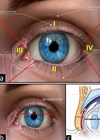
Periocular burns: a literature review of classification, management protocols and outcomes of treatment
The author provides a review of the current literature regarding the principles of classification, management protocols of acute ocular and periocular burns and the role of the burn and oculoplastic surgeon involved in their care. More than two-thirds of facial...

Profile of a tertiary referral oculoplastics service in the UK
The provision of safe and effective ophthalmic care to large patient populations has always been challenging. Severe restrictions of outpatient clinical activity due to the COVID-19 crisis has compounded this problem, with 26,800 appointments cancelled in our unit in the...
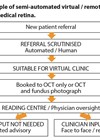
Telemedicine strategies in ophthalmology: harnessing established and emerging technologies for lasting solutions
The author considers recent progress and shares insights from leading practitioners in telemedicine applications and digital technology strategies. Amidst COVID-19 and combined mitigation and suppression measures, hospitals and clinics have responded rapidly to strengthen telemedicine strategies and virtual healthcare services...

Is patient masking leading to an increase in post-op infection after eyelid surgery?
Due to the COVID-19 pandemic, the use of facemasks or face coverings in the clinical setting has become necessary. It is important to recognise that facemasks can be a source of infection after eye surgery and consider ways to minimise...
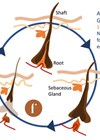
Sensitive cilia – eyelashes in health and disease
In health our eyelashes protect the eyes, but in disease they can disfigure, impair quality of life and threaten vision. In this review the authors discuss aspects of lashes that are relevant to all professionals working near the eyes and...

The creation of PlayDoh® models as an educational tool for teaching anatomy of the eyelid
An understanding of the anatomy of the eyelid is essential for training in oculoplastic surgery. Active learning has been shown to increase knowledge and retention and has an advantage over passive teaching methods alone [1,2]. PlayDoh® models have been used...

Developments in oculoplastic surgery
A study of NHS practice demonstrated significant patient-reported quality-of-life improvements from commonly performed oculoplastic operations: entropion repair, ectropion repair, ptosis repair and dacrocystorhinostomy (DCR) [1]. In recent years, surgical and non-surgical approaches to functional and aesthetic oculoplastic surgery have advanced...

The bionic eye – behind the headlines
Multiple visual prosthetic projects and other vision regeneration initiatives being tested in preclinical and clinical development worldwide illustrate continuing progress and opportunities in addressing profound blindness from hereditary retinal diseases and other causes (Table 1). Three implantable bionic vision systems...

The refractive index in the eye lens – implications for clinical practice and optical design
The eye may appear to be a comparatively simple organ and yet its optical system is complex and continues to be a source of investigation and research. The major optical elements are considered to be the cornea and the lens...

Simulated ocular surgery – strabismus surgery
See also Simulated ocular surgery and Simulated ocular surgery: pars plane vitrectomy and scleral buckling surgery Strabismus surgery requires a range of skills, distinct to those required for intraocular surgery. Even if a trainee does not plan to become a...
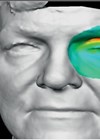
Can 3D facial imaging improve patient management in disfiguring eye disease?
Fight for Sight is the leading UK charity funder of eye research. Since the 2013 Sight Loss and Vision Priority Setting Partnership we have encouraged our researchers to work on priorities jointly identified by people affected by sight loss and...

Simulated ocular surgery: pars plana vitrectomy and scleral buckling surgery
See also Simulated ocular surgery and Simulated ocular surgery - strabismus surgery In this second article on ocular surgery simulation, we will discuss how vitreoretinal surgery can be simulated using high tech virtual reality modalities such as the Eyesi, as...


