Trainees
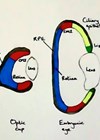
The paediatric cataract: an overview of the embryology and pathophysiology
In the first of the two articles (see Part 2 here) on paediatric cataracts, Samuel Aryee reviews the aetiology of this condition. Cataracts arise from opacification of the natural transparent lens, which can cause partial or total blindness. Although the...
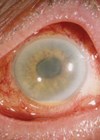
Case series of toxic anterior segment syndrome
Herein we report two cases of toxic anterior segment syndrome (TASS) following uneventful cataract surgery. Both patients presented 24 hours after their uneventful operations with painless blurred vision in the operated eye. The inflammatory reaction was controlled successfully with an...
How to pass the Refraction Certificate
Unfortunately, I had the pleasure of getting to know this exam intimately. With adequate preparation this does not have to be the case for most people. The exam has recently changed to consist of 10 OSCE style stations (previously 12)....

Practical phacodynamics – making the most of your phacoemulsification machine
Understanding phacodynamics is appreciating the subtleties in the dynamic changes of the fluidics and the ultrasonic power delivered. Kristina Southcott explains. Increase my vacuum! Increase my bottle height! Increase my phaco power! I frequently observe the above commands being directed...

Laser corneal refractive procedures – a review
Evolution of refractive surgery stays true to the quote of Theodore Roosevelt: “The more you know about the past, the better prepared you are for the future.” Refractive surgery is an evolving field, which thanks modern technologies for refining ideas...

How I overcame the hurdle that is the FRCOphth Part 1
The FRCOphth Part 1 is one of the most difficult exams in ophthalmology training, with an exam pass rate of 39.6% over the last 12 months (compared to 60.8% for FRCOphth Part 2 oral [60.8%] and written [68.7%]). Stack the...

Technology in ophthalmology – a promising future and what we need to know about the regulations
Undoubtedly, ophthalmology is one of the greatest sources of inspiration for technological progress in medicine. Thus far, we have seen remarkable advancements in the technology used by ophthalmologists across all subspecialties. From simplifying common procedures, to treating previously incurable conditions,...

Light in darkness – manual small incision cataract surgery in India
Cataract has been documented to be the most significant cause of bilateral blindness in India, where vision <20/200 in the better eye on presentation is defined as blindness [1,2]. Estimation of blindness in India by the World Health Organization (WHO)...
Simulation in ophthalmology: a pedagogic viewpoint
The advent of simulation technology has enhanced modern medical training. The first utilisation of simulation was in 1929 where Edward Link used this concept to develop a mechanical flight simulator [1]. Industries such as aviation, nuclear power and the military...
Training on the go
In this guide, we aim to provide trainees with novel ideas to maximise learning in the workplace to make the most of your working hours and balance the multiple demands on your time. They say time flies; and it really...

An arm and a leg
“It cost me an arm and a leg.” – Mr B told me. An arm and a leg to be seen by the famous Russian eye surgeon who said that everybody can be spectacle-free. He took Mr B’s money (roughly...
The medical student syndrome
It is often said that “a little learning is a dangerous thing,” but being super savvy can’t put us at the brink of harm, can it? Each year as thousands of students commence their medical degrees, they begin a journey...