
You searched for "retinal"
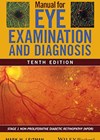
Manual for Eye Examination and Diagnosis (Tenth Edition)
This is a single author published manual which aims to equip the novice reader with a short, yet comprehensive introduction to ocular examination and diagnosis. This book has a substantial history, having been first published 48 years ago, and is...Skills training and setting up of nurse practitioners led intravitreal treatment (IVT) workshop at the RCOphth Congress
The Medical Retina team at Great Western NHS Hospital, Swindon will be running a first of its kind skills training workshop at RCOphth Annual Congress, Birmingham on 24 May ’23.Periorbital and subconjunctival emphysema - a sign of orbital rim fracture
Background Orbital emphysema is a condition where air is present in orbit or periorbital tissues [1]. It is most commonly caused by trauma leading to orbit fracture, where air from paranasal sinuses is allowed to enter the orbit. The most...Lines, dots, spots and rings in ophthalmology: understanding eponyms
Eponymous names are familiar to all who have undergone undergraduate and postgraduate training in medicine. The ability to name a few allows one to stand out among your peers and rare, or not so rare, eponymous syndromes are a favourite...
Post hoc analysis of the CANTREAT randomised trial
CANTREAT, a Canadian multicentre two-year randomised trial compares treat and extend treatment (T&E) relative to the monthly administration of Ranibizumab in nAMD. Two-hundred and eighty-five treatment-naïve patients with nAMD were randomised to receive either a once-monthly dosing or T&E regimen...Does vitrectomy increase the risk of glaucoma? A retrospective review from a UK hospital
The authors investigate what proportion of patients undergoing pars plana vitrectomy subsequently developed ocular hypertension or a diagnosis of glaucoma. A systematic review carried out in 2017 including seven studies found that there is evidence that pars plana vitrectomy (PPV)...Large language models in ophthalmology
Traditional artificial intelligence (AI) models typically require large amounts of labelled data for training. For example, to develop a model capable of detecting macular pathologies on optical coherence tomography scans, thousands of scans would need to be manually labelled by...Blame the lens – not its position – in refractive surprise
Aetiology of postoperative refractive surprise Weber coined the term “wrong eye, wrong intraocular lens, wrong patient” in 2008 as an aide memoir of major factors believed to underlie refractive surprise – defined as a significant unintended difference between dioptric refraction...
Support for patients with nystagmus
This is a qualitative study in patients with nystagmus identified through regional clinics, charity events and the Royal National Institute of Blind People (RNIB). Two hundred and fifty-one participants were identified, with 184 respondents included in the study. Fifty-six percent...
The willingness of patients to participate in an eye donation registry for research
This paper explores the willingness of ophthalmic patients to donate their eyes post-mortem for research purposes. A total of 300 German patients with a median age of 70 years (range 19-95) completed the standardised questionnaire; 45.3% were female and the...OSA regulatory advice baton moves to new expert
The OSA’s regulatory advice service – a key element of membership for many optical businesses – is moving to safe new hands as Ann Blackmore retires after six years at the helm. Ann’s extensive knowledge of the optical landscape, both...


