You searched for "Clinics"
Insights on medical AI for ophthalmology: an update on current perspectives
Artificial intelligence (AI) has immense promise for revolutionising medical practice. Generative AI is a form of AI in which algorithms are trained on datasets that can be used to generate new content, such as text, images or video based on...The Worshipful Company of Spectacle Makers awards 2023 Ruskell Medal for research
The Worshipful Company of Spectacle Makers has awarded its prestigious bronze Ruskell Medal for 2023 to Dr Cristina Martinez-Fernandez de la Camara, a senior scientist in the Clinical Ophthalmology Research Group at the Nuffield Department of Clinical Neurosciences at the University of Oxford, for her work on RPGR-associated retinal dystrophy.ABDO announces dates for the ABDO Clinical Conference
The Association of British Dispensing Opticians (ABDO) has announced the dates for its second clinical conference. The ABDO clinical conference will take place on Sunday 6 and Monday 7 October at the ABDO National Resource Centre, Birmingham, providing two opportunities for members to attend.27th Nottingham Eye Symposium and Research Meeting
A unique opportunity for the dissemination and discussion of cutting-edge basic science and clinical ophthalmic research. Conference Chair: Ms. Dalia Said The 27th Nottingham Eye Symposium & Research Meeting anticipates a delegation of approx. 150 ophthalmologists from around the UK...
Multimodal Retinal Imaging
Understanding of rapidly advancing retinal imaging techniques is important as they have changed the management of retinal conditions considerably. Interpretation of these tests is a vital skill in the armamentarium of every practising ophthalmologist. The book is directed at general...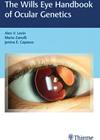
Wills Eye Handbook of Ocular Genetics
Wills Eye Handbook of Ocular Genetics is a concise and comprehensive guide to the diagnosis and management of ophthalmic genetic conditions. Ocular genetics is a rapidly-evolving field and an updated textbook is vital to communicate the recent advances made in...
Eyelid nodule outcomes
Idiopathic facial aseptic granuloma (IFAG) is a recently defined paediatric dermatology disorder. This study presents the clinical outcomes of children with IFAG nodules on their eyelids with or without facial nodules and aim to compare the outcomes with those presenting...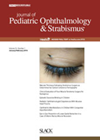
Exotropia symptoms
The aim of this study was to evaluate clinical preoperative symptoms and changes to these postoperatively in patients with exotropia. A non-validated questionnaire with 15 questions was used: three subscales including stereopsis (five questions), ocular fatigue (five questions) and cosmetic...
Bitemporal hemianopsia as a result of ethambutol toxicity
The authors present six cases of visual loss in patients treated with ethambutol for mycobacterium avium complex, including four patients with bitemporal hemianopsia. Two additional patients were undergoing glaucoma monitoring and developed visual field defects with ethambutol treatment, which recovered...
Aflibercept, bevacizumab or ranibizumab for DMO
This is a two-year randomised clinical trial of 660 patients with visual acuity impairment from diabetic macular oedema (DMO) who were randomised to monthly injections of 2.0mg aflibercept, 1.25 mg bevacizumab or 0.3mg ranibizumab. Focal or grid laser was performed...
Iranian prevalence of convergence / accommodative disorders
The aim of this study was to investigate the frequency of accommodative and convergence disorders in an optometric clinical population and ascertain tests with the highest sensitivity and specificity in detecting these anomalies. The authors gathered information on symptoms, near...