You searched for "imagers"
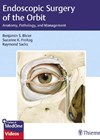
Endoscopic Surgery of the Orbit: Anatomy, Pathology, and Management
Endoscopic surgery still remains a challenge for many oculoplastic surgeons, whose main scope of work has traditionally been open surgery. The learning curve for endoscopic surgery is quite steep and this approach requires skills that needs to be well trained,...
Ocular Telehealth: A Practical Guide, 1st Edition
Ocular Telehealth: A Practical Guide is in its first edition, which is great considering the recent adjustments to practical medical delivery that the COVID-19 pandemic has mandated. Overall, this book is well written in a structured format defining the uses...
Preoperative RPE alterations in macular holes
This retrospective interventional case series from Japan assessed whether preoperative alterations of the retinal pigment epithelial (RPE) in idiopathic macular holes correlated with postoperative functional and morphological changes in the macula. Fifty-nine eyes had preoperative Spectralis OCT using the ‘detailed’...
Macular slippage following macular hole surgery
The treatment of macular holes now involves peeling the internal limiting membrane (ILM) as well as vitrectomy and gas tamponade. It has been noted in previous studies that following an ILM peel the morphology of the macula is different. Tadayoni...
OCT measurements of eye muscles for Grave’s disease
The purpose of this study was to use optical coherence tomography (OCT) to assess horizontal rectus muscle thickening in patients with active and inactive Grave’s ophthalmopathy (GO) compared to healthy controls. This was a cross section observation study of rights...
Retinal ischaemia on OCTA and diabetic retinopathy grade
The authors quite rightly point out that quantification of retinal ischaemia has the potential to serve as a biomarker for diabetic retinopathy disease progression. They set out to investigate the relationship between area of ischaemia on a swept source OCTA...
Conservative surgical management of optic disc pit maculopathy
Four cases are presented in this case report that illustrates the option of conservative surgical management for optic disc pit complicated by maculopathy (ODP-M). Four men aged 24-67-years-old with no spontaneous resolution of ODP-M for a minimum of three months,...
Assessment of retinal capillary VD and FAZ area in CSC using OCTA
The authors aim to report a cross-sectional, case controlled study, the purpose of which was to access the retinal capillary vessel density (VD) and foveal avascular zone (FAZ) area in acute and chronic central serous chorioretinopathy (CSC) patients compared to...
Relating metamorphopsia severity and OCT findings in advanced epiretinal membranes
The authors present the findings of a retrospective study to correlate metamorphopsia and ectopic inner foveal layers (EIFL) or ‘central bouquet’ abnormality (CBA) in patients with advanced stages of epiretinal membrane (ERM) following the new OCT‐based grading scheme as described...
Assessing failure of laser coagulation treatment for type 1 retinopathy of prematurity
The authors present the findings of a retrospective study to examine the cause of treatment failures in type 1 retinopathy of prematurity (ROP). They reviewed the medical charts of all infants with persistent disease post laser treatment at Uppsala University...