
You searched for "complaints"
Early detection key to improving treatment of uveitis, a leading cause globally of vision loss
New treatment guidance has been developed to help doctors tackle uveitis — one of the leading causes of vision loss. The new clinical guidance, by a team at the University of Bristol, aims to help thousands of sufferers keep this...Eye Capacity: clinical need should drive ophthalmic service provision
Almost two million people in the UK suffer sight loss, a number forecast to double over coming decades. Major causes of blindness are age-related macular degeneration (AMD), glaucoma, diabetic retinopathy, cataract and uncorrected refractive error. Prevalence of these sight-threatening conditions...LambdaVision aims to refine process for in-space manufacturing of artificial retinas through ISS National Lab-sponsored investigation
Approximately 1.5 million people worldwide are affected by retinitis pigmentosa, a rare genetic disorder that causes vision loss. Currently there is no cure, but researchers from LambdaVision are turning to the International Space Station (ISS) National Laboratory to look for...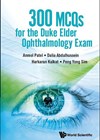
300 MCQs for the Duke Elder Ophthalmology Exam
The Duke Elder undergraduate prize examination is held by the Royal College of Ophthalmologists annually for undergraduate medical students. It is a competitive examination covering clinical ophthalmology as well as the ocular basic sciences, optics, statistics and socio-economic medicine. For...Making sense of the orthoptic assessment
Following the Specialty Trainee article on this topic in the February/March 2020 issue, Joe Smith provides a more detailed breakdown of the orthoptic report. Orthoptists investigate, diagnose and manage a wide variety of patients with varying problems. In this article,...October meeting to announce major OSA news
A major development at the Optical Suppliers' Association (OSA), which will bring significant advances for eHealth interoperability, will be announced at the 16th October meeting in London. As the speed of change in optics advances at great pace, the OSA...Gambia-Swansea Partnership: Technical support in our 16-year partnership
I have been involved in the Gambia-Swansea VISION 2020 LINK now for more than 16 years. I hope that this article will be of some interest to anyone considering volunteering overseas, as part of a LINK or in any other...
Corneal Transplantation
This relatively small book provides a thorough overview of the history of corneal transplantation, an update on the anatomy and physiology of the cornea with particular reference to the components essential to keratoplasty procedures, also graft preparation and storage. There...
The Eye in History
Amongst the numerous texts that are available, one occasionally encounters a history of ophthalmology. There is such rapid development of technology in recent years and one can get drawn into the minutiae of a particular subject, losing track of the...
DIY IOP – does it work?
Measuring intraocular pressure (IOP) plays a major role in glaucoma care as IOP is a parameter, along with visual field progression and optic disc cupping used to assess treatment effect. While Goldmann tonometry (GAT) is the gold standard, it only...
Treatment of infantile cataract with secondary IOLs
The authors examined whether secondary IOL insertion is helpful in the successful treatment of monocular infantile cataracts. Eleven children were reviewed: eight with cataract extraction at one to four months of age and three at five to seven months of...


