You searched for "Retina"
FLORetina ICOOR 2025
13th International Congress on OCT and OCT angiographyRCOphth (The Royal College of Ophthalmologists): Paediatric Ophthalmology Study Day
Come and learn about the wonderful world of Paediatric Ophthalmology. An all day event filled with “how to” advice, top tips, clinical pearls and practical guides for problem solving in eye conditions presenting in children, particularly on call. Become aware...The refractive index in the eye lens – implications for clinical practice and optical design
The eye may appear to be a comparatively simple organ and yet its optical system is complex and continues to be a source of investigation and research. The major optical elements are considered to be the cornea and the lens...Telemedicine strategies in ophthalmology: harnessing established and emerging technologies for lasting solutions
The author considers recent progress and shares insights from leading practitioners in telemedicine applications and digital technology strategies. Amidst COVID-19 and combined mitigation and suppression measures, hospitals and clinics have responded rapidly to strengthen telemedicine strategies and virtual healthcare services...In conversation with Vasuki Sivagnanavel at 100% Optical
At 100% Optical at the end of February, we were lucky enough to run into Vasuki Sivagnanavel, Consultant Ophthalmic Surgeon at The Royal Eye Unit, Kingston Hospital, shortly after her presentation: 'Diagnostic insights with retinal ultra-widefield multimodal imaging - perspectives from an optometrist and ophthalmologist'.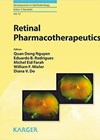
Retinal Pharmacotherapeutics (Developments in Ophthalmology)
Retinal Pharmacotherapeutics is volume 55 in the ‘Developments in Ophthalmology’ series released by Karger. As the name of the series suggests it aims to explore current and future developments in retinal therapeutics. The book itself is split into six main...Eye News to partner with AOP Young Ophthalmologists Program
We are delighted to announce our partnership with the AOP (Advanced Ophthalmologic Practice) Academy Young Ophthalmologists event 'Retina: How to avoid false friends'.
OCT use with macular retinoblastoma
The authors explore the use of portable hand-held spectral domain OCT (SD-OCT) in three eyes of three infants and young children with macular retinoblastoma. All were treated with chemotherapy and all had SD-OCT before and after treatment. The children were...Management of DMO and PDR in 2019
An evidence-based approach to the management of diabetic macular oedema (DMO) and proliferative diabetic retinopathy (PDR) in 2019 was outlined by Sobha Sivaprasad, UK, in presentations during the Diabetic Retina scientific session September 6 2019, at the 19th European Society...Acute uveitis from late migration of soft lens matter 10 years post cataract surgery
A 58-year-old Caucasian male presented to the emergency eye clinic with a two-day history of a painful, red left eye and blurred vision. His past ocular history included uncomplicated left phacoemulsification cataract surgery in 2010 and left retinal detachment repair...
Handbook of Pediatric Retinal OCT and the Eye-Brain Connection
Paediatric optical coherence tomography (OCT) imaging of the eye remains an evolving technology to date. This handbook delves into this challenging area successfully and gives a comprehensive and detailed input into paediatric OCT pertaining to the retina and the optic...