You searched for "educational"
Rb-NET: a network to save life and preserve vision in children in Africa
Responding to need is a key element underpinning the VISION 2020 LINKS Programme [1]. It is embedded in the process through which LINKS are established, with institutions in low- and middle-income countries (LMICs) first defining their priority areas of training...Preparing for modern ophthalmic surgical training as a trainee
As a trainee in ophthalmology, every day you are learning more and more about the specialty. In addition, you will most likely be exploring the vast array of subspecialties that ophthalmology has to offer, and would probably be trying to...Ophthalmology in ancient india, Sushruta’s time and the modern era
While reading an article related to the history of Indian ophthalmology, I came across this description of a surgical procedure: “The doctor warmed the patient’s eye with the breath of his mouth. He rubbed the closed eye of the patient...Building data infrastructure for eye research in the NHS: Real-world lessons from the Liverpool Eye Data Platform
The Liverpool Eye Data Platform demonstrates how governance-compliant infrastructure can bring together routinely-collected, siloed NHS eye data. Routine care delivered across the NHS generates vast amounts of clinical data within a healthcare system that is uniquely characterised by comprehensive population...Feb/Mar 2016 Quiz 2
History A 30-year-old male presents with a phthisical left eye and undergoes enucleation. He has some lesions in his right eye that are under ophthalmic surveillance. Figure 1 is a low power of the enucleation. Figures 2, 3 and 4...Jun/Jul 2018 Quiz
History A 35-year-old woman had a long-standing left blind eye following extensive exudative retinal detachment in the past. She later developed increasing pain in her blind eye. Her medical history includes pheochromocytoma resected five years ago, and she is currently...
Long-term outcomes for hereditary retinoblastoma
Earlier diagnosis and more rigorous treatment regimens have contributed to better outcomes for patients with retinoblastoma. This study looked at 24 patients with hereditary bilateral retinoblastoma treated with systemic chemotherapy during a ten year period (2001-2011). The medical notes were...
Episcleral brachytherapy (EB) for retinoblastoma (RB)
This retrospective study consisted of 11 eyes treated either with Iodine (I) -125 or Ruthenium (R) -106EB with a mean apical dose of 44Gy. There were five in group B (46%), three in group C (27%) and three in group...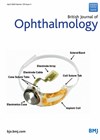
A prospective trial of adjuvant therapy for high-risk melanoma
Patients diagnosed with iris, ciliary body or choroidal melanoma of high-risk tumour cytogenetics (monosomy 3>/= 20% of cells), were treated with adjuvant low-dose dacarbacine (DTIC) and interferon –alpha-2b (IFNA-2b), following primary treatment (enucleation, brachytherapy or resection). DTIC was given intravenously...
Review of paediatric open globe injuries in the US
This study used the Nationwide Inpatient Sample (NIS) database to describe the trends in types, demographics and incidence of paediatric open globe injuries in the US. The NIS database covers about 97% of the US population and about 20% of...
Presenting and diagnostic signs of retinoblastoma
This study revisits the presenting signs of retinoblastoma (RB) in the context of current best practice with respect to diagnosis and assessment of RB. This was a retrospective review of 131 consecutive cases, excluding those with positive family history over...