You searched for "tomography"

Combined ranibizumab and ablative therapy for Coat’s disease
The aim of this study was to observe the efficacy of intravitreal ranibizumab (IVR) combined with laser photocoagulation or cryotherapy, for Coats’ disease. Patients younger than 16 years of age who were diagnosed with Coats’ disease were included in this...
Choroidal defects in neurofibromatosis
The aim of this study was to investigate the frequency of choroidal abnormalities using infrared reflectance imaging with optical coherence tomography (OCT) in paediatric patients with neurofibromatosis (NF) type 1. Thirty-eight eyes of 19 patients were reviewed. NF1 was diagnosed...
Microperimetry of subretinal drusenoid deposits
Subretinal drusenoid deposits (SDD), originally termed ‘reticular pseudo-drusen’, have recently been identified by histology and optical coherence tomography (OCT) as aggregations located in the subretinal rather than the sub retinal pigment epithelium (RPE) space. These deposits affect the amount of...
Stargardt disease in a Turkish cohort
The authors present a study of 27 Turkish patients who were seen in a single centre over a five-year period. All patients had macular optical coherence tomography (OCT), colour fundus photography and 30-2 Humphery visual fields performed, along with clinical...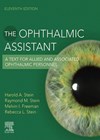
The Ophthalmic Assistant: A Text for Allied and Associated Ophthalmic Personnel, 11th Edition
The 11th edition of The Ophthalmic Assistant is a great resource for anybody working within the world of eyecare and health. The book really does cater to a wide range of people including theatre staff, ophthalmic nurses, optometrists, dispensing opticians,...Shafi Balal on predicting keratoconus progression
In this interview, section editors Nima Ghadiri and Arun James Thirunavukarasu ask Ophthalmic Surgeon and NIHR Doctoral Fellow Shafi Balal about the development of his AI model for predicting keratoconus progression risk, with the longer-term objective of using AI on...My top five: Uses of artificial intelligence in ophthalmology
Artificial Intelligence (AI) has emerged as a prominent topic of discussion within the field of ophthalmology, captivating researchers and practitioners alike. Although recent attention has been drawn to the integration of AI in ophthalmology, it’s important to recognise that AI...My Top Five: Uses of artificial intelligence in ophthalmology
Artificial Intelligence (AI) has emerged as a prominent topic of discussion within the field of ophthalmology, captivating researchers and practitioners alike. Although recent attention has been drawn to the integration of AI in ophthalmology, it’s important to recognise that AI...25 years of OCT
David Huang first described optical coherence tomography (OCT) in 1991, in his seminal paper on the subject in Science. This method developed the work of others on ophthalmic interferometry, which essentially showed that measuring reflected light could be used to...
Corneal Collagen Cross-Linking
As the title suggests, this publication provides a single volume that collates much of the current knowledge and application for corneal collage cross-linking (CXL). There are 23 chapters, subdivided into seven sections, including five pages of indices. The chapters are...Your 101 guide to interpreting the Pentacam®
Anterior segment tomography produces a three-dimensional assessment of anterior and posterior corneal structures. The Pentacam uses rotating Scheimpflug imaging to generate cross-sectional scans of the cornea and anterior chamber, essential for detecting ectasia, refractive surgery screening and longitudinal monitoring. However,...