
Seven cases are described of spontaneous Browns syndrome with onset months after fourth nerve palsy (NP), without evidence of direct trauma, to report pathophysiological explanations for these cases. There were 5 males and 2 females with mean age of 57 ±9 years and median 1.0logMAR visual acuity. Four had head trauma after accident, 3 after neurosurgery for meningioma. Classic unilateral fourth NP was present in 6 cases and 1 had bilateral fourth NP. Elevation in adduction was normal for all 7 cases and all had hypertropia. All had spontaneous improvement of the NP but then developed limitation of upgaze in adduction of the affected eye. The bilateral case developed unilateral Browns syndrome. This was seen on average 144 ±34 days after initial incident and 79 ±23 days after last follow-up for fourth NP. None had shown evidence for direct trochlear injury and features were not consistent with mechanical origin in the orbit. The authors discuss possible mechanisms based on a literature review. They speculate that a mechanism like aberrant regeneration is possible and specific to the fourth nerve on the basis that the superior oblique muscle consists of different types of muscle fibres, innervated by specific motoneurons and responsible for different functions. Regenerated nerve fibres might end up in wrong myelin sheaths resulting in a tonic muscle contraction of the depressor muscle. Alternatively, the Browns syndrome may develop from an active compensatory increase of the superior oblique adjusting for hypertropia in primary gaze with increased innervation overcorrecting in adduction and upgaze. As compensatory mechanisms decrease over time subsequently, the Browns syndrome improves. The authors fully acknowledge these proposals are speculative.
Development of Browns syndrome after acquired fourth nerve palsy
Reviewed by Fiona Rowe
Secondary Browns syndrome following further nerve palsy – case series and review of literature.
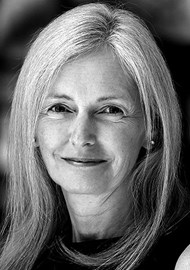
CONTRIBUTOR
Fiona Rowe (Prof)
Institute of Population Health, University of Liverpool, UK.
View Full Profile

