Trainees

Reflections as an international trainee
I had the privilege of undertaking two glaucoma fellowships in the UK – first at the St Paul’s Eye Unit in Liverpool (2022–23), followed by a second year at Moorfields Eye Hospital in London (2023–24). Many of my seniors had...

Preparing to start as a consultant
I was just coming to the end of a fantastic glaucoma fellowship at Moorfields, during which Samad Ansari had been a colleague and friend, and soon to start as a consultant in Oxford where Rebecca Turner is Clinical Director, and...

Postgraduate training for ophthalmic practitioners
The UK currently spends £25 billion per year on ocular disease, and there is expected to be a 40% increase in those affected by visual impairment by 2050 [1]. To manage this demand, 82% of ophthalmology units across the UK...

Eyes on Rwanda: Lessons from an international ophthalmology experience
On the 26 February 2025, I travelled to Rwanda on the invitation of a former Belfast trainee, Michael Mikhail. Michael is now one of only two vitreoretinal (VR) surgeons in Rwanda, a country with a population of 14 million. Born...

Obtaining US clinical experience in ophthalmology as a UK medical student or junior doctor
Medical students or junior doctors in the UK may be interested in gaining US clinical experience for many reasons. Unfortunately, many trainees do not know how to arrange these and there is a common misconception that it is difficult to...

How to pass FRCOphth Part 1 on the first attempt
Studying for this exam makes one wonder how there is so much to know about such a small organ. The FRCOphth Part 1 examination is notorious for its low pass rate, with only 20–40% of candidates succeeding at each sitting....
Innovation update: key advances in eyecare transformation in the last year
Vishal Shah and his co-authors reflect on examples of innovation in eyecare delivery published in the last year and the implications for the future of eyecare services. The “new normal” is an overused phrase to describe extraordinary measures that have...
“Beware of the pigment”
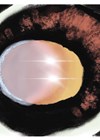
Using some captivating artwork, Iheukwumere Duru describes key features of pigment dispersion syndrome. Pigmentary dispersion syndrome (PDS) leads to pigmentary glaucoma (PG) in approximately 35-50% of patients with the condition [1]. PG is the leading cause of non-traumatic blindness in...

How I overcame the hurdle that is the FRCOphth Part 1
The FRCOphth Part 1 is one of the most difficult exams in ophthalmology training, with an exam pass rate of 39.6% over the last 12 months (compared to 60.8% for FRCOphth Part 2 oral [60.8%] and written [68.7%]). Stack the...

Technology in ophthalmology – a promising future and what we need to know about the regulations
Undoubtedly, ophthalmology is one of the greatest sources of inspiration for technological progress in medicine. Thus far, we have seen remarkable advancements in the technology used by ophthalmologists across all subspecialties. From simplifying common procedures, to treating previously incurable conditions,...

A closed angle seldom comes alone
Case report An 89-year-old lady with dementia was referred to me out of hours by her GP with a few days history of an angry looking left eye for suspected elevated intraocular pressure (IOP). I discovered that this lady first...
Training on the go
In this guide, we aim to provide trainees with novel ideas to maximise learning in the workplace to make the most of your working hours and balance the multiple demands on your time. They say time flies; and it really...