
You searched for "rare"
Orbis Launches #MyEyeStory Campaign with Industry Leaders to Inspire Action and Expand Eye Care for Children
International eyecare charity Orbis is dedicated to ensuring no one loses their sight simply because of where they live. During the recent World Sight Day, Orbis partnered with Babiators, Bausch & Lomb, Corza Medical, and Hoya Vision Care, to expand...SightCare Awards shortlist announced
SightCare, the UK’s leading provider of business and networking services to independent optometrists and opticians, is excited to announce the shortlisted entries to our prestigious awards, celebrating excellence in the independent optical sector. Now in their fifth successful year, the...New report calls for national funding to expand life-changing eye care technology
Optometry Scotland warns of “postcode lottery” Optometry Scotland (OS), the representative body for optical professionals, has published a landmark report calling for the full integration of an early diagnostic tool in primary eyecare across Scotland. Ocular Coherence Tomography (OCT) is...VISION 2020 LINKS Programme: Reviewing the first ten years and announcing the new diabetic retinopathy initiative
The VISION 2020 LINKS Programme celebrates its 10th anniversary next month. Over the past decade it has achieved its objective of building capacity for eye care in developing countries, particularly in Africa, by establishing long-term training partnerships between institutions, known...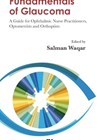
Fundamentals of Glaucoma: A guide for Ophthalmic Nurse Practitioners, Optometrists and Orthoptists
As multidisciplinary teams continue to develop and evolve, there is a growing demand for accessible literature in glaucoma. This handbook gives a useful overview of classification in glaucoma, examination techniques and investigations, treatments and providing a holistic approach to patient...
Anything new in the control of myopia progression?
This is a review article looking at up to date concepts and evidence in myopia control from current literature and studies. The authors identified that myopia control is best measured in absolute change in axial length as opposed to refraction...


