
You searched for "consent"
A day in the life of...an ophthalmic imager / an orthoptic assistant
The ophthalmic imager My role as an ophthalmic / medical photographer has evolved, dramatically, since I began my career at Manchester Royal Eye Hospital, 30 years ago. Long gone are the days of developing and hand printing fluorescein angiograms in...Ultrasound biomicroscopy (part 2): primary angle closure
Patients with primary angle closure or primary angle closure glaucoma [PAC(G)] comprise a significant subgroup affecting around 10% of glaucoma patients amongst Caucasians. Assessment of the patient with angle closure, or narrow angles, requires gonioscopy. However, whilst identifying the presence...Human factors in the operating room
The importance of minimising human error in surgery is well established. This was initially sparked by lessons learned from the aviation industry in the 1970s after several fatal flight accidents [1]. This became a catalyst for a movement on training...Unique exhibition conveys experience of visual impairment
The exhibition ‘Windows of the Soul’, part of the Bloomsbury Festival in London, has been pioneered by a combination of young scientists, clinicians and artists, some of whom are visually impaired themselves.Introducing: the Glaucoma Field Defect Classifier
For patients with advanced glaucoma, there are no treatments to reverse severe sight impairment (blindness). Support in the community is essential but requires a certificate of visual impairment (CVI) signed by a consultant ophthalmologist. The criteria for certification are ambiguous...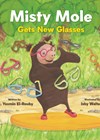
Misty Mole Gets New Glasses
Misty Mole Gets New Glasses is an illustrated children’s book written by doctor Dr Yasmin El Rouby and illustrated by Ishy Walters. Together, they’ve managed to craft a beautifully written short story that highlights what it’s like moving through life...
Transfected RPE cells inhibit AMD in rats
Age-related macular degeneration (AMD) is a leading cause of blindness in the elderly. Wet AMD is characterised by choroidal neovascularisation, new vessels into the retina, leading to leakage and tissue damage. Many proangiogenic factors particularly vascular endothelial growth factor (VEGF)...Thinking outside the box – adapting to the COVID-19 lockdown
How can we avoid further delays to follow-up in glaucoma patients? The author asks if there is a socially distanced way to check IOPs in those at high risk of losing vision. Glaucoma is an asymptomatic condition. Loss of the...The Case of Dr Bawa-Garba – Do we truly have a ‘no blame’ culture?
Eye News’ medico-legal specialist shares his thoughts on the recent acquittal of Dr Bawa-Garba. On 13 August 2018 the Court of Appeal ruled that Dr Hadiza Bawa-Garba should be reinstated on the UK medical register. The Court of Appeal rejected...BOLD Optical Fair // The Hottest show of the year
The September edition of Bold Optical Fair, the optical event for the Netherlands (and neighboring regions such as Flanders and North Rhine Westphalia, among others), turned out to be the hottest show of the year.


