You searched for "presentation"
In conversation with Robert Henderson
Revolutionary eye treatments offer hope for children facing blindness from CLN2 batten disease. Robert Henderson discusses this, and his use of Heidelberg Engineering’s Spectralis device to better combat it. Pioneering research from Great Ormond Street Hospital (GOSH) and the University...
SS-OCT assessment of ITC after phacoemulsification
This is a multicentre randomised controlled trial of 22 patients with primary angle closure glaucoma with peripheral anterior synechia and peripheral primary angle closure glaucoma (PACG) with peripheral anterior synechia (PAS) detected by indentation gonioscopy was randomised into two groups....CALL TO ACTION: Ophthalmology on Myanmar / Thailand border: do you have any redundant kit?
In 1990, the late Doctor Frank Green, a consultant ophthalmologist in Aberdeen, along with Doctor Phillip Ambler, a GP with ophthalmic training, responded to an invitation to provide ophthalmic care for Karen refugees on the northern and eastern Myanmar borders....Advances in cataract surgery
This article covers recent clinical findings in mydriasis and anaesthesia for cataract surgery, shared by Sathish Srinivasan and Keith Davey at a surgical meeting in Manchester. Towards dropless cataract surgery Day case cataract surgery is the standard of care in...World Ophthalmology Congress goes virtual
The World Ophthalmology Congress (WOC2020) has decided to make its June meeting virtual, to provide "an opportunity to come together, collaborate and share the latest advancements in eye care".Conference report: SORD: Student Ophthalmology Review Day 2024
The Student Ophthalmology Review Day (SORD), now in its fifth year, was hosted at the Royal College of Ophthalmology at their esteemed London location, and two identical sessions were run on 11 and 12 December 2024. Designed for medical students...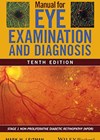
Manual for Eye Examination and Diagnosis (Tenth Edition)
This is a single author published manual which aims to equip the novice reader with a short, yet comprehensive introduction to ocular examination and diagnosis. This book has a substantial history, having been first published 48 years ago, and is...