You searched for "fusion"
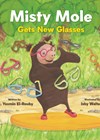
Misty Mole Gets New Glasses
Misty Mole Gets New Glasses is an illustrated children’s book written by doctor Dr Yasmin El Rouby and illustrated by Ishy Walters. Together, they’ve managed to craft a beautifully written short story that highlights what it’s like moving through life...Saving sight and changing lives: working with Syrian refugees in Jordan
Two ophthalmologists from the Emory Eye Center share their three-year experience of treating refugees in the camps in Jordan. Jordan currently hosts an estimated 1.4 million Syrian people who have fled the war in their home country. Cataract & Cornea...
Outcomes of ‘treat and extend’ for neovascular AMD
The authors report on 24-month outcomes of anti-vascular endothelial growth factor (anti-VEGF) therapy using a ‘treat and extend’ regime for treatment-naïve neovascular age-related macular degeneration (nAMD). Data for this study was collected from the Fight Retinal Blindness observational registry based...
Case series of posterior scleritis
This report aimed to facilitate the correct diagnosis of posterior scleritis, a condition which is usually overlooked or misdiagnosed. Electronic health records of 31 patients with posterior scleritis were analysed and compared to a group with isolated anterior scleritis of...
Sutureless 27-gauge needle intrascleral intraocular lens implantation
The authors report on a prospective, non-comparative, interventional case series of patients undergoing sutureless intrascleral fixation of a posterior chamber three piece intraocular lens (IOL) using a 27-gauge needle for docking. Sutureless techniques have the advantage of not having complex...
Changes in refractive error in patients with accommodative esotropia after being weaned from hyperopic correction
This is a retrospective review of medical records of 47 patients with refractive ocular accommodative esotropia who achieved emmetropisation and orthotropia without hyperopic glasses correction and were followed up for at least three years. The objective of the study is...
Cataract surgery in patients with retinitis pigmentosa
Retinitis pigmentosa (RP) is the commonest inherited cause of retinal degeneration. Posterior subcapsular cataract (PSC) develops in 41% to 90% of these patients by age 40 years. In this retrospective study, the authors have evaluated surgical outcomes in patients with...
Cataract surgery in patients with Vogt-Koyanagi-Harada
This retrospective, interventional case series of 286 patients (408 eyes) assessed visual outcome and prognostic factors in patients with Vogt-Koyanagi-Harada (VKH) undergoing cataract surgery between September 2008 and December 2017. Two groups were reviewed. The first group (352 eyes) had...
Effect of cataract surgery on inflammation control and vision in uveitis patients
This retrospective longitudinal study from Moorfields, London, UK compared uveitis recurrence rates and vision loss in 309 eyes of uveitis patients post cataract surgery to 300 control uveitis patients. Cataract is a common complication associated with uveitis and leads to...
Corneal crosslinking in pellucid marginal degeneration
Fourteen studies were included in this first review examining the use of corneal-crosslinking (CXL) to treat pellucid marginal degeneration (PMD). PMD is a bilateral, non-inflammatory corneal thinning disorder characterised by inferior peripheral corneal thinning 1-3mm from the limbus in the...
Silicone oil in rhegmatogenous retinal detachment
Silicone oil (SO), used in complicated retinal detachments, is associated with complications such as cataract, increased intraocular pressure (IOP), keratopathy, cystoid macular oedema (CMO), epiretinal membrane (ERM) and loss of vision. Emulsification of oil can also lead to migration of...