You searched for "surgical"
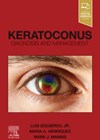
Keratoconus: Diagnosis and Management
From the history of keratoconus to its diagnosis and management, this book covers everything. Don’t be fooled by thinking keratoconus is a simple disease like I did; this book is dense, and packed with information. The book is divided into...
Risk factors for intraoperative floppy iris syndrome
Intraoperative floppy iris syndrome (IFIS) is charcterised by flaccid iris stroma leading to fluttering and billowing of iris, tendency of iris to prolapse through surgical incisions and causing intraoperative pupil constriction. IFIS is characterised as complete when all three features...
Better outcomes from early repair of Type B blow-out fractures
This paper examines whether early, rather than late, surgical repair results in better motility outcomes for a particular subgroup of orbital floor blowout fractures. The authors divide floor fractures into Types A and B, depending on whether or not the...
Are single IOP measurements adequate for estimating the effect of IOP lowering interventions?
The World Glaucoma Association recommends that, to assess the effect on intraocular pressure (IOP) of medication or surgery, the mean of multiple measurements of postoperative IOP is a better reflection of IOP than a single measurement of postoperative IOP. The...
Task shifting for eye care in Eastern Africa
More than eight million people suffer with trichiasis due to trachoma globally, but less than 160,000 receive surgery per year even though “S” is a key aspect of the elimination of blindness due to trachoma as part of the WHO...
Oculofacial plastic surgery – is antibiotic prophylaxis required?
This is a randomised, controlled, unmasked clinical trial evaluating whether topical antibiotic prophylaxis reduces the rate of infection after oculofacial plastic surgery compared to a non-antibiotic ointment. A total of 401 participants over the age of 18 were recruited, with...
Prism adaptation test in acquired non-accommodative esotropia
This study investigated factors related to the increase in prism adapted angle in patients with acquired non-accommodative comitant esotropia (ANAET) who had strabismus surgery based on the results of a short prism adaptation test (PAT) and evaluated their outcomes. Short...