
You searched for " cornea"
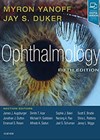
Ophthalmology
The textbook is a large, single volume that ideally needs to be desk or table-supported, as its sheer weight makes it virtually impossible to rest comfortably on ones lap. The book is compiled by its two lead authors and editors...
5-FU vs. Avastin as adjunct to conjunctival autograft
The authors compare the outcome of pterygium treatment using 5-fluorouracil as an adjunct to free conjunctival autograft versus bevacizumab (Avastin) as an adjunct to free conjunctival autograft, via a randomised controlled prospective study. Seventy eyes of 70 patients were included...Cambridge Ophthalmological Symposium 2024: Evolution and the Eye
by Anushka Irodi, Y5 Medical Student, University of Cambridge, UK. The 52nd Cambridge Ophthalmological Symposium, a renowned two-day national meeting, took place on September 5th and 6th, 2024 at St John’s College, Cambridge, UK. It brought together international leading minds...Glaucoma patients can monitor and treat their own IOP!
Simerdip Kaur takes a look at the latest ophthalmology-related stories in the news. Headline: Glaucoma patients can monitor and treat their own IOP! It is well known that poorly controlled intraocular pressure (IOP) is a leading risk factor for glaucoma...Embryology in clinical practice
The fascinating world of embryology is both beautiful and practical. It is a home video of our evolutionary history through the ages from the single cell through to the life aquatic, the development of gut, limbs and brain, and most...
Conventional vs. accelerated cross-linking
The Dresden protocol of 3mW/cm2 irradiance for 30 minutes has been extensively studied and has shown advantageous clinical and topographical results. However, this protocol is time-consuming and therefore accelerated CXL using higher irradiance to shorten treatment duration has emerged. The...
Cytotoxic effect of voriconazole on human corneal epithelial cells
Voriconazole is a second-generation synthetic derivative of fluconazole with broadened antifungal spectrum. It is becoming the drug of choice for fungal keratitis. Voriconazole eye drops are not available commercially, thus have to be prepared by diluting the intravenous formulation containing...
Liquid adhesive bandage for clear corneal cataract incisions
This paper reports a prospective randomised controlled trial of patients undergoing routine phacoemulsification with a 2.75mm clear corneal incision and followed up for 14 days postoperatively. They evaluated wound edge closure, surgically induced astigmatism and foreign body sensation after use...
Surgical outcomes after trauma-induced cataract extraction
This study evaluated outcomes in children aged less than eight years with corneal laceration and traumatic cataract who had cataract extraction one to eight weeks after primary corneal wound repair. This was a retrospective study of 47 eyes of 47...
Risk factors for visual impairment in facial nerve palsy
Facial nerve palsy (FNP) is known to be associated with corneal exposure due to the nature of the condition, but how many of those will go on to develop severe visual impairment (SVI)? This study investigates the risk factors associated...


