
You searched for "educational"
Latest NHS plan to modernise primary care misses an opportunity
Government announces drive to digitise GP phonelines and offer greater options in patient access to care in dentistry and pharmacy, but does not capitalise on opportunities to improve patient experiences closer to home or address IT connectivity issues holding back optometry services.College of Optometrists urges public to wear their glasses for night driving
As the clocks go back into Greenwich Mean Time, and the nights draw in, experts at The College of Optometrists are urging those drivers who have been advised to wear glasses while driving, to don their spectacles before getting behind the wheel.Booster accelerates EU-funded projects results to create tangible impact
META Group is proud to announce that Booster has been renewed for another four years, with additional and customised services. Funded by the European Commission’s Directorate-General for Research and Innovation (DG RTD) and led by META Group, Booster offers a...Primary eyecare backs the government’s three key shifts in NHS care and calls for urgent implementation in Phase One of the 10 Year Plan
ABDO, The College of Optometrists and FODO strongly back the government’s three big shifts for the NHS in England: Hospital to community Analogue to digital Sickness to prevention. These go to the heart of what primary eye care is about...Minister for equalities backs Sight Scotland’s push to break down accessibility barriers in Scottish venues
Equalities Minister Kaukab Stewart recently met with Sight Scotland’s Policy Group to discuss the importance of improving access and inclusion in Scotland’s venues. She stressed that everyone should have the freedom to enjoy life and visit places of their choice,...Patients “didn’t realise they had choice in receiving care,” finds new report on patient choice in elective eyecare
The current system of elective care is struggling to inform patients of their rights to choose healthcare providers and procedures, and offering little information or support when decisions need to be made, according to a new report. The report, Patient...How the other half live – ophthalmology training around the world
Ophthalmology speciality training is currently seven years in the UK without an additional fellowship. UK trainees are privileged to have a training programme that is held in high esteem across the world, but did you ever wonder what other trainees...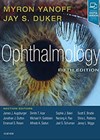
Ophthalmology
The textbook is a large, single volume that ideally needs to be desk or table-supported, as its sheer weight makes it virtually impossible to rest comfortably on ones lap. The book is compiled by its two lead authors and editors...
The Retina Illustrated
I’ve always liked googling authors of the textbooks we get sent rather than relying on the very obviously bias blurb about them presented in the book. When I got Retina Illustrated I have to admit I was pretty excited to...
Protecting retinal ganglion cells
Glaucoma is considered to be a heterogeneous group of conditions giving retinal ganglion cells (RGC) damage. Lowering intraocular pressure (IOP) reduces the risk of progressive RGC loss in glaucoma. Regeneration of the optic nerve has been shown to restore some...


