

Ophthalmology

Corneal confocal microscopy: A window into peripheral nerve health
This article has been verified for CPD. Click the button below to answer a few short questions and download a form to be included in your CPD folder. Corneal confocal microscopy (CCM) is an advanced, non-invasive imaging technique that has...

Ophthalmic imaging in children
Ophthalmic imaging has in recent years become an integral part of the diagnosis and monitoring of patients. There is now a wide range of instruments available for imaging children and assisting in the provision of detailed clinical information for the...

Paediatric optic disc anomalies
Anomalies of the optic nerve are relatively rare, but account for a significant proportion of sight impairment in children and adults. The recognition of these anomalies by eye health professionals is important not only due to their potential impact on...

Addressing diabetes-related complications in Tanzania and Eswatini: A comprehensive approach to eye and foot screening
Diabetes is rising globally, particularly in low- to middle-income countries (LMICs), where healthcare systems are under resourced [1,2]. Among its complications, diabetic retinopathy (DR) and diabetic foot disease are preventable yet frequently overlooked [3-6]. These problems often develop together due...

The founder of modern ophthalmology: Sir William Stewart Duke-Elder
A recent article in Eye News by Blaikie & King highlighted the extraordinary contribution made to the profession of ophthalmology by Sir William Stewart Duke-Elder. The author felt it appropriate to take a further in-depth look at the remarkable career...

Introducing the Royal College of Nursing Ophthalmic Nursing Forum
The Royal College of Nursing (RCN) represents nurses and nursing. While the terms ‘nurses’ and ‘nursing’ are used generically, membership is inclusive of a variety of clinical roles, including midwives, advanced nurse practitioners, advanced clinical practitioners, nurse consultants, registered nursing...

Planes, trams, and auditoriums: Beware predatory conferencing
Predatory open-access journals and predatory conferences are considered the two main areas of predatory infiltration in academic medicine that are of growing concern [1–7]. Unsolicited publishing requests from potentially predatory publishers occur frequently among faculty in ophthalmology [8]. Predatory conferencing...

See sweet to C-suite: Peter Holland
See also - See sweet to C-suite: Imran Rahman In this three-part conversation series, Co-editor David Lockington speaks with highly influential individuals about their journey to the top, with advice for the next generation of leaders. Part One: David speaks...
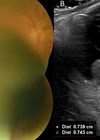
Uveal melanoma
Uveal melanoma is the most common primary intraocular tumour. However, they are still rare, with an incidence of 2-8 per million [1]. The presence of a choroidal naevus is a risk factor for uveal melanoma [1]. Patients with choroidal lesions...
Neonatal hypoxic ischaemic encephalopathy with imaging abnormalities in the occipital lobe – how to counsel the parents
Case A baby boy, with a background of intrauterine growth restriction, was born at 37 weeks and three days gestation via forceps delivery. The baby was born in poor condition, with low heart rate, poor respiratory rate, poor colour and...
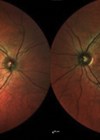
Possible COVID-19 related maculopathy
COVID-19 is being investigated as a potential cause for various ocular diseases, with growing evidence of related retinal vascular changes, that vary from isolated cotton wool spots and retinal haemorrhages to retinal vascular occlusions [1.2]. COVID-related macular affection has also...
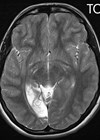
Unexpected diagnoses – stroke in children and homonymous hemianopia
We present the case of a 12-year-old child presenting with a few days history of left-sided visual loss. Upon further investigation with magnetic resonance imaging (MRI) she was unexpectedly diagnosed with a right-sided chronic posterior cerebral arterial territory infarct, causing...


