You searched for "lashes"

Laser pointer maculopathy
The objective of this study was to describe the potential clinical presentations of retinal pathology resulting from exposure to laser pointers. The study included eight eyes of seven patients. Mean age was 18.7 years (12-36). Most were accidental self-inflicted while...Envision Glasses – A different take on a sight impairment wearable (part 2)
This is the second part of the review of the Envision Glasses (see Part 1 here), a wearable piece of assistive technology. Features From the main menu four feature modes can be chosen: Read, Identify, Find and Call. The Glasses...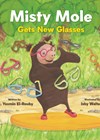
Misty Mole Gets New Glasses
Misty Mole Gets New Glasses is an illustrated children’s book written by doctor Dr Yasmin El Rouby and illustrated by Ishy Walters. Together, they’ve managed to craft a beautifully written short story that highlights what it’s like moving through life...
Self refracting – child’s play?
Uncorrected refractive error was the leading cause of vision impairment in the world in 2010. Although refractive error may be safely and effectively corrected with spectacles, lack of well-trained refractionists in settings of limited resources may be a major barrier....
Changes in refractive error in patients with accommodative esotropia after being weaned from hyperopic correction
This is a retrospective review of medical records of 47 patients with refractive ocular accommodative esotropia who achieved emmetropisation and orthotropia without hyperopic glasses correction and were followed up for at least three years. The objective of the study is...Through the bubble: A patient’s perspective on macula hole surgery pre- and postoperatively
The evolution of ophthalmic surgical practice over the past seven decades has been extraordinary. Within this period, the first vitrectomy was performed, establishing a foundation for what is now an operation performed thousands of times per year in the UK...Optical practices to continue to provide urgent and essential care
The UK Government has now published further guidance clarifying that opticians are exempt from the general requirement for retail businesses and premises to close. Optical practices may therefore continue to provide urgent and essential eye care to the extent that they can, including remote care, while managing COVID-19 risk to keep patients, staff and the public as safe as possible.Cricket fan Tony credits NHS cataract surgery with improving his mental health as well as his sight
Tony, 65, could see the ball at Trent Bridge match ‘for the first time in years’ and says ‘everything’ in life has improved, after cataract removal at SpaMedica.Sustainability in eyecare: Intraocular gases and the climate emergency
In 2020 the NHS became the first national health system to commit to delivering ‘net zero’ carbon emissions by 2040. The author investigates how the impact of ophthalmic surgery can be reduced. Medical gases have been used in ophthalmic surgery...
Silicone oil migration presenting as an eyelid cyst
The author presents a single case report of a rare complication of silicone oil tamponade, silicone oil migration, after pars plana vitrectomy. A seven-year-old female, with a history of vitrectomy one year prior for penetrating eye trauma, presented with a...
Femto-DMEK – a solution for high re-bubbling rates?
This retrospective study examined results of patients that underwent femtosecond laser enabled descemet membrane endothelial keratoplasty (DMEK) (FE-DMEK) and manual DMEK (M-DMEK) for Fuch’s endothelial dystrophy. In FE-DMEK femtosecond laser was used to create 8.25mm descemetorhexis, whereas during M-DMEK- descemetorhexis...