You searched for "nystagmus"

Genetic cause for idiopathic foveal hypoplasia
The authors present a small cohort study of 19 patients with idiopathic foveal hypoplasia diagnosed based on optical coherence tomography (OCT) features. Peripheral blood samples from all 19 patients underwent next-generation sequencing and 33 genes known to be involved in...
Morning glory syndrome associated with PHPV
This is a retrospective review of the medical records of 85 eyes / 74 patients diagnosed as morning glory syndrome (MGS) in the clinic between November 2009 and November 2012. Twenty two eyes of 19 patients diagnosed as having MGS...
Outcomes of early versus late surgery for infantile esotropia
The authors aimed to provide a better understanding of the clinical spectrum of infantile esotropia by comparing motor and sensory results in the long-term follow-up of patients who underwent surgery. This was a retrospective review over a 17-year period. There...
Comparing bimedial rectus recession and botulinum toxin for partially accommodative esotropia
The authors present a retrospective case review to compare bimedial rectus recession and botulinum toxin injection to the medial recti. This study was possible due to the different first-line preferences of the individual surgeons within the team. Inclusion criteria were...
Effects of ML4 on the eye
Mucolipidosis type IV (ML4) is an autosomal recessive lysosomal storage disease and is caused by variants of the MC0LN1 gene. It often presents in young individuals with eye and ocular adnexa issues. The authors present a case report and literature...
How common are ocular disorders in the first 12-months of life?
The authors present a retrospective case review of all children aged under one year of age diagnosed with an ocular disorder over a 10-year period. The aim of the study was to describe incidence and types of ocular disorder in...
Features and associations of CVI in Australian children
The authors report the findings of an audit of data from the Australian Childhood Vision Impairment Register (ACVIR) of 132 Australian children with a primary diagnosis of cerebral visual impairment (CVI). All children were living in Australia, 49% female, 51%...
Recommendation for wide angle fluorescein angiography to diagnose FEVR in NEDSDV
Neurodevelopmental disorder with spastic diplegia and visual defects (NEDSDV) is a genetic disease described in 2012 associated with variants in the CTNNB1 gene which encodes beta-catenin. Characteristics include strabismus, reduced visual acuity and familial exudative retinopathy (FEVR). In this study,...Unravelling ocular motility
Ocular motility can often be a slightly abstract concept during the earlier years of ophthalmology training. A large variance on what embodies normality; mythical concepts like fusion and binocular vision, examination techniques that can be fiddly, and complex neuroanatomy all...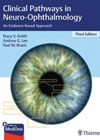
Clinical Pathways in Neuro-Ophthalmology: An evidence based approach (Third edition)
This is a fairly comprehensive textbook with 20 chapters covering the most common neuro-ophthalmic problems you are likely to encounter in clinical practice. The chapters each comprise several sections, the titles of which are often phrased as questions the reader...
Corneal keloid: Report of natural history and Outcome of Surgical Management in Two Cases
Corneal keloids are rare and typically reported following trauma (including post-surgical) and has been reported without any trauma or previous surgery. A corneal keloid differs from a hypertrophied scar in that it occurs months/years after the injury, enlarges over time...