
You searched for "Climate"
Caring for adults with an ocular tumour
Detection If you screen for an intraocular tumour, dilate the pupil. If the patient is driving, use phenylephrine only. If the patient declines, document this in the casenotes. Don’t forget to look for sentinel vessels, which would indicate a ciliary...Towards virtual reality conferences?
COVID-19 is forcing us to reconsider every aspect of life. The authors ask what future ophthalmic meetings could look like. The coronavirus disease COVID-19 pandemic disrupted ophthalmic conferences resulting in the cancellation of the majority of meetings in 2020, e.g....Congratulations to the SOC poster prize winners!
The Scottish Ophthalmological Club (SOC) recently hosted another excellent webinar on the theme ‘Post COVID – The Best of Times and The Worst of Times'.BCLA to stage its first in-person Presidential Address since pandemic
The new President of the BCLA will highlight the “fears and opportunities” in the contact lens industry as part of the first face-to-face address to members in four years.Conference report: SORD: Student Ophthalmology Review Day 2024
The Student Ophthalmology Review Day (SORD), now in its fifth year, was hosted at the Royal College of Ophthalmology at their esteemed London location, and two identical sessions were run on 11 and 12 December 2024. Designed for medical students...
Gonioscopy: A Video Assisted Skill Transfer Approach
Gonioscopy is a critical part of the eye examination, a challenging technique to learn and although drawings and photographs are helpful, videos that demonstrate the technique and findings are particularly valuable. Interpretation beyond merely identifying whether there is a closed...
Developments in Ophthalmology: Ophthalmic Radiation Therapy Techniques and Applications
Radiation was discovered by Wilhelm Roentgen in 1895, and since then has been used to treat a variety of cancers. Its therapeutic properties have been widely used for ocular and periocular tumours and inflammatory disease, but the present era is...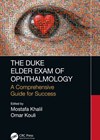
The Duke Elder Exam of Ophthalmology: A Comprehensive Guide for Success
The Duke Elder Exam is an annual competitive national undergraduate exam organised by the Royal College of Ophthalmologists. This two-hour exam consists of 90 multiple-choice questions (MCQs) and examines clinical ophthalmology, ocular physiology, anatomy, pathology, genetics and socio-economic medicine related...
Ophthalmology Made Easy
Ophthalmology Made Easy by Michelle Attzs and Twishaa Sheth is a concise yet comprehensive guide that delivers essential ophthalmic knowledge in a digestible format. This book stands out for its accessibility and clarity, making it an invaluable resource for medical...
Clinical Techniques in Ophthalmology
Ophthalmology is a highly specialised field with complex equipment often unfamiliar to medical students and foundation doctors due to limited exposure during training. Clinical Techniques in Ophthalmology is a 300-page handbook divided into six sections: Basic Clinical Optics, Ophthalmic Equipment,...
Self refracting – child’s play?
Uncorrected refractive error was the leading cause of vision impairment in the world in 2010. Although refractive error may be safely and effectively corrected with spectacles, lack of well-trained refractionists in settings of limited resources may be a major barrier....


