
You searched for "IoL"
“Beware of the pigment”
Using some captivating artwork, Iheukwumere Duru describes key features of pigment dispersion syndrome. Pigmentary dispersion syndrome (PDS) leads to pigmentary glaucoma (PG) in approximately 35-50% of patients with the condition [1]. PG is the leading cause of non-traumatic blindness in...Glaucoma: 30 years on
Back in 1993, the late and great Barry Cullen FRCS (Cavan born, Dublin trained), the first editor of Eye News, asked me to write an article about the current treatment of chronic open angle glaucoma (COAG). At the time I...
Protecting retinal ganglion cells
Glaucoma is considered to be a heterogeneous group of conditions giving retinal ganglion cells (RGC) damage. Lowering intraocular pressure (IOP) reduces the risk of progressive RGC loss in glaucoma. Regeneration of the optic nerve has been shown to restore some...
25-gauge PPV for retained lens fragments
This was a retrospective study including 40 eyes of 40 patients with mean age of 78 years, 19 females and 21 males, who underwent 25-gauge pars plana vitrectomy (PPV) for retained lens fragments with a minimum of six months of...Retinal arteriovenous malformation
A 24-year-old Caucasian girl reported to the eye clinic with the complaint of painless decreased vision in her right eye. She had no history of infectious disease, trauma, systemic malignancy or other systemic complaint. Her best corrected visual acuity was...Chemical injury
You are the on-call ophthalmologist. You receive a call from A&E regarding a 45-year-old man who sustained a chemical injury. He was mixing some cement, when a small amount entered his left eye. He was not wearing any protective goggles....Another plant-based remedy for the eye?
Simerdip Kaur takes a look at the latest ophthalmology-related news stories and asks which are based on facts and which are ‘fake news’. Headline: Another plant-based remedy for the eye? What do the nicknames Mary Jane, tea, and 420 all...Bovine pericardium scleral patch graft associated scleritis: Ahmed valve implant for pupillary block glaucoma
Processed bovine pericardium is a lyophilised collagen sheet used as a surgical armamentarium. It renders the material antigenically inert with minimal inflammation [1]. Sclera patch pericardium graft (Tutopatch) is a collagenous membrane derived from solvent preserved, irradiated bovine pericardium [2]...Vision on the line: Managing orbital trauma in a 30-year-old surgeon after a football injury
Blunt orbital trauma is a common consequence of sports injuries. Although retrobulbar haemorrhage is frequently associated with orbital compartment syndrome (OCS), the severity of clinical signs can outweigh imaging findings. Early recognition and intervention, such as lateral canthotomy and cantholysis...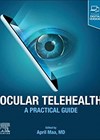
Ocular Telehealth: A Practical Guide, 1st Edition
Ocular Telehealth: A Practical Guide is in its first edition, which is great considering the recent adjustments to practical medical delivery that the COVID-19 pandemic has mandated. Overall, this book is well written in a structured format defining the uses...
Intravitreal bevacizumab vs. triamcinolone in patients with DMO at the time of cataract surgery
This prospective, single masked randomised control trial (RCT) compared visual and anatomical outcomes when either intravitreal bevacizumab (BVB) or triamcinolone (TA) was administered at the time of cataract surgery and at subsequent review, if required, in patients with diabetic macula...


