You searched for "optical"
Reflections on a research course in London
The Research Changes Lives course is one of very few courses designed specifically for research within ophthalmology and remains a popular choice amongst researchers in the UK. Delivered by ophthalmologists, statisticians and epidemiologists, it provides a broad and diverse perspective....The screening and treatment of retinopathy of prematurity
A male child is born at 31 weeks and requires 100% oxygen supplementation with intensive care. What would be the ophthalmic management of this child? In the first instance, it will be useful to know the screening criteria and protocol....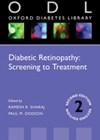
Oxford Diabetes Library – Diabetic Retinopathy: Screening to Treatment (second edition)
This book encapsulates what working in diabetic eye disease is all about: the multidisciplinary team. It takes you through the patient pathway, from screening to grading to management of diabetes, as well as management of eye disease, dealing with all...
ANGPTL-4 inhibition reduces inflammation in diabetic retinopathy
Diabetic retinopathy (DR) is the most common cause of blindness in working-age humans, and numbers are rising due to increased cases of type 2 diabetes (T2D). T2D is associated with increased obesity and dyslipidaemia, which is a major risk factor...
Intravitreal functional plasminogen in branch retinal vein occlusion
Branch retinal vein occlusion (BRVO) is the second most common vascular disorder of the eye. Intravitreal injections of anti-VEGF agents and corticosteroids have proven efficacy. Posterior vitreous cortex (PVC) adhesion has been shown to support the development of retinal vein...
Akimba mice, a model of human diabetic retinopathy
Diabetic retinopathy (DR) is a major complication of diabetes and a growing problem as the systemic disease becomes more prevalent. DR develops insidiously from an asymptomatic form through to vascular damage that leads to oedema and breakdown of the blood-retinal...
Complement Factor H and Factor H-Like protein are expressed in human RPE cells
The role of inflammation in age-related macular degeneration (AMD) is well documented and the association of AMD with the inflammatory marker C-reactive protein (CRP) and members of the complement system underline the role of complements in AMD. Human complement factor...
Non-accidental retinal haemorrhages
The authors sought to determine whether the presence of retinal haemorrhages (RH) correlated positively to individuals who confessed to shaking (group a) compared to those who did not confess but were identified as the likely perpetrators (group b) and cases...
Vitrectomy in retinal detachment associated with choroidal detachment
Hypotony, posterior retinal breaks, longer axial lengths and total retinal detachments (RD) are risk factors for development of RD associated with choroidal detachment (RRDCD). This study retrospectively analysed the anatomic outcomes and prognostic factors of vitrectomy in 175 patients with...
Congenital aniridia with or without retinal detachment
The authors present the clinical and molecular genetic evaluations performed on a large Iranian pedigree with 26 aniridia affected patients in four generations and some with retinal detachment. Members of the family affected with aniridia were invited to participate after...
Can the angle of origin of the ophthalmic artery predict embolic trajectory?
A retrospective, comparative case-control study was used to test the hypothesis that a risk factor for retinal versus cerebral infarct is the angular origin of the ophthalmic artery from the internal carotid artery. The study compared one group (n=28) who...