You searched for "optical"
CHEC expands transformative MIGS service
CHEC, a community healthcare provider delivering specialist ophthalmology services on behalf of the NHS, has announced the expansion of its minimally invasive glaucoma surgery (MIGS) service. MIGS is an innovative approach combining glaucoma treatment with cataract surgery, utilising advanced techniques...
Experiences of patients and their families and the impact of Leber hereditary optic neuropathy
The authors present a qualitative study which aimed to explore the impact of Leber hereditary optic neuropathy (LHON) from diagnosis to present day on both patients and their families. Individuals with LHON and their families were purposively sampled from four...Moorfields cataract, medical retina and disc assessment
The Cataract/medical retina/ disc assessment short course has been designed to meet the training needs of band 6’s and 7s who wish to develop their knowledge and skills in disease recognition, management and intervention of cataract, medical retina and disc...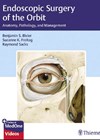
Endoscopic Surgery of the Orbit: Anatomy, Pathology, and Management
Endoscopic surgery still remains a challenge for many oculoplastic surgeons, whose main scope of work has traditionally been open surgery. The learning curve for endoscopic surgery is quite steep and this approach requires skills that needs to be well trained,...Light in darkness – manual small incision cataract surgery in India
Cataract has been documented to be the most significant cause of bilateral blindness in India, where vision <20/200 in the better eye on presentation is defined as blindness [1,2]. Estimation of blindness in India by the World Health Organization (WHO)...Virtual reality for the ophthalmic trainee
If you believe the tech blogs 2015 is the year of virtual reality. Industry experts believe this will be due to the potential commercial release of the poster boy of this new revolution, the Oculus Rift. This is a headset...Matt Stringer, RNIB’s Chief Executive Officer commented on the fifth anniversary of start of the Covid-19 pandemic
The UK was woefully ill-prepared for the Covid-19 pandemic, and indeed any type of pandemic, with regards to the rights and needs of blind and partially sighted people. This anniversary still demonstrates that critical lessons need to be learned to...Matt Stringer, RNIB’s Chief Executive Officer commented on the fifth anniversary of start of the Covid-19 pandemic (1)
“The UK was woefully ill-prepared for the Covid-19 pandemic, and indeed any type of pandemic, with regards to the rights and needs of blind and partially sighted people. This anniversary still demonstrates that critical lessons need to be learned to...
Cost-effectiveness framework discussion for vision screening
The authors present a discussion paper on hypothetical, but representative, examples of post-referral costs that may result from different screening options up to the point of discharge from specific services. Data was taken from a recent (2019) systematic review (with...
Ocular characteristics in Marfan syndrome
Marfan syndrome (MFS) is a genetic disorder with clinical manifestations associated with cardiovascular, ocular and skeletal organ systems. Typical signs are descending aortic root aneurysms, ectopia lentis, tall stature and scoliosis. This observational study looked at the ocular characteristics, visual...