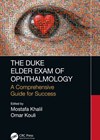
The Duke Elder Exam is an annual competitive national undergraduate exam organised by the Royal College of Ophthalmologists. This two-hour exam consists of 90 multiple-choice questions (MCQs) and examines clinical ophthalmology, ocular physiology, anatomy, pathology, genetics and socio-economic medicine related...
5 October 2020
| Ronnie Mooney, Roderick Williams, Fiona Henriquez (Prof)
|
EYE - Cornea, EYE - General
The global increase in Acanthamoeba keratitis infections has emphasised the inefficiencies of current treatment and preventative methods, here researchers from the West of Scotland detail a promising new series of compounds that may stem the tide. News headlines detailing horror...
Welcome one and all to our festive Eye News Dec/Jan 2024. The arrow of time has flown through 2023, landing us at the year’s end, but not before Santa brings you this special delivery. Aside from the partying and generally...
My six-week elective in ophthalmology at Westmead Hospital in Sydney offered much more than technical mastery; it challenged my assumptions about patient care, teaching and the role of curiosity in medicine. Though my passion for eyes was ignited by my...
“In the midst of tragedy, we start the comedy” – Agatha Christie, The ABC Murders. Throughout a career in medicine, we are often faced with tragedy. One of the coping mechanisms is to use humour to navigate the mini everyday...
A multilingual, voice-enabled chatbot helps patients access retinal detachment advice through personalised, real-time, clinically grounded conversations. From hospital leaflets to spoken answers in dozens of languages, new research from the University of East London (UEL) suggests artificial intelligence could dramatically...
Ocular tumours can vary widely in origin, from benign growths to metastases from distant disseminated malignancies. Although rare, ocular tumours pose a significant health and economic burden globally, with ocular cancers accounting for 0.2% of all diagnosed malignancies in the...
A 21-year-old girl presented to her general practitioner (GP) with a three-month history of headaches, becoming more frequent and associated intermittent vomiting that did not improve with simple analgesics. There was a strong family history of migraines. She was initially...
Blinding eye disease in children can lead to a lifetime of dependence and non-productivity for the person afflicted. Sometimes a relatively simple condition such as a refractive error can lead to irreversible disability that could, if caught in time, have...
Red eye, or hyperaemia, is one of the most common presentations to primary care [1] and the emergency department [2]. However, despite this the underlying cause is often misdiagnosed which can lead to severe, sight-threatening conditions being missed [1]. Thorough...
Introduction In this article I will try to summarise some of the definitions, tests and assessments performed in the strabismus clinic to assess patient binocular potential. This is a key feature of strabismus assessment, especially in adults, and it will...
Ischaemic optic neuropathy (ION) is the commonest adult optic neuropathy encountered today in our ageing population, is a common cause of irreversible visual loss and is usually associated with underlying vascular disease. The condition is classified as follows: (a) Anterior...