

Ophthalmology
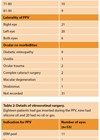
Does vitrectomy increase the risk of glaucoma? A retrospective review from a UK hospital
The authors investigate what proportion of patients undergoing pars plana vitrectomy subsequently developed ocular hypertension or a diagnosis of glaucoma. A systematic review carried out in 2017 including seven studies found that there is evidence that pars plana vitrectomy (PPV)...
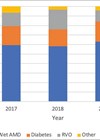
Safety and efficacy of a nurse-led intravitreal injection service using an Precivia® injection assist device
Nurse-led intravitreal injections have become of great importance for busy eye units. In this article, the authors present safety data from five years of a nurse-led service with the use of the Precivia® intravitreal injection assist device. Intravitreal injections of...
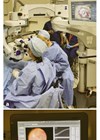
Gene therapy for inherited retinal disease: the Manchester Ocular Gene Therapy Group MDT service
The authors describe the process set up in Manchester for the optimum delivery and assessment of a new gene therapy treatment for patients with RPE65 IRD. Inherited retinal dystrophies (IRDs) are the second commonest cause of severe visual impairment in...
My top five Instagram accounts to keep your scrolling educational
There’s no denying that now, more than ever, we are better connected to our electronic devices; 24/7, around the clock. The phenomenon of ‘Zoom’ and ‘Microsoft Teams’ is shaping the future of medical education, national trainee recruitment and conference access....

Sustainability in eyecare: Intraocular gases and the climate emergency
In 2020 the NHS became the first national health system to commit to delivering ‘net zero’ carbon emissions by 2040. The author investigates how the impact of ophthalmic surgery can be reduced. Medical gases have been used in ophthalmic surgery...
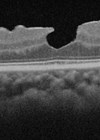
A new observation point: updating the nomenclature and classification with OCT
The evolution of ophthalmic imaging technologies has been particularly rapid over the last few years. The author provides an update of the current terms for common signs and pathologies observed using optical coherence tomography. My experience as an ophthalmic technician,...
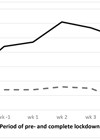
Do patient demographics influence AMD clinic attendance during COVID-19 lockdown?
The authors assess the impact of the COVID-19 pandemic on adherence to scheduled clinic appointments among age-related macular degeneration patients in a clinic in North Wales. The COVID-19 pandemic has significantly affected the population, affecting economic and social wellbeing, whilst...

The ocular manifestations of COVID-19: an overview of current literature
Although respiratory symptoms are the most frequent manifestation of COVID-19, multi-organ involvement has been demonstrated, including ocular manifestations. The author investigates how the eye can be affected. The SARS-CoV-2 virus responsible for the COVID-19 pandemic has presented a significant public...
The implementation of postoperative day 1 vitrectomy telephone follow-up consultations
In this pre-COVID-19 study, the authors argue that some follow-up consultations can be done by telephone without compromising patient safety. Thirty years ago, a study by Isernhagen et al. [1] found that 52% of patients required some form of unexpected...

Gemini Untwined: treating craniopagus conjoined twins
The authors discuss the successful separation of craniopagus conjoined twins at Great Ormond Street Hospital and the role of the ophthalmologist in such cases. Craniopagus conjoined twins are extraordinarily rare, occurring in only one in 2.5 million births and representing...
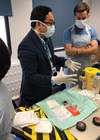
Celebrating eight years of the nurse-led intravitreal injection service
Moorfields Eye Hospital NHS Foundation Trust in London celebrated the eighth year of its nurse-led intravitreal (IVT) injection service in 2020. In collaboration with Beaver-Visitec International (BVI), Moorfields’ comprehensive one-day course for non-medical staff has blossomed into a thriving success....
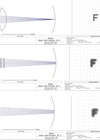
A missed intraocular telescope – an opportunity to re-focus the evidence
Intraocular telescopes allow magnification of the image so that it would be projected into a larger area of the macula, this makes the central defect caused by dry age-related macular degeneration (AMD) smaller. The most common approach is a Galilean...


