

Ophthalmology

Planes, trams, and auditoriums: Beware predatory conferencing
Predatory open-access journals and predatory conferences are considered the two main areas of predatory infiltration in academic medicine that are of growing concern [1–7]. Unsolicited publishing requests from potentially predatory publishers occur frequently among faculty in ophthalmology [8]. Predatory conferencing...

See sweet to C-suite: Peter Holland
See also - See sweet to C-suite: Imran Rahman In this three-part conversation series, Co-editor David Lockington speaks with highly influential individuals about their journey to the top, with advice for the next generation of leaders. Part One: David speaks...
Strabismus and ocular motility, demystified
I am a former orthoptist, now trained in medicine and working as a foundation doctor. In my previous work, I was frequently approached by ophthalmology trainees eager for guidance with strabismus and ocular motility. Drawing on my clinical experience, I...

The work of BIPOSA
The British and Irish Paediatric Ophthalmology and Strabismus Association (BIPOSA) was set up in 2008 to merge two streams of ophthalmology, namely the practice of paediatric ophthalmology and the practice of strabismus (to include refracting in children, and strabismus in...
Retinoblastoma – the challenges of a rare cancer and the role of international partnerships
Introduction: the global challenge The global burden of retinoblastoma (Rb) is one in 15,000-18,000 live births, which equates to 8000 new cases worldwide each year. The global disparities in Rb outcome represent a paradigm of health inequality worldwide [1]. In...
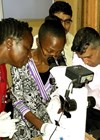
The ROP Network: a south-south collaboration to improve care for premature babies
Retinopathy of prematurity (ROP) is a disorder of the immature preterm retina and a leading cause of preventable, irreversible blindness in children. There are 15 million preterm births annually, and over 32,000 neonates became blind from ROP in 2010 [1]....
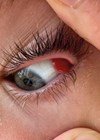
Implications of missed foreign bodies under the upper eyelid
Children aren’t the best historians. As a result, clinicians sometimes rely on the accounts of parents regarding problems. Missed foreign bodies due to poor histories or incomplete examinations may result in irreversible loss of vision. This case report shines light...
Gene therapy for inherited retinal disease: the Manchester Ocular Gene Therapy Group MDT service
The authors describe the process set up in Manchester for the optimum delivery and assessment of a new gene therapy treatment for patients with RPE65 IRD. Inherited retinal dystrophies (IRDs) are the second commonest cause of severe visual impairment in...

My work experience with Great Ormond Street Hospital Young Persons’ Advisory Group for Research
For my school work experience I had the amazing opportunity to attend and work with the Great Ormond Street Hospital (GOSH) Young Persons’ Advisory Group for research (YPAG) (Figure 1). The GOSH YPAG is a group of young people aged...

The Leicester Grading System for Foveal Hypoplasia
The University of Leicester Ulverscroft Eye Unit have published the first medical grading system named after the city of Leicester. Infantile nystagmus is characterised by constant and involuntary eye movements and affects 24 per 10,000 people [1]. Onset is usually...

Paediatric ptosis
Manoj Parulekar and colleagues provide a comprehensive overview of the diagnosis, assessment and management of childhood ptosis. Blepharoptosis (commonly referred to as ptosis – Greek, πτῶσις, ‘to fall’) is a condition where the upper eyelid is in an abnormally low...

The past and the future for paediatric ophthalmology
The past 25 years have seen remarkable advances in clinical eye care for children in the UK. This has led to both improved outcomes and better patient and family experiences. There have been substantial changes to patient pathways, major advances...


