

Ophthalmology
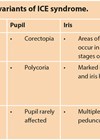
Irido-corneal endothelial syndrome: an overview
Irido-corneal endothelial (ICE) syndrome is a rare group of eye related disorders that constitute three different clinical entities: Chandler syndrome (CS), essential / progressive iris atrophy and iris naevus / Cogan-Reese syndrome. ICE syndrome is sporadic in its presentation as...
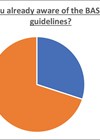
Headache: the clue is in the eyes
A worrying cause of headache is raised intracranial pressure (ICP). Papilloedema is a vital clue for accurate diagnosis and performing fundoscopy is essential in detecting this sign. The authors review the use of fundoscopy in their own district general hospital....

My work experience with Great Ormond Street Hospital Young Persons’ Advisory Group for Research
For my school work experience I had the amazing opportunity to attend and work with the Great Ormond Street Hospital (GOSH) Young Persons’ Advisory Group for research (YPAG) (Figure 1). The GOSH YPAG is a group of young people aged...
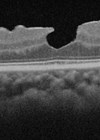
A new observation point: updating the nomenclature and classification with OCT
The evolution of ophthalmic imaging technologies has been particularly rapid over the last few years. The author provides an update of the current terms for common signs and pathologies observed using optical coherence tomography. My experience as an ophthalmic technician,...

Gemini Untwined: treating craniopagus conjoined twins
The authors discuss the successful separation of craniopagus conjoined twins at Great Ormond Street Hospital and the role of the ophthalmologist in such cases. Craniopagus conjoined twins are extraordinarily rare, occurring in only one in 2.5 million births and representing...
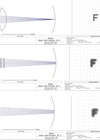
A missed intraocular telescope – an opportunity to re-focus the evidence
Intraocular telescopes allow magnification of the image so that it would be projected into a larger area of the macula, this makes the central defect caused by dry age-related macular degeneration (AMD) smaller. The most common approach is a Galilean...
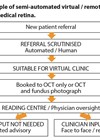
Telemedicine strategies in ophthalmology: harnessing established and emerging technologies for lasting solutions
The author considers recent progress and shares insights from leading practitioners in telemedicine applications and digital technology strategies. Amidst COVID-19 and combined mitigation and suppression measures, hospitals and clinics have responded rapidly to strengthen telemedicine strategies and virtual healthcare services...

Hot debates in medical retina and imaging: Perspectives from the Controversies in Ophthalmology 2020 virtual conference
Controversies in medical retina and imaging were debated during the Controversies in Ophthalmology 2020 virtual conference held during two mid-day scientific sessions on 27 and 28 March 2020. The author recounts key perspectives and presents viewpoint recommendations from the Vision...
Coming to terms with AI
A machine might be called intelligent if its response to questions could convince a person that it was human, a test proposed by Alan Turing in 1950 [1]. The author considers potential applications of artificial intelligence (AI) using machine learning...

Clinical relevance of the anatomic classification of neovascular age-related macular degeneration
The author explains why an OCT-based classification of neovascular AMD is needed and how these neovascular subtypes may help to predict patients’ long-term visual outcome. Age-related macular degeneration (AMD) is a chronic and progressive neurodegenerative process involving the macula in...

25 years of OCT
David Huang first described optical coherence tomography (OCT) in 1991, in his seminal paper on the subject in Science. This method developed the work of others on ophthalmic interferometry, which essentially showed that measuring reflected light could be used to...

High quality retinal image grading and management service by the NetwORC UK
In 2004 a network of three ophthalmic reading centres in Belfast, London and Liverpool (known as NetwORC UK) was established to form the largest reading centre in Europe for the purpose of providing high quality grading of ophthalmic images for...


