Retinoblastoma (Rb), a rare childhood eye cancer, presents a particularly compelling example of how global health partnerships can operate at the intersection of different medical disciplines, in this case: ophthalmology, oncology and public health.
This article places the work of the Retinoblastoma Network (Rb-NET) within a broader and evolving global policy context: the World Health Organization’s (WHO) Global Initiative for Childhood Cancer (CureAll) and the recent WHO-endorsed resolution reaffirming global commitment to childhood cancer care.
The WHO Global Initiative for Childhood Cancer and retinoblastoma
CureAll aims to achieve at least 60% survival for childhood cancer globally by 2030, saving one million additional lives. Retinoblastoma has been selected as one of six tracer cancers to guide implementation of the initiative because it exemplifies an integrated approach linking community awareness, early diagnosis, referral systems and specialist care. With five-year survival rates of up to 96% when treated appropriately, Rb demonstrates what is achievable through timely detection and effective treatment.
The disease presents with characteristic early signs, including leukocoria (a white pupillary reflex) and strabismus and, in more advanced stages, orbital mass or proptosis. These features can be recognised by parents, community health workers and primary care providers. Accordingly, the CureAll framework explicitly identifies Rb detection as a primary care-level activity, alongside health promotion and education. This recognition is crucial, as most children with cancer first present to local facilities, and delays at this stage have profound consequences for survival and vision.
CureAll outlines a tiered system of care. Primary care providers are responsible for awareness, screening and early detection. Secondary-level facilities provide routine diagnostic services, including basic imaging. Tertiary centres deliver specialised care for intraocular and extraocular Rb, while the most complex cases, such as bilateral disease or those requiring advanced multimodal treatment, demand highly specialised services. The framework also highlights the need for investment in specialist ophthalmology services, explicitly recognising oncology ophthalmology as a surgical subspecialty essential to scaling up childhood cancer care.
Central to this approach is the training of primary healthcare teams to recognise early signs and symptoms, coupled with efficient referral mechanisms linking community facilities to centres of excellence. Without these system-level components, even highly effective treatments cannot achieve their potential impact.
Global Rb-NET: building capacity through collaboration
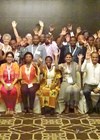
Rb-NET, based at the International Centre for Eye Health (ICEH), London School of Hygiene & Tropical Medicine (LSHTM), is a clinical, research and capacity strengthening network that directly addresses many of the challenges highlighted by CureAll. Rb-NET currently provides support to approximately 450 specialists in around 40 low- and middle-income countries (LMICs), predominantly in Africa and Asia. Much of this input is delivered through online training, mentoring and regular multidisciplinary team (MDT) meetings, during which complex Rb cases are discussed and management strategies adapted to local contexts.
In several countries, including Uganda, Tanzania, Kenya, Malawi, Nigeria and Indonesia, and more recently Pakistan and Afghanistan, Rb-NET has provided more intensive support. This has included direct clinical training visits and wider engagement with health systems development, referral pathways and workforce training. The overarching aim of Rb-NET is to save lives, preserve eyes and vision, and ensure that affected children and their families are treated with care and compassion.
Crucially, Rb-NET functions not as a parallel system, but as a capacity strengthening network, reinforcing local services. In doing so, it exemplifies CureAll’s emphasis on building centres of excellence that are embedded within national health systems and linked through regional and global collaboration.
Evidence generation and the Global Retinoblastoma Research Collaboration
An important extension of Rb-NET’s work is its contribution to the global evidence base. The Global Retinoblastoma Research Collaboration, led by ICEH/LSHTM and arising directly from the Rb-NET, enabled recruitment of over half of the world’s new Rb cases in 2017, with follow-up over three years. Results published in The Lancet Global Health demonstrated stark global inequities: survival approaching 100% in high-income countries, compared with just over 50% in low-income settings [1].
In addition to this landmark analysis, the collaboration has produced 15 further peer-reviewed publications based on the first cohort. A new prospective cohort (2024–2027) is now underway, designed to inform the WHO Childhood Cancer Initiative directly. To date, nearly 6000 children (approximately 75% of all new global Rb cases in 2024) have been enrolled and analysis of their presentation is underway. Data collection includes detailed information on changes in treatment protocols and national public health campaigns aimed at improving early detection and reducing delays in presentation.
Key questions being addressed include whether progress has been made towards earlier presentation, which strategies have been most effective, and whether improvements in early diagnosis or in tertiary-level treatment facilities have had the greatest impact on outcomes. This emphasis on monitoring and evaluation aligns directly with one of CureAll’s four strategic pillars.
Despite progress in awareness and early detection, a significant proportion of children in low-income settings still present with advanced disease, including extra-ocular extension towards or into the brain. Appropriate management of these children remains a major global knowledge gap. The planned TopCAT trial, a collaboration between LSHTM and partners in Tanzania, aims to address this by comparing a proposed new chemotherapy combination (topotecan administered intravenously and intrathecally, alongside cyclophosphamide) with the current standard regimen of etoposide, vincristine and carboplatin. This trial exemplifies the type of context-appropriate research required to improve outcomes for the most vulnerable children.
Rb-NET within the CureAll framework
The CureAll framework is built on four strategic pillars: (1) increasing access through centres of excellence and care networks; (2) integrating childhood cancer into universal health coverage; (3) optimising treatment regimens and service quality; and (4) establishing robust evaluation and monitoring systems. Rb-NET contributes directly to at least three of these pillars, particularly through capacity building, networking and evidence generation.
Recent global policy developments further strengthen this alignment. A newly endorsed WHO resolution on childhood cancer has reaffirmed international commitment to CureAll’s goals, providing political momentum and legitimacy to ongoing clinical and research efforts [2]. Such resolutions help ensure that childhood cancers like Rb remain visible within national health agendas and funding priorities.
In this context, Rb-NET represents more than a clinical support initiative; it is a practical implementation platform for CureAll, translating global policy into tangible improvements in diagnosis, treatment and survival.
In the following sections, we present selected clinical case studies discussed within Rb-NET MDT meetings. These cases illustrate how global frameworks, collaborative networks and local clinical teams come together in practice, and how the principles of CureAll are being applied to improve outcomes for children with Rb worldwide.

Figure 1: Fundus left eye, circle highlighting the suspicious fluffy white lesion with enplaque yellowish background.
Unilateral exudative mass in a nine-year-old boy
Presenting team: University of Child Health Sciences and Children’s Hospital, Lahore, Pakistan
A nine-year-old boy presented for squint surgery with left exotropia and a one-month history of visual decline. Examination revealed poor light projection, a relative afferent pupillary defect, a slightly raised intraocular pressure and a yellowish plaque-like fundal lesion (Figure 1). Ultrasound showed specks of calcification, raising concern for Rb (Figure 2).

Figure 2: B Scan showing speck of calcification.
Participants were asked to select the most likely diagnosis. Despite calcification, further investigations including fluorescein angiography (Figures 3a-d) and optical coherence tomography (OCT) supported a diagnosis of Coats disease, and the child was managed conservatively with peripheral cryotherapy and laser photocoagulation.

Figures 3a–d: Fundus fluorescein angiography highlighting vasculopathy with area of peripheral avascular zone.
Learning points:
- Coats disease remains the leading cause of pseudo-Rb and can rarely show calcified exudate.
- Although Rb is uncommon at nine years of age in high-income settings, older presentation is not rare in some LMICs.
- Diagnostic enucleation was not acceptable to the family, highlighting the importance of context-sensitive decision-making.
- Liquid biopsy may have had a role if negative, but anti-VEGF therapy was unlikely to be beneficial.
This case illustrates CureAll’s emphasis on appropriate diagnosis, avoiding both overtreatment and missed malignancy, while respecting family preferences.

Figure 4: The child at presentation.
Unilateral leukocoria and proptosis in a young child
Presenting team: Meskine Baptist Hospital, Maroua, Cameroon
A 19-month-old girl presented with left leukocoria and proptosis first noted at three months of age. Examination revealed a hyperaemic eye with corneal haze and no fundal view. The only available investigation was ultrasound (Figure 4), which demonstrated vitreous calcification. Lumbar puncture, MRI and CT were either unavailable or unaffordable.

Figure 5: The child in the second year of remission.
Participants were asked to choose the next step. Primary enucleation risked treatment abandonment, while biopsy was unsafe. The agreed approach was neoadjuvant chemotherapy followed by enucleation, balancing oncological control with family acceptability. The child received two cycles of intravenous chemotherapy before enucleation, followed by four further cycles. Histology revealed grade 4 Rb with optic nerve involvement. One year later, the child remained in remission and was successfully fitted with an ocular prosthesis (Figure 5).
Discussion points:
- Management decisions were driven by feasibility, family acceptance and follow-up risk.
- Limited access to investigations remains a major barrier in some settings.
- Six cycles of chemotherapy were considered sufficient to reduce metastatic risk.
- The psychosocial importance of a well-fitted prosthesis was emphasised.
This case exemplifies CureAll’s focus on realistic, system-appropriate care pathways that prioritise survival while maintaining dignity and long-term follow-up. Shared learning across diverse settings Taken together, these cases demonstrate the practical value of Rb-NET MDT discussions in navigating uncertainty, adapting evidence to context and supporting clinicians facing rare but high-stakes decisions. They also illustrate how CureAll’s principles, early recognition, tiered care, multidisciplinary collaboration and continuous learning, are applied across vastly different health systems.
By creating a structured space for shared problem-solving, Rb-NET helps ensure that children with Rb benefit not only from advances in treatment, but from collective global expertise, a critical component in closing the survival gap and delivering on the promise of CureAll.
References
1. The Global Retinoblastoma Study Group. The Global Retinoblastoma Outcome Study: a prospective, cluster-based analysis of 4064 patients from 149 countries. Lancet Glob Health 2022;10(8):e1128–40.
2. https://www.who.int/initiatives/the
-global-initiative-for-childhood-cancer
[All links last accessed February 2026]