So far, we have seen how cataract impacted the works by Monet and Cassatt and witnessed how Degas and O’Keeffe adapted their practices in the face of retinal degeneration. In this final article, we cast an eye over works by Leonardo da Vinci and Rembrandt van Rijn to see what insight they may provide into the artist’s eye conditions.
Leonardo da Vinci (1452–1519)
Leonardo da Vinci was a Renaissance painter, famed for creating The Mona Lisa (1503), whose eyes appear to follow the viewer as they walk across the floor of Le Louvre. However, it is the eyes in da Vinci’s self-portraits that have sparked debate in recent years as they appear to depict one eye deviating to the side [1]. This has raised the question as to whether da Vinci in fact had strabismus.
In a recent study by Tyler, six of da Vinci’s pieces, including two sculptures, two oil paintings and two drawings, were analysed to assess the mean relative alignments of the pupils [1]. This was conducted by fitting circles and ellipses to the pupils, irises and eyelid apertures in the artworks. The findings were consistent with intermittent exotropia.
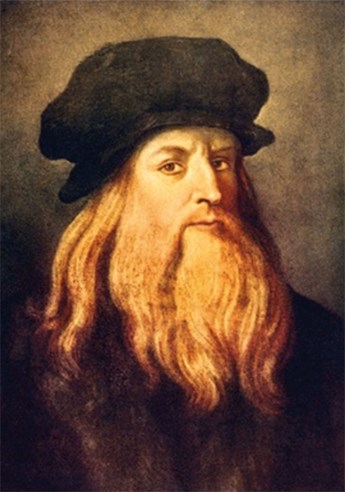
Figure 1: Leonardo da Vinci. (c1505) ‘Self Portrait’.
Image from WikiArt (Public Domain Image).
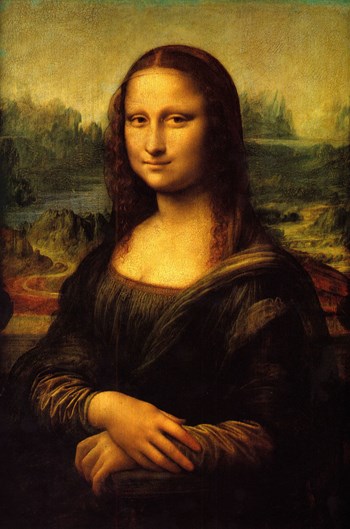
Figure 2: Leonardo da Vinci. (c1503–1519) ‘Mona Lisa’, oil on wood panel.
WikiArt (Public Domain Image).
Strabismus can influence depth perception and in some create two-dimensional monocular vision, a feature that could be artistically advantageous. For instance, many artists shut one eye when examining their subjects as it helps them picture the image as they want it to appear on canvas. Should da Vinci have had intermittent exotropia, he may have been able to switch to monocular vision, perhaps aiding him in translating the three-dimensional world onto a two-dimensional canvas.
Rembrandt van Rijn (1606–1669)
Similarly to da Vinci, the Dutch Baroque painter Rembrandt van Rijn is also thought to have had strabismus. This theory is again due to numerous self-portraits depicting exotropia. The 2004 study by Livingstone, et al. examined the pupil positioning in 24 oil paintings and 12 etchings by Rembrandt [2]. Out of the 36 self-portraits studied, 35 portrayed Rembrandt’s eye as exotropic. Furthermore, the etchings, created by scratching lines into a metal plate before inking it to make a print, produce a reversed image as a result. The deviating eye in the etchings is contralateral to that in the paintings, suggesting Rembrandt had unilateral strabismus.
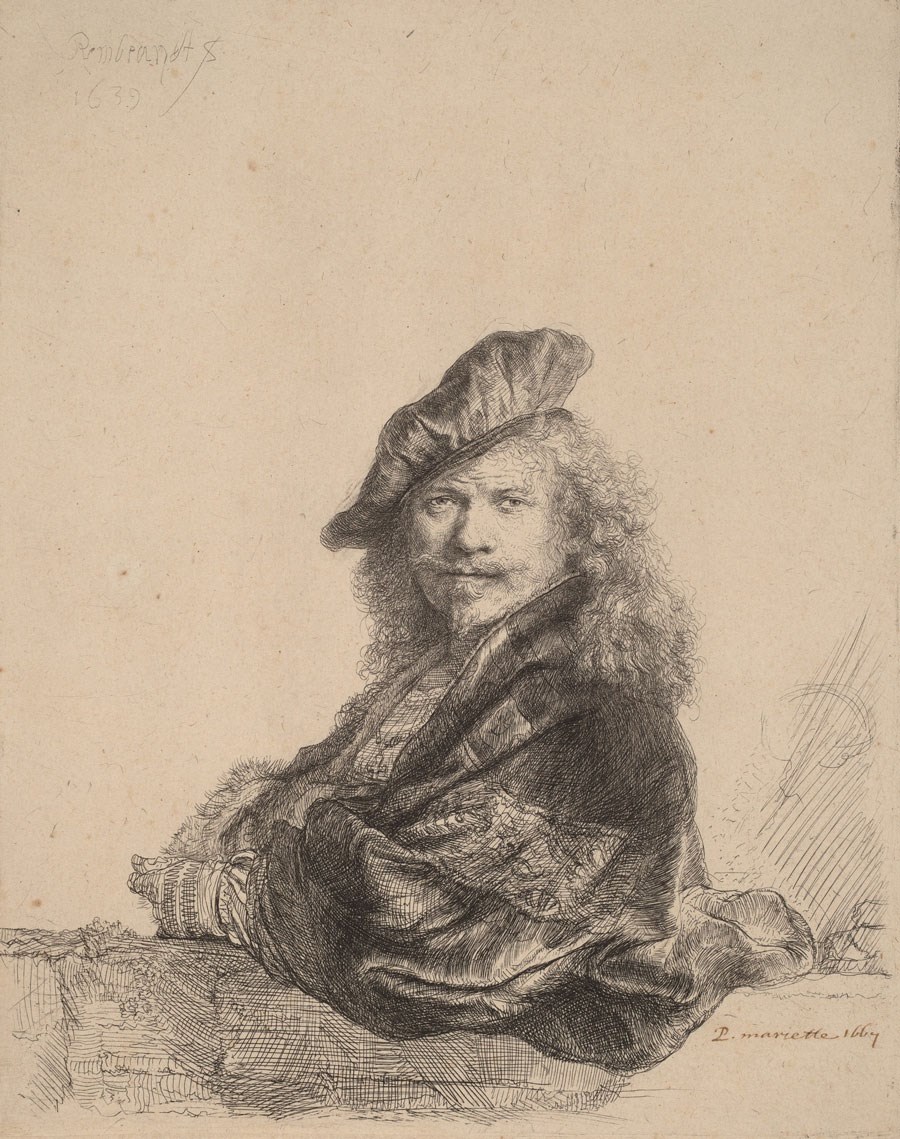
Figure 3: Rembrandt van Rijn. (c1639) ‘Self-Portrait leaning on a Stone Sill’, etching on laid paper.
Courtesy of National Gallery of Art (Public Domain Image).
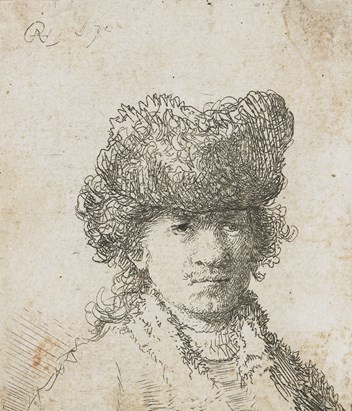
Figure 4: Rembrandt van Rijn. (c1630) ‘Self-portrait in fur cap bust’.
WikiArt (Public Domain Image).
The dominant eye theory
Understandably there is significant difficulty with diagnosing eye conditions of an artist from their paintings dating as far back as the 1400s. Both Rembrandt and da Vinci were both well known in their time, and there is no apparent documentation of either having strabismus, leading us to question the validity of such a diagnosis.
Eye dominance has been suggested by Shakarchi, et al. as an alternative cause for both artists depictions of themselves [3]. When painting a self-portrait, the artist examines their reflection in the mirror, looking at one eye at a time. The eye seeing its own reflection will see the eye staring straight back, while the other eye views the reflection at an angle, making it appear exotropic. Without a dominant eye, most people’s brains learn disregard the misaligned image and see the reflected eye as looking straight. However, those with a dominant eye would see the contralateral eye as exotropic in the mirror. Although for this theory to be supported, the artist would have had to be very close to the mirror, perhaps unrealistically so as Taylor suggests [4].
We will likely never know the answer, so it is slightly irrelevant in this case – perhaps we ought to focus on the impressive artists and their works rather than the alignment of their eyes. However, as shown through this series, art can give us fascinating insights into the experience of visual impairment, one that I would argue makes the pieces more valuable and impressive, demonstrating just how adaptable humans can be.
References
1. Tyler CW. Evidence that Leonardo da Vinci had strabismus. JAMA Ophthalmol 2018;137(1):82–6.
2. Livingstone M, Conway B. Was Rembrandt stereoblind? N Engl J Med 2004;351(12):1264–5.
3. Shakarchi AF, Guyton DL. A geometric analysis of eye dominance suggesting that Rembrandt and Leonardo da Vinci had straight eyes after all. JAMA Ophthalmol 2020;138(1):101–2.
4. Bates S. Why Rembrandt, da Vinci may have painted themselves with skewed eyes. Science News 2019 [Online]:
www.sciencenews.org/article/
why-rembrandt-da-vinci-may-have
-painted-themselves-skewed-eyes
[Link last accessed April 2026]
Declaration of competing interests: None declared.