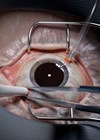
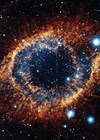
They were all SEEN by one individual who then took their story to the world to witness. He saw them through his eyes and captured them in his camera lens. Through his vision and through their visual interpretations, an extraordinary, beautiful collection of portraits emerged, and this blended exhibition was finally given a name by Joshua Bratt; it was called SEEN.
On the afternoon of 11 September 2025, in the presence of journalists and media figures, I was cordially invited to the private preview of a new insightful portrait series of blind and partially sighted individuals. Walking around the display walls with a sparkling drink in hand, attendees sipped and enjoyed viewing the 22 magnificent prints, each depicting what vision meant to them. This free-to-view exhibition was open to the public and held at Royal National Institute of Blind People (RNIB) Headquarters, The Grimaldi Building between 12–14 September 2025. It was accompanied with Tactile portrait images in Braille books, of all 22 participants.
Browsing through the brochure to accompany the portraits, I saw a record-breaking athlete, fully blind; a theatre maker and a model, both with albinism; a baker cookbook author with sight loss from uveitis; a member of parliament with Stargardt’s disease; a commissioned photographer collaborating with major brands including Apple and Canon with retinitis pigmentosa (RP) type 2 Usher syndrome (a condition that combines blindness with deafness); a graduated farmer from an agricultural college driving racing cars yet with permanent sight loss from glaucoma.
Over in one corner, Joshua was in an interview and listening to what he had to say was empowering. The Welsh photojournalist and portrait photographer, working freelance, has captured everything from campaigns and advertisements to sporting events and celebrities. His expanding list of clients and publications include The Sunday Times, The Washington Post, The Guardian, Adobe, American Express and the NHS.

Jessikah Inaba was born with bilateral microphthalmia and is completely blind. In 2022, she was called to the Bar of England and Wales, becoming the first Black and blind barrister in the country’s history.

Jessikah Inaba explores the tactile image of her photograph.

Maud Rowell lost her sight to a rare degenerative disease called familial exudative vitreoretinopathy (FEVR). She studied Japanese and trained in journalism. Her new book explores adventures in remote Japan after winning the 2021 Holman Prize grant of $25,000. Her short film released this year, ‘Picturing Wonderland’, is about the beauty of blindness with analogue photography.

Dr Nicolas Bonne was born with retinopathy of prematurity. Originally from Australia, he moved to the UK for a career as a professional astronomer. Working at the University of Portsmouth’s Institute of Cosmology and Gravitation as a science communicator, his work involves developing multi-sensory resources to give blind and partially sighted people ways to access the visual elements of astronomy.

Red Szell was diagnosed in his teens and later registered blind with retinitis pigmentosa. As a broadcaster and blind rock climber, in 2013 he became the first blind person to climb the Old Man of Hoy; the tallest sea-stack in the Northern Hemisphere at 450ft high. The feat was captured in a BBC TV documentary and Red’s adventure was published in 2015.

Mr Dot [Clarke] and Joshua Bratt use tactile booklet.

Chris Hunt Skelley was diagnosed with ocular albinism at 19 and became a paralympic champion. As a Tokyo 2020 Gold Medallist, Paris 2024 Bronze Medallist and former World No.1 Judoka, he was honoured with an MBE for services to the community from King Charles.
Fast forward to SEEN – this was a fresh project which took almost two years to create, born from what Joshua recalls as a quiet moment of reflection during his daily commute to work. Repeatedly seeing a blind man with a cane, he revisited his perception of a person with sight loss to a person with a life, career and a story of their own. It became a determination to challenge public perceptions of sight loss, shifting the focus of the blind to their remarkable achievements.
Clarke Reynolds, with a loss of sight from retinitis pigmentosa, is a professional artist based in Portsmouth who uses colour-coded braille as a visual language in contemporary art. He said, “I want people to see blindness not as a deficit, but as a different way of understanding and contributing to the world – one that has value, creativity and professionalism at its heart.”
Eye News caught up with Joshua who was in Spain after the three-day exhibition was over. He said, “I hope that people who explore the images online come away seeing the whole person – not just a guide dog or a cane, but the identity, lived experience and achievements behind them. SEEN was created to challenge assumptions, to shift focus from disability to individuality. I’d like people living without sight disabilities to connect with those that do and realise that there is no difference in what can be achieved or people’s aspirations. We are all the same, all be it living with different challenges. My ambition is that this work continues to spark conversations, to increase visibility, and to honour the amazing achievements of everyone featured.”
SPECIAL THANKS TO
Stephanie O’Grady, Communications Lead, RNIB.
Joshua Bratt, Photographer of SEEN Exhibition.
Click Here to view all featured 22 portraits in SEEN, or if you would like to hire the exhibition.