Reading the Royal College of Ophthalmologists’ (RCOphth) ‘Sustainable Cataract Surgery’ guidance (September 2025) was a pleasant surprise [1]. Many of its recommendations mirror what we have been doing at Kabgayi Eye Unit for years, not because of formal policy, but out of necessity.
Kabgayi is a busy eye referral centre in the Southern Province of Rwanda, seeing up to 300 patients per day. Our cataract service runs daily at high volume with often more than 20 phacoemulsification cases.
Open-plan theatre and perioperative workflow
At Kabgayi, efficiency and safety start well before patients enter theatre. Patients are often scheduled for surgery the day after consultation, and for those seen late in clinic, biometry (A-scan or intraocular lens (IOL) master) and vital signs are performed on the day of surgery by a dedicated team of nurses and ophthalmic clinical officers. Results are verified again before anaesthesia and before surgery.
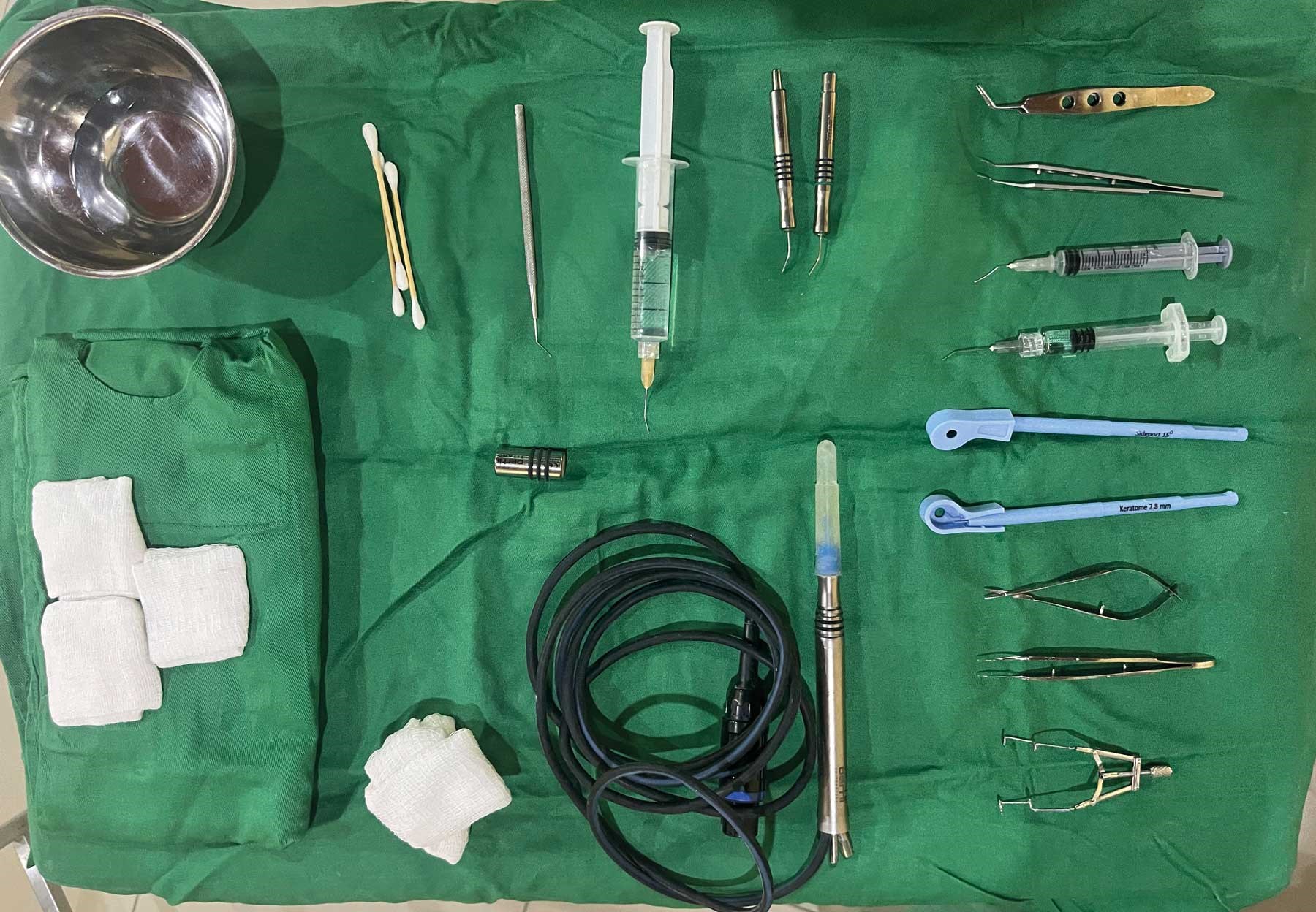
Tray with instruments.
Our theatres are open-plan, with two operating beds side by side. When two surgeons are present, both operate simultaneously. When only one surgeon is available, the workflow remains efficient. As the current patient reaches the end of surgery, the next patient is brought into theatre. The incoming patient is then positioned, and the eye is cleaned and draped while the surgeon finishes the case. Once the surgeon has completed the operation, they change gloves and move straight to the next bed. This one-out, one-in process keeps the list moving safely and efficiently while conserving power and resources.
Bilateral simultaneous surgery with a ‘tweak’
Many of our patients travel long distances and cannot return easily for separate procedures. For this reason, we routinely perform bilateral cataract surgery over two days; the first eye on day one, the second on day two. Although not simultaneous in the strict sense, this approach achieves the same sustainability and efficiency benefits while maintaining safety and patient comfort.
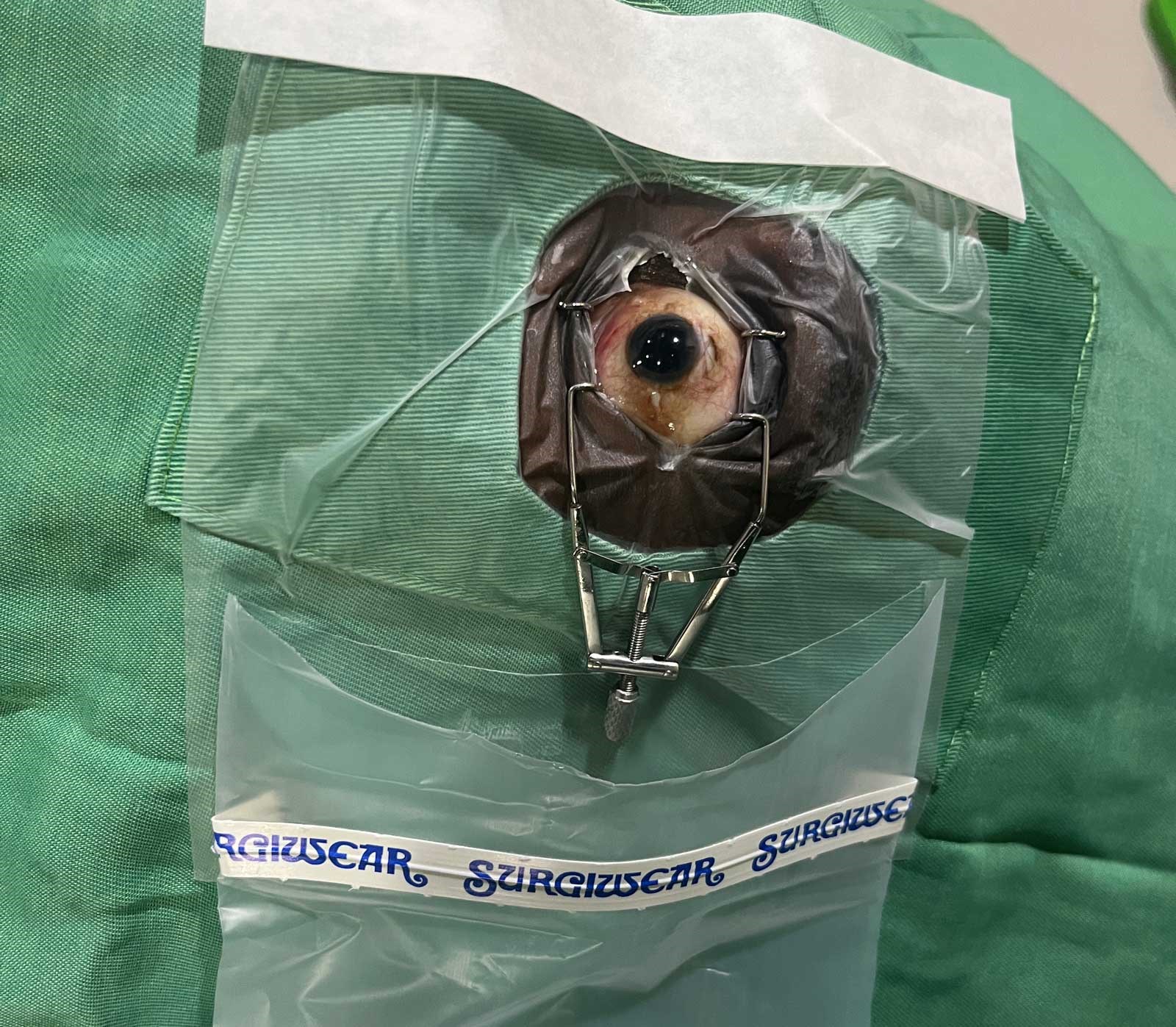
Fabric drape with plastic bag.
Because some of our patients may not cooperate well under topical anaesthesia, we use local anaesthetic blocks (peribulbar or sub-Tenon-like). The RCOphth guidance highlights immediate sequential bilateral cataract surgery as one of the most effective sustainability measures; our modified two-day approach applies this principle in a way that suits our local context.
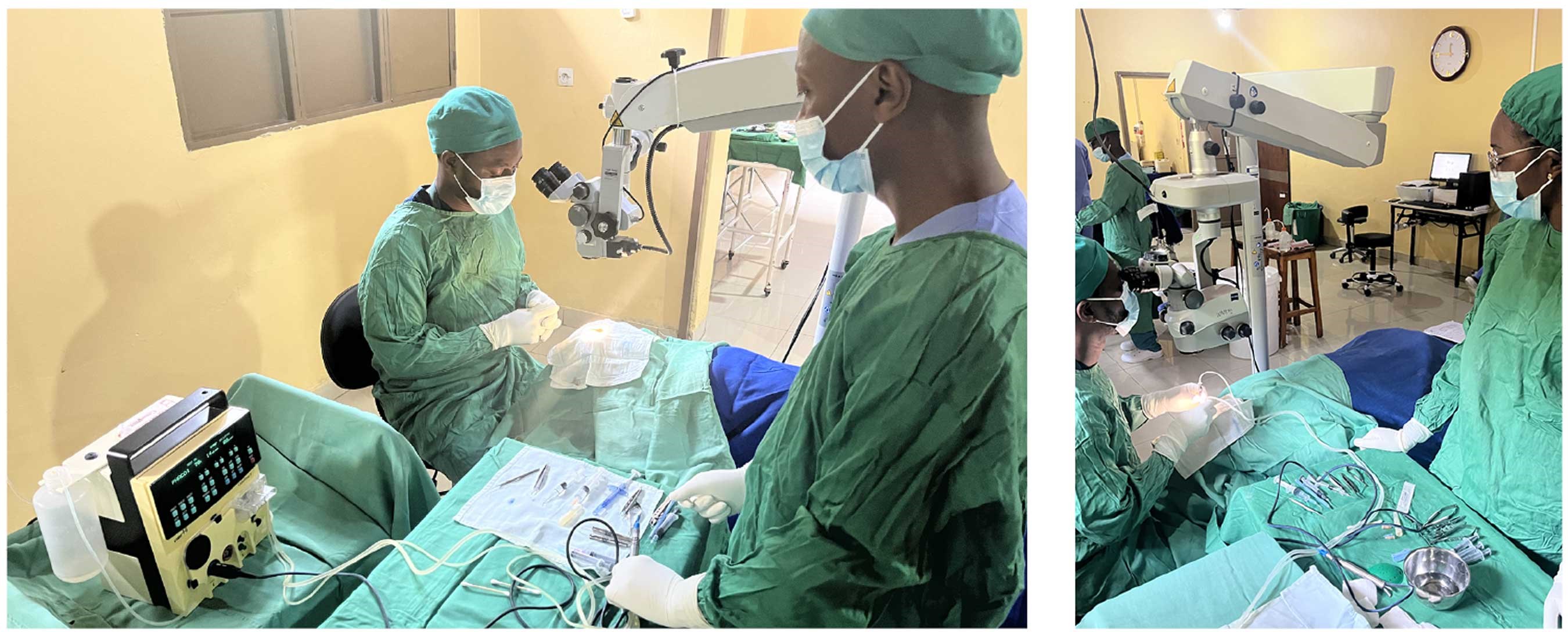
Everything is fabric.
In terms of fabric items, our gowns, drapes, caps and tray covers are made from reusable, breathable cotton fabric. They are washed at high temperature and sterilised after each use. The surgeon uses one gown for the entire surgical session. For draping, a small eye drape with a minimal plastic pouch is used to collect irrigation fluid. The drape fabric is reused after sterilisation.
- Microscope handles: We use reusable rubber handles that are sterilised between cases instead of disposable plastic covers.
- Oxygen: Oxygen is not routinely used under the face drape during surgery.
• Glove changes and hand hygiene: Gloves are changed after every case, and alcohol hand rub is applied between cases. No non-sterile gloves are used. - Instruments: Only essential instruments are laid out: speculum, toothed forceps, scissors, one vial of viscoelastic, keratome, 15-degree blade, cystotome, rhexis forceps, phaco and irrigation/aspiration (I/A) probes, and the IOL. The IOL is inserted under continuous balanced salt solution (BSS) infusion without viscoelastic, saving both time and cost.
- Phaco cassette: We use one phaco cassette for the entire list, similar to the Aravind Eye Hospital model in India, which safely performed over one million cataract surgeries with an endophthalmitis rate of just 0.01% [2]. At Kabgayi, we follow strict infection-control protocols. After every case, the tubing is thoroughly flushed and wiped with alcohol. The phaco cassette itself is reusable and autoclavable, ensuring long-term durability and cost-effectiveness. Importantly, the phaco handpiece, phaco needle, sleeve and I/A probes are changed after every single case.
- BSS: One BSS bottle is used until it runs out. It contains no additives such as adrenaline.
- Intracameral cefuroxime: One vial is reconstituted for the entire day’s list. We add 10ml of saline to the vial, then draw 1ml and dilute it further with 9ml of saline to make a working solution. Each syringe contains 0.2ml for one patient, allowing some excess. The vial covers the entire list and is discarded at the end of the day. One vial can cover over 30 eyes.
- Subconjunctival dexamethasone: Prepared for the number of cases on the list; any excess is discarded.
- Postoperative drops: Each patient receives Tobradex four times daily for two weeks and Pred Forte 1% six times daily for one month, using one bottle for both eyes.
Our infection control record has remained excellent. Since August 2024, we have not encountered any cases of postoperative endophthalmitis.
While our current system demonstrates that safety, efficiency and sustainability can coexist, there is always room to improve. One possible step is stopping routine postoperative antibiotics, as recommended in some high-income settings, though whether this is safe in the African context remains uncertain. Similarly, ‘dropless’ cataract surgery could reduce waste, but African eyes often show stronger postoperative inflammation, so this may not be suitable.
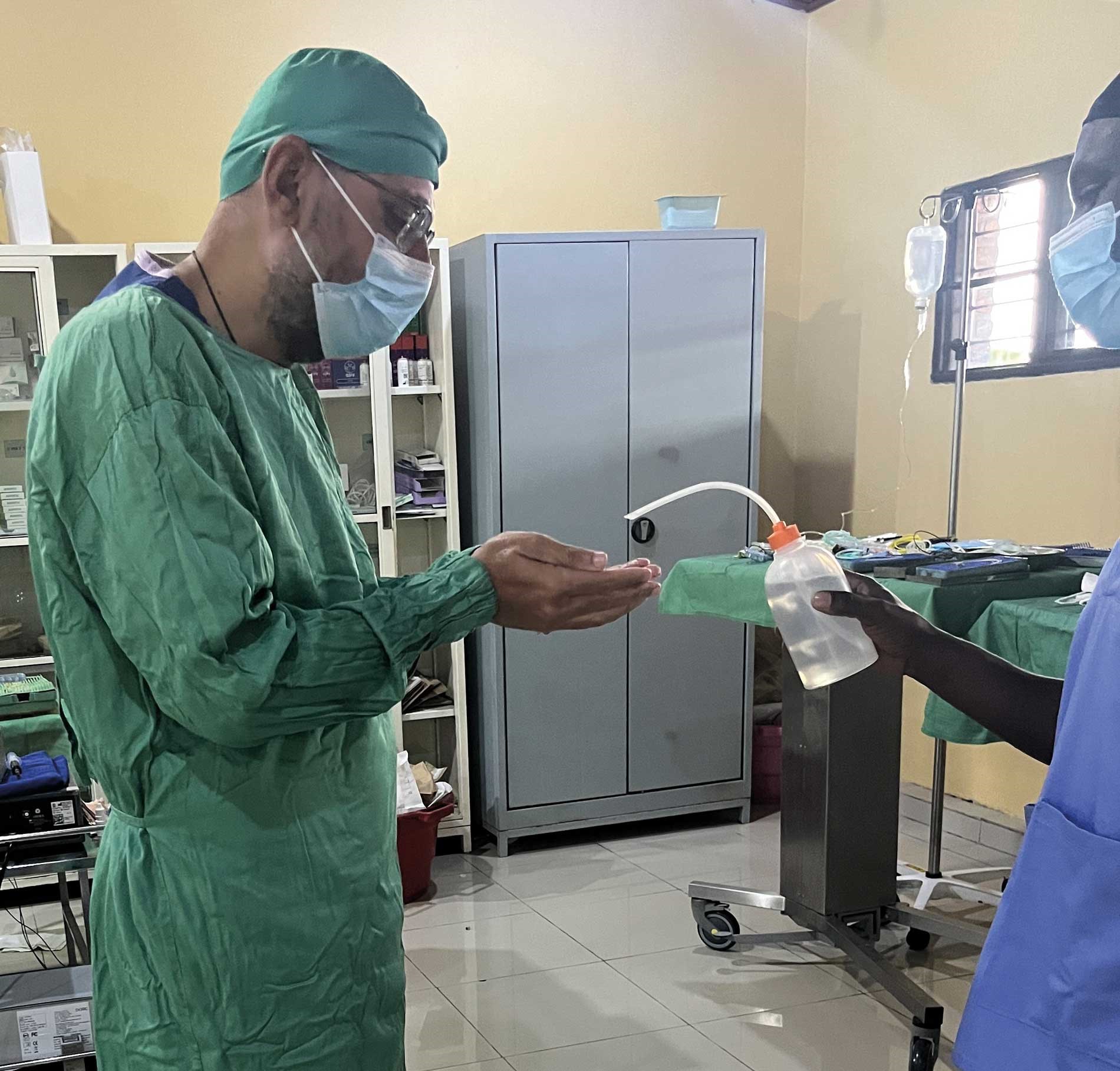
Surgeon rub hands with alcohol.
At Kabgayi, these are not special initiatives; they are our normal, everyday practice. The system evolved around patient needs, limited resources and practical efficiency. It is encouraging to see that what necessity taught us aligns closely with global sustainability goals.
Our experience shows that sustainable cataract surgery is achievable without compromise. It can be safe, efficient and effective even in the busiest and most resource-limited settings.
References
1. https://www.rcophth.ac.uk/resources-listing/
sustainable-cataract-surgery/
[Link last accessed December 2025]
2. Chang DF, Haripriya A. Postoperative endophthalmitis rate associated with routine off-label reuse of single-use phacoemulsification cassettes in more than 1,000,000 consecutive surgeries. Asia Pac J Ophthalmol (Phila) 2025:100247.
Declaration of competing interests: None declared.