The National Physiological Science Data Collections are part of NHS England’s Diagnostic Transformation programme which was established following Professor Mike Richards review of Diagnostic services. A key recommendation was to establish data collections to make up for the lack of information about diagnostic services.
The National Physiological Science data collections cover eight Physiological Science (PS) disciplines including Ophthalmic Diagnostics and Imaging services. They ask for information about activity, waiting times, facilities, estates, workforce, supervision and training along with information about digital maturity. This information aims to provide a comprehensive understanding of these services to aide local, regional and national service transformation and prioritise future investment.
Our activity
We worked with subject matter experts to define essential information to be collected from each provider. Trusts were asked to voluntarily complete the data collection during April and May 2024 providing information at Trust level for all sites that provide Ophthalmic Diagnostics and Imaging services. In this first data collection, we referred to these services as Ophthalmic and Vision Science which we believe may have caused confusion and contributed to the low uptake.
Survey responses
We received contact details of 85 Trusts providing this service. Thirty-two completed the survey, eight partially completed and 45 did not input any data. Due to low submission rates, the data should be interpreted with caution. However, for the first time it does provide insight in to how these services are delivered.
Analysis
A dashboard has been developed with the submitted data. Access to the dashboard can be requested by contacting england.psprogramme@nhs.net.
Our key learning from this data collection has been to ensure we are asking the right questions. We now recognise the questions we asked may not quite reflect how these services operate. For example, unlike other PS services, many patients do not wait for a particular test, they often wait in a specified clinic where the tests are often defined on the day. For many trusts they were unable to provide their waiting list data for individual tests. We have reflected on this, and it will be addressed in the next data collection. Therefore, this report will focus on information we gathered about workforce, training, accreditation and estates.
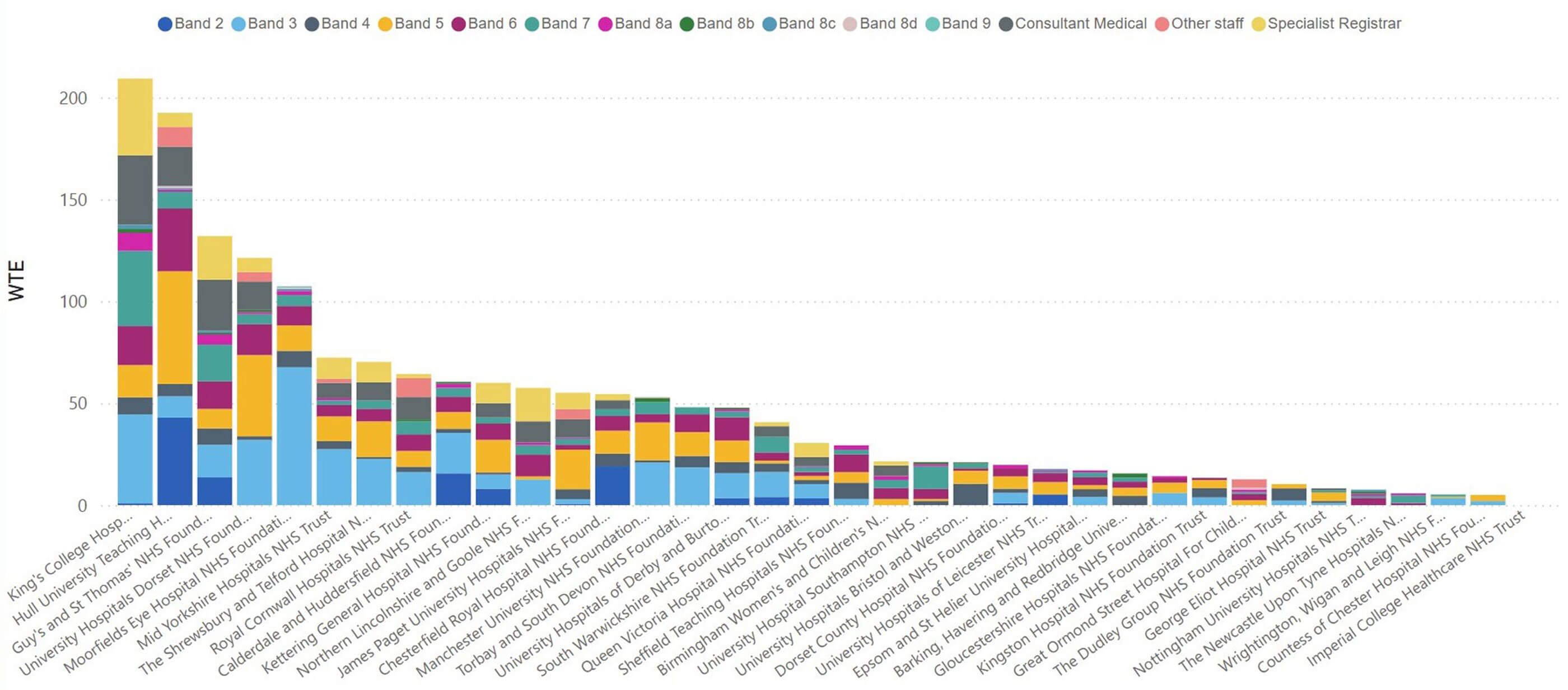
Figure 1: Total WTE staffing by band.
Workforce
The data submitted suggests differences for whole time equivalent (WTE) staffing that deliver these services with wide variation in pay bands (Figure 1). This is different to other diagnostic services where there is far less variation in staff bandings. This may be a reflection on how the services have been commissioned and evolved over time.
We understand that in many services, graduates enter the service at band 3. Bands 3 (22%) and 5 (19%) had the highest number of WTEs followed by 12% WTE in band 6 and 7% WTE in band 4. Only 9% WTE were in band 7 and 3% WTE in bands 8a to 8d.
We know historically that this workforce has been under recognised, with many departments relying on individuals to provide all the diagnostic requirements. As this has grown, many departments have not known where to allocate this staff group, leading to misrepresentation and lack of understanding about the vital work this workforce undertakes.
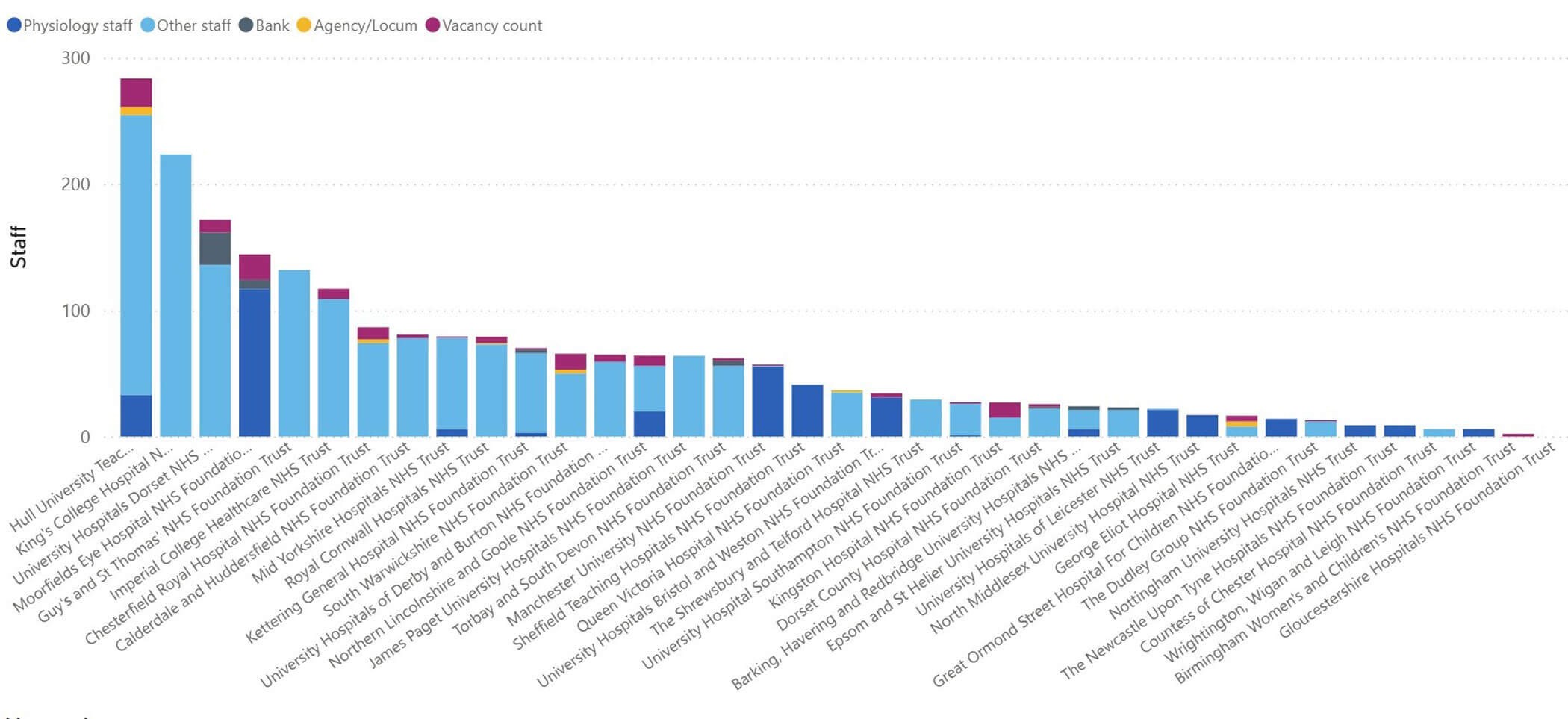
Figure 2: Staff by type (headcount).
The data suggests there are fewer physiology staff compared to other PS specialisms within these services (see Figure 2). Low numbers of physiology staff leading these services may create challenges with accreditation.
Training
Only 40% of Trusts submitted data about training and trainee numbers on courses. The data presents a mixed picture about the number of people participating in recognised training courses for this specialism, which appears to be low compared to other PS services.
Unlike other PS services such as cardiac science, there isn’t a clear service specification for ophthalmic diagnostics and imaging which outlines what level of training is required for each role. We are aware that a lot of training takes place within Trusts by more experienced staff or by manufacturers, however, with rapidly advancing technology staff need to be appropriately trained not just in the use of equipment, but also the fundamentals of underpinning physiology relevant to their specialism.
Workforce is the most valuable and important asset to be able to meet demand and provide services which are safe. We would like to see a clear service specification which outlines the competency for each role supported by investment in training. This will not only ensure patients are seen by experienced and qualified healthcare staff but provide a career structure which will support retention.
Improving quality in physiological services (IQIPS)
There is a need to embed a culture of quality and safety across all diagnostic services. IQIPS is a professionally led quality accreditation scheme with the aim of improving services, and the care and safety of patients undergoing physiological tests, examinations and procedures. Only Moorfields NHS Foundation Trust has achieved accreditation with UKAS. Six departments reported they were in development of accreditation. Four departments reported they were accredited with another scheme and another four said they were developing accreditation with another scheme.
Lack of accreditation is an issue across all physiological science services. In May 2025, there are only 79 individual physiological science services who had gained IQIPS accreditation and the majority of these are within audiology services [1]. Without accreditation, there is little assurance for provider Trust Boards, Integrated Care Boards or patients and their families of the quality of services. We need all PS services to develop their quality strategies with a focus on achieving professional accreditation in the future.
Source: Physiological Science data collections May 2022 – November 2023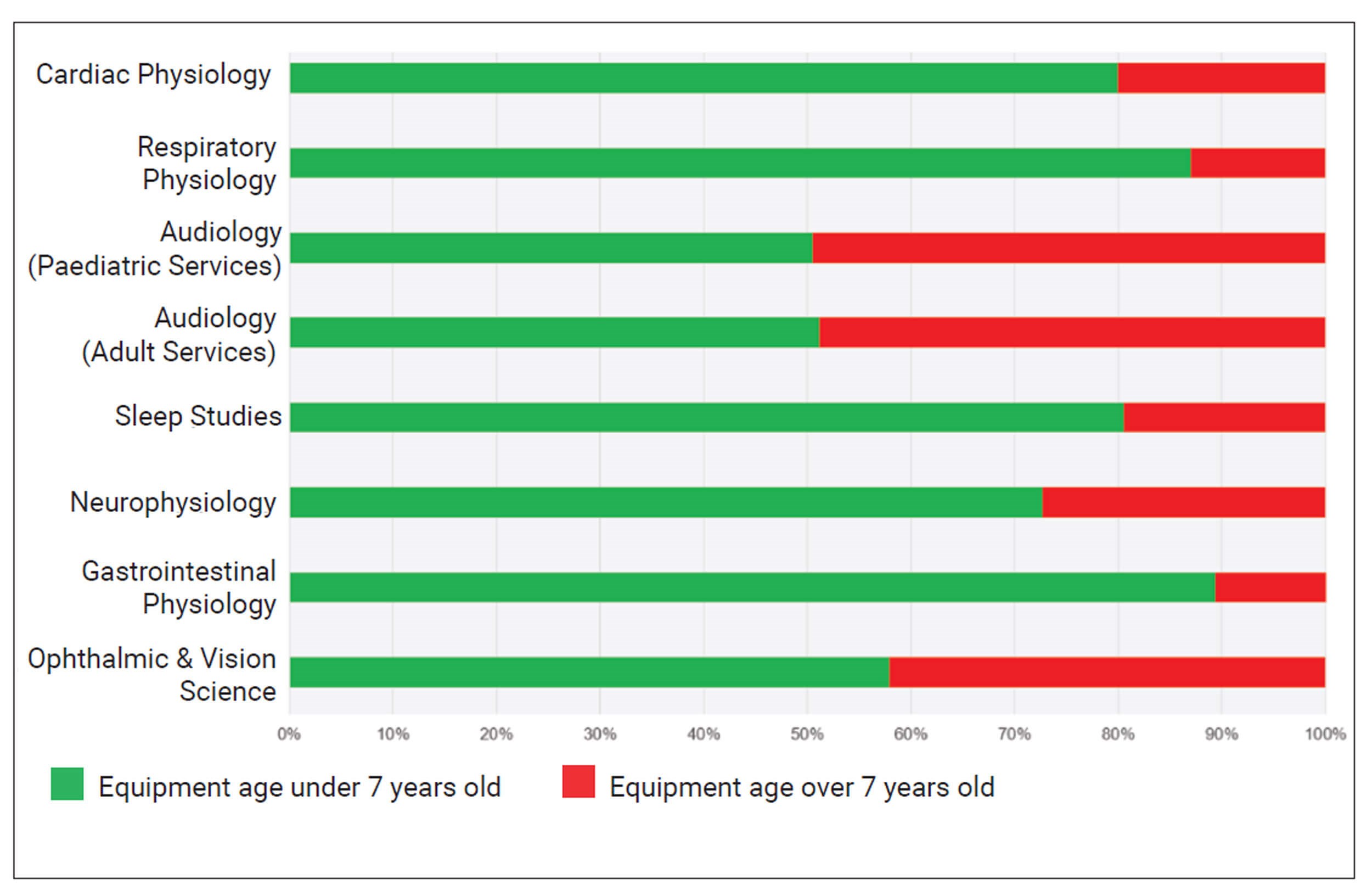
Figure 3: Age of physiological science equipment. Source: Physiological Science data collections May 2022 – November 2023.
Estates and facilities
Forty Trusts provided information about their estates. Compared to other PS disciplines, ophthalmic diagnostic and imagining services have the highest percentage of equipment which is over seven years old – a third (27%) of all equipment reported was over seven years old (see Figure 3). Old equipment can hinder productivity, such as more frequent break downs or providing poor-quality images.
Thirty-three percent reported that they shared their equipment with other services. Again, this will impact on productivity within the service if scheduling has to be planned when equipment is not used by other services.
Digital
Twenty-three-point-seven percent (n=40) of respondents reported they relied on paper for the appointment system, 12.7% for clinical reports, and 18.4% for referrals. Compared to other PS services, this specialism appears to be more digitally mature but more detailed understanding is required to evaluate the specific digital ophthalmic diagnostics and imaging requirements.
Lord Darzi’s ‘Independent investigation of the NHS in England’ highlighted how digitally immature some parts of the NHS are and recommended the need to shift from analogue to digital [2]. It will be important that ophthalmic diagnostics and imaging services continue to invest in how they use digital technologies and are included in future digital programmes.
Conclusion
Following feedback from providers and our subject matter experts we have refined the questions so they are more specific to ophthalmic diagnostics and imaging services.
However, this first data collection has provided us with a better understanding of ophthalmic and imaging diagnostics. The data is important to help support national, regional and local transformational priorities. For example, using data from the national data collections has supported 2025/26 capital investment for physiological science equipment as part of ICB capital funding allocations. Trusts and ICBs have recently submitted funding requests to the national diagnostic programme.
Our next ophthalmic diagnostics and imaging services data collection will run in the Autumn 2025, and we urge all Trusts and departments that deliver ophthalmic and imaging diagnostics to participate. For further information please contact england.psprogrammes@nhs.net
References
1. https://www.ukas.com/find-an-organisation/
browse-by-category/?type=277
2. https://www.gov.uk/government/publications/
independent-investigation-of-the-nhs-in-england
Declaration of competing interests: None declared.