This article offers a reflection on preparation, strategies and insights gained while preparing for a first exam encounter: the FRCOphth Part 1.
Preparing for the FRCOphth Part 1, the first major hurdle on the path to fellowship of the Royal College of Ophthalmologists, can feel daunting. I hope the strategy I adopted will be of practical use to future candidates facing the same challenge.
When should I sit Part 1?
Although many candidates sit Part 1 before starting ophthalmology specialty training (OST), doing so can be difficult when you’re also preparing your OST application and balancing a busy foundation year rota. I chose to sit the exam midway through my second year of training. At that stage, the curriculum content felt clinically relevant, which made it easier to understand and retain.
Overcoming the first hurdles
Early in my first year of ophthalmology training, I ambitiously attempted a set of multiple choice questions (MCQs) on the Eyedocs.co.uk website. The questions seemed obscure and overly technical – it felt as if higher education qualifications in immunology, physics or statistics were required to stand a chance. I closed my laptop feeling defeated. But time moved on, and the pressure of needing a pass before my third year of training grew. I knew I had to get started properly.
Building knowledge through MCQs
I had used PassMed.com extensively for medical school finals and found it incredibly helpful, so I was relieved to find that eFRCOphth.com offered a similar format of multiple-choice questions. Its short explanations, basic diagrams and discussion forums made it user-friendly and reassuring. The chat function helps users clarify the veracity of questions, brings a sense of community and offers occasional comic relief.
After completing the eFRCOphth question bank, I moved on to Hall and Peden’s FRCOphth Part 1: 400 SBAs and CRQs. I noticed the step up in difficulty, but the questions were well-written and rich in content. Their clarity and depth made them enjoyable and effective learning tools.
I then returned to Eyedocs, which is the largest bank of MCQs for Part 1 (at the time of writing). Some of the questions felt overly complex, but they forced me to master core concepts. The real exam may not have such elaborate questions in statistics and optics, for example, but it does demand strong fundamentals – which Eyedocs helps to solidify.
Tackling textbooks strategically
At this point, I was still dodging optics questions, procrastinating the inevitable. I finally turned to Elkington’s Clinical Optics, the go-to text for optics in the exam. Initially, I tried to read the book front to back, but I found the content too abstract to consume in bulk. I switched to using it as a reference while working through questions, gradually covering the entire book without realising it. Acef Ahmad Assaud’s high-yield summary of Elkington is also an invaluable revision aid in the lead-up to exam day to review key concepts.
I hadn’t yet opened either Ferris’ Basic Sciences in Ophthalmology or Forrester’s The Eye: Basic Sciences in Practice. With limited time left, I turned to Ferris, as the MCQ format made for faster reading. I focused on the explanations, skimming the multiple-choice answer options. Despite being around 500 pages, the book felt manageable thanks to its clear diagrams, spacious layout and logical structure. Some sections go beyond the syllabus, but overall, it builds understanding from the ground up.
I only dipped into Forrester’s text but found the chapters on ‘Microbial Infections of the Eye’ and ‘Pathology’ especially helpful.
Final month strategy
By the final month before the exam, I had completed:
- eFRCOphth and Eyedocs MCQ banks
- Hall & Peden, and
- Ferris.
I debated whether to seek out new resources or revise what I had already covered. Unlike undergraduate exams, there’s no set list of lecture slides or summary notes to work through. That sense of feeling completely ready never quite comes.
To cover ground efficiently, I used www.Eye-Notes.com. The content feels part flashcard, part textbook, and is fantastic for last-minute revision. While not exhaustive, it’s highly efficient. I also worked through:
- Ophthobank MCQ questions
- MCQs for FRCOphth Part 1 by Sohaib Rufai (the difficulty of the general physiology questions surpasses that of the exam, in my experience)
- Self-Assessment in Optics and Refraction by Prof Chua.
Other resources worth mentioning include ophthalmologist Tim Root’s YouTube series, especially his two-part video on retinoscopy, which was directly relevant to some optics questions.
Neuro-ophthalmologist Andrew G Lee’s video lectures and the Eyes for Ears podcast by Ben Young and Andrew Pouw aren’t tailored specifically to Part 1, but they kept ophthalmology engaging and reminded me why I enjoy the field, something that helped maintain motivation when revision felt heavy.
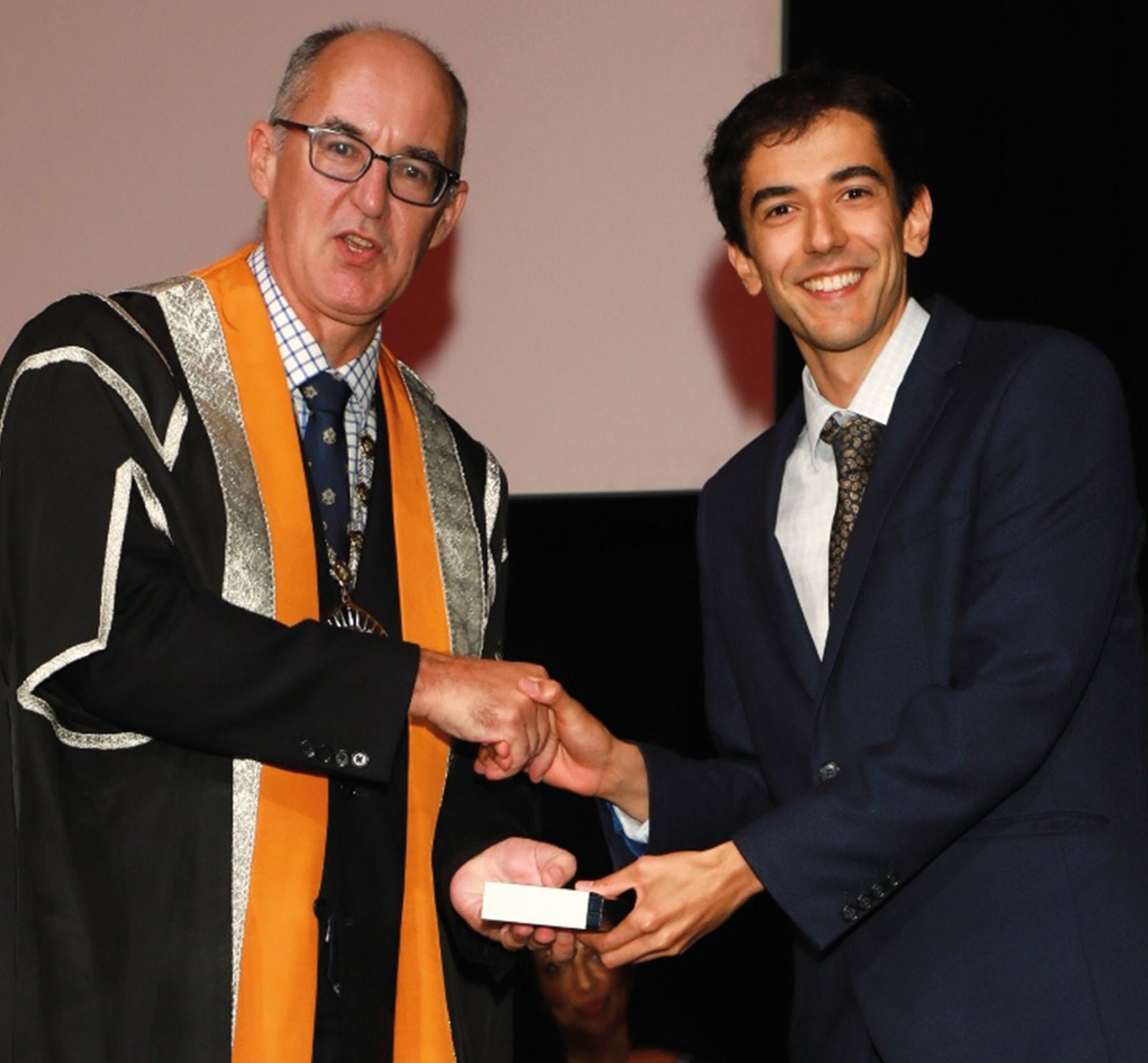
Figure 1: Receiving Crombie Medal.
Final thoughts
Looking back, my strategy hinged on starting early, letting MCQs guide my textbook reading, and building understanding over rote memorisation. Mixing different resources helped me cover all bases and kept things fresh.
I am very grateful to colleagues who shared their invaluable advice and encouragement. I hope sharing my experience provides useful insight for others preparing to sit this exam.
Good luck and enjoy the process. You’ve got this.
EDITOR’S NOTE
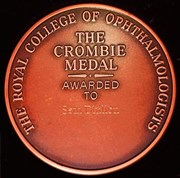
Seth Dhillon was awarded the Crombie Medal for achieving the highest score across all sittings of the FRCOphth Part 1 examination in the 2024–2025 academic year. He also set a new high-percentage score for the exam’s current format, which has been undertaken by over 3000 medical graduates from the UK and overseas since 2021.
Declaration of competing interests: None declared.