
You searched for "technology"
Getting the Duke Elder examination right: reflections and tips from a medical student
The Duke Elder undergraduate prize examination is an annual exam organised by the Royal College of Ophthalmologists in the United Kingdom. Named after Sir Stewart Duke Elder, a prominent British ophthalmologist, the exam is designed to encourage undergraduate medical students...In conversation with Yasmin El-Rouby
Author and Eye Doctor, Dr Yasmin El-Rouby, wishes to raise awareness about common vision disorders. Envisioning a world where preventable eye conditions are caught early, she founded Baseera, a non-profit organisation, to improve access to basic eyecare in developing countries....Unconscious bias (part 2)
Does unconscious bias exist, and does training help to reduce discriminatory behaviour? Clare Inkster questions her role as a trainer. I read Gwyn Williams’ Learning Curve article on this topic a few months ago with interest, and as someone who...REPORT: American-European Congress of Ophthalmic Surgery (AECOS) European Symposium
David Shahnazaryan, Consultant Ophthalmologist, London, UK and Radhika Rampat, Consultant Ophthalmologist, London, UK, report from the AECOS Symposium in Antwerp, Belgium (June 10-12).Bookings open for education programme at 100% Optical
100% Optical releases suite of education for event that will take place from 24-26 February at ExCeL London.BCLA ASIA 2024 triumphantly takes place in Chengdu, China
The British Contact Lens Association (BCLA) marked an historic milestone with the successful staging of BCLA ASIA in mainland China.Obituary: a heartfelt goodbye to Roger Pope
One of the most admired of UK opticians, Roger Pope, holder of two Royal Warrants, has sadly passed away leaving a legacy as the greatest colleague and friend to the optical community.ABDO National Resource Centre secures new gold digital sponsor
The ABDO National Resource Centre (NRC) based in Birmingham has secured a new gold digital sponsor in Birmingham Optical. Birmingham Optical is a leading supplier of optical equipment and services, with over 60 years of experience in the industry. The...Conference Report: ARVO 2025 Annual Meeting
The Association for Research in Vision and Ophthalmology (ARVO) 2025 Annual Meeting was held at the Salt Palace Convention Centre in Salt Lake City, US. This prestigious event brought together experts in vision and ophthalmology from around the world for...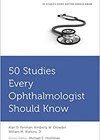
50 Studies Every Ophthalmologist Should Know
This book features a compilation of 50 important clinical studies that have left a profound impact on the current clinical practice of ophthalmology. From the 1980 botulinum toxin injection study by AB Scott to the United Kingdom Glaucoma Treatment Study...


