The Duke Elder Examination is a prestigious ophthalmology exam, open to all medical undergraduates. It is a prize examination, consisting of 90 multiple-choice questions in two hours, testing students on ophthalmology content beyond the undergraduate curriculum. With notoriously tough questions, this exam provides a steep academic hill to climb. After sitting the exam in 2025, here are my five top tips for success.
1: Timetabling is key
The content for the Duke Elder Examination is vast. It is important to allow yourself 2–3 months of revision. Unfortunately, as the exam falls in September, these months can coincide with medical school exams and summer holidays. I began my revision in May in order to account for a busier June and July to focus on medical school exams.
Create weekly goals for yourself, starting with foundational knowledge and active learning in the first month (using notes, flashcards and diagrams). Dedicate the last month to question banks, timed mocks and filling in knowledge gaps.
When creating a timetable, I found it useful to rotate topics and learning methods throughout the day to ensure your revision doesn’t become monotonous. Your timetable should align with your energy peaks and troughs, to coincide challenging, perhaps disliked topics at your peaks.
Lastly, plan for your plan not to go perfectly. Certain topics extend beyond the usual undergraduate level and may take you longer to get a grasp of – plan for buffer days to revisit the trickier content.
2: Use social media wisely
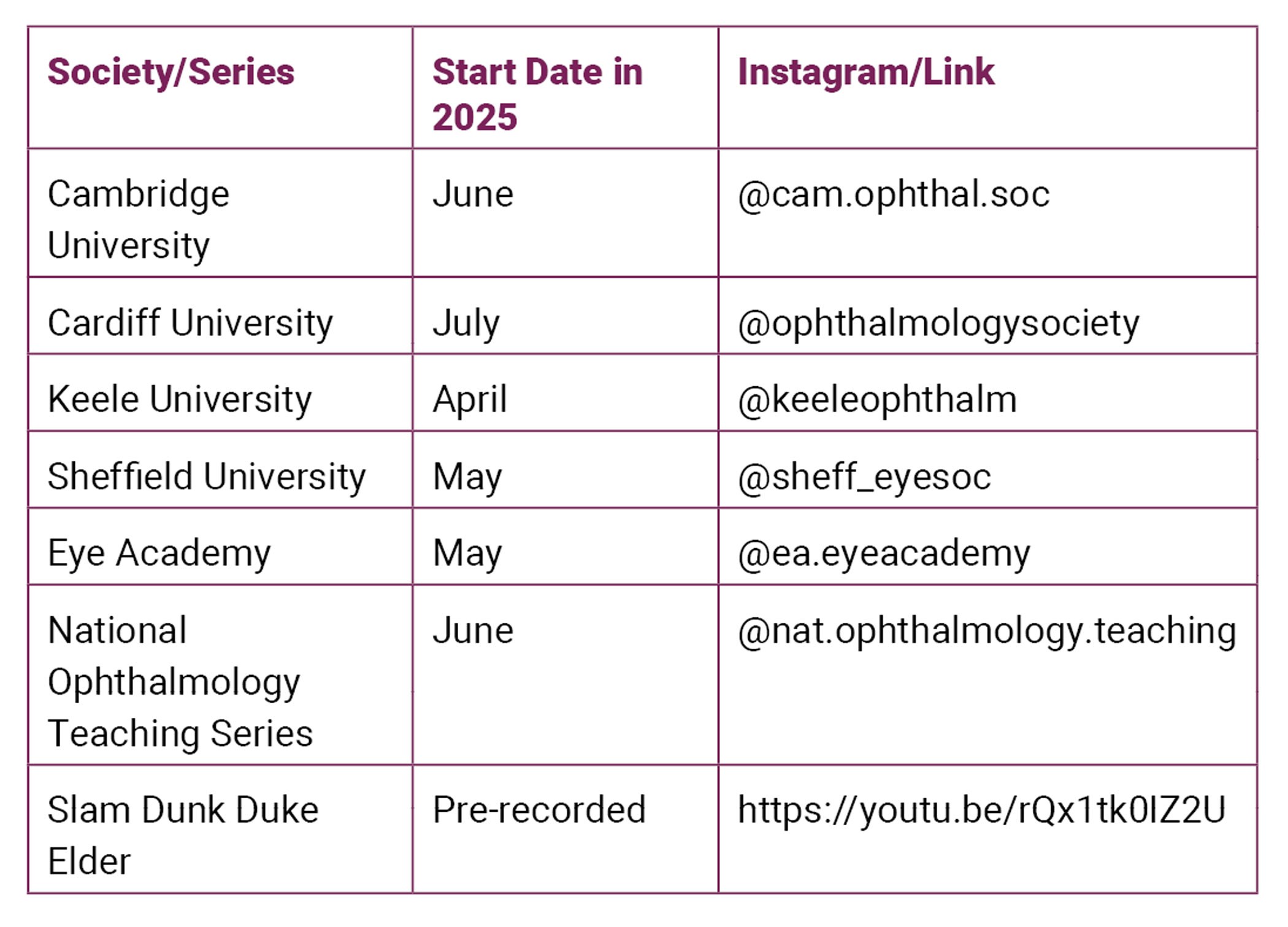
The best free resource is social media. Several lecture series are run by societies and universities, with lectures delivered by ophthalmology trainees and students who have succeeded at the examination. These lectures will help you build a picture of high-yield conditions and presentations. Some things to do are:
- Follow all the university ophthalmology societies
- Put key lecture dates in your calendar and prioritise topics you struggle with
- Check if the lectures are recorded or if they will give access to the slides for reference closer to the exam
- After the exam, keep an eye out for talks by universities on portfolio building, electives and teaching.
Here is a list of lecture series that I have compiled with rough start dates (may change year by year):
3: Create study groups (and score extra portfolio points!)
The Duke Elder can feel like a mystery with little information about what to expect. It may be difficult to connect with peers across the years sitting the exam.
"Plan for your plan not to go perfectly. Certain topics extend beyond the usual undergraduate level and may take you longer to get a grasp of"
Take the initiative to create a Duke Elder study buddy scheme, recruiting experienced students to mentor the incoming sitters. This also allows the mentees from various year groups to mingle and share study tips. This could be done through your university ophthalmology society or independently.
This is a win-win scheme:
- You can gain portfolio points for running an educational course and gain mentorship
- Mentors can claim portfolio points for delivering regular teaching sessions
- Mentees will receive structured support and insider tips.
These could be used for portfolio points according to the 2025 Ophthalmology ST1 portfolio under the ‘Education and Training’ domain [1] – the ophthalmology portfolio is extensive; this is a good way to hit two birds with one stone:
- 1 point for ‘for delivering at least three formal teaching sessions (not ward-based or small group) on different subject areas over a period of at least three months with formal feedback uploaded’
- 0.5 points for ‘helping with an educational course (more than one session)’.
4: Pay attention to the syllabus and revise each subspecialty
Ophthalmology has great variety within its subspecialties and may require different approaches in exam preparation. It is easy to focus on enjoyable areas and perhaps neglect your weaker topics. Make sure to refer to the list given by the Royal College of Ophthalmologists Candidate Info Pack [2]:
- Cornea and external eye disease
- Cataract
- Glaucoma
- Medical retina and vitreo-retinal surgery
- Strabismus and paediatric ophthalmology
- Neuro-ophthalmology
- Ocular adnexal and orbital disease
- Refractive errors and optics.
Other topics covered include ocular physiology, clinical pharmacology, anatomy, pharmacology, basic science, statistics, optics including ray diagrams, pathology, embryology, genetics of eye conditions, and socio-economic medicine relevant to ophthalmology, e.g. blind registration or world blindness.
Use this list to map out a revision plan. I found it useful to make a list of different resources to use for each topic, refering to them closer to the exam.
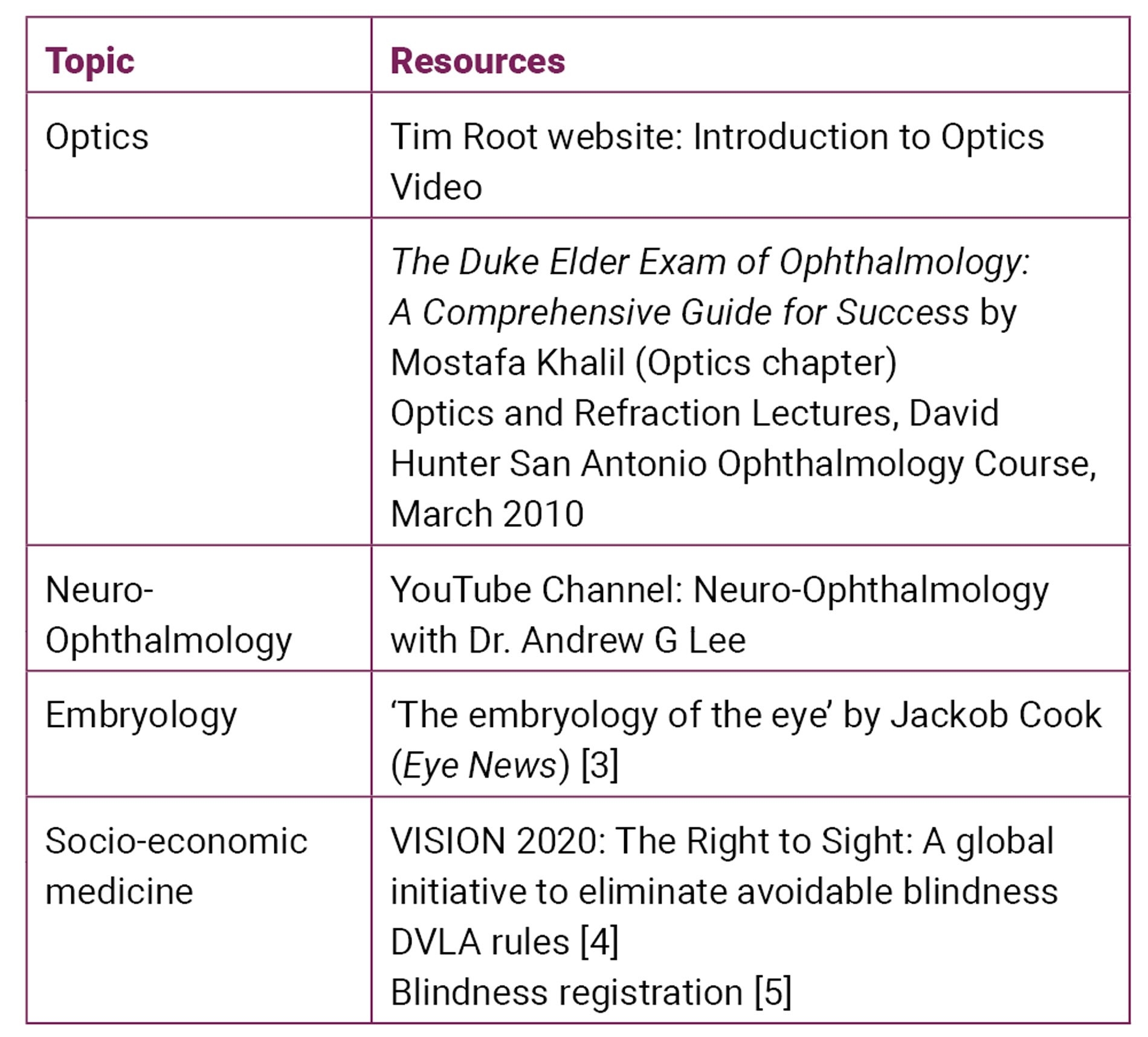
Resources such as EyeWiki and The Duke Elder Exam of Ophthalmology: A Comprehensive Guide for Success were generally useful across all subject areas. Attending ophthalmology clinics can be a great study method. Many facts such as machines used, types of lasers, equipment, imaging and dyes can be learned from observation.
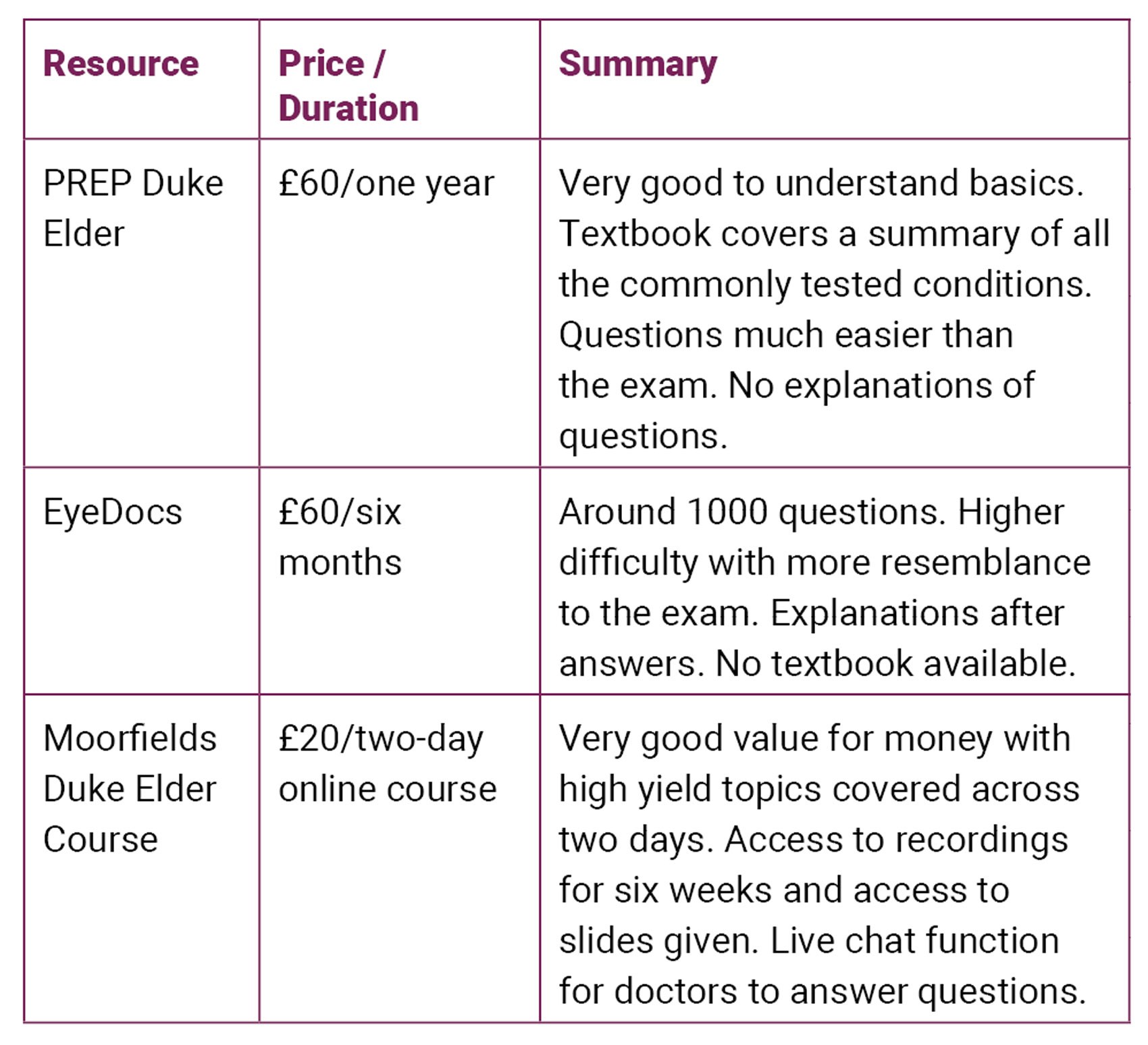
5: Make a budget for paid resources
Preparation for this examination can be expensive so using books from your university/hospital library can cut your costs. For example, I used the MCQs for FRCOphth Part 1 by Sohaib Rufai. Whilst it may go above the scope of the Duke Elder, it has many relevant questions to supplement your revision.
Final tips for the exam day
- As the date approaches, read the instructions carefully – this may be your first proctored exam so ensure the setup complies with the regulations
- Take time to relax as the exam is in the afternoon
- Remember, you won’t know everything – stay calm, use the flag function and eliminate answers with the facts that you do know.
Good luck to everyone sitting the Duke Elder exam this year – stay consistent and have faith in your preparation!
References
1. www.severndeanery.nhs.uk/
recruitment/vacancies/show/oph-st1-26/
evidence-folder-lib
2. www.rcophth.ac.uk/wp-content/
uploads/2025/01/2025-Duke-Elder
-Candidate-Info-Pack.pdf
3. Cook J. The embryology of the eye. Eye News [Online].
www.eyenews.uk.com/education/
trainees/post/the-embryology-of-the-eye
4. www.gov.uk/guidance/visual-disorders
-assessing-fitness-to-drive
5. www.rnib.org.uk/your-eyes/
navigating-sight-loss/registering-as-sight
-impaired/the-criteria-for-certification/
[All links last accessed March 2026]
Declaration of competing interests: None declared.