
Newmedica is supporting research into a potential next generation treatment for diabetic retinopathy, reinforcing its commitment as an eye health champion.
Working in partnership with charity Sight Research UK, the project is led by Dr Michael O’Hare and his team at Queen’s University Belfast. They are exploring whether messenger gene (mRNA) technology could offer a new option for patients who do not respond to existing treatments.
Nigel Kirkpatrick, medical director at ophthalmology provider Newmedica, says: "We are pleased to be supporting this important project in partnership with Sight Research UK. We look forward to following the team’s progress."
An existing treatment for this eye condition, called anti-VEGF, can help manage the symptoms. But it doesn’t work for 5-10% of patients, leaving them at risk of blindness.
The research focuses on RUNX1, a protein that appears unusually active in affected retinal blood vessels and may be linked to treatment resistance. The team is investigating whether mRNA could be used to temporarily suppress RUNX1 activity within the eye.
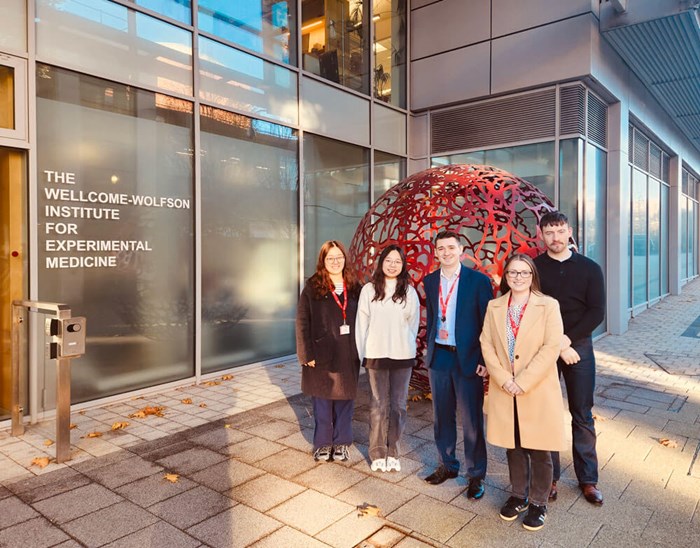
They will also compare two delivery methods to determine the safest and most efficient way of targeting cells at the back of the eye. "Our aim is to develop mRNA-encoded therapeutics for patients who do not respond to existing treatments for diabetic retinopathy," says Dr O’Hare. "We are extremely grateful for the support and funding from Newmedica and Sight Research UK.
"It is essential in helping us to develop next-generation mRNA-encoded therapeutics and novel delivery systems that have potential as treatments not only for diabetic retinopathy, but for other ocular diseases as well."


