
Ophthalmology is the largest outpatient specialty in the NHS, and in Gloucestershire, it is growing at an annual rate of 2.55%, outpacing other specialties. However, rising demand has led to significant waiting lists, often resulting in patients not being seen in appropriate timeframes. This delays treatment, increasing the risk of avoidable sight loss, progression of eye disease, and secondary issues such as falls. A fundamental shift in care delivery was urgently needed.
A major barrier to efficiency in UK eyecare has been the lack of digital connectivity between community optometrists and hospital eye services (HES). Without access to essential full and complete datasets – that includes all imaging, clinical notes and GP correspondence – optometrists faced a binary choice when encountering potential pathology: laboriously seek information through fragmented channels or refer patients to HES, often unnecessarily. These inefficiencies led to over-referral, clogged waiting lists and delayed treatment for those in genuine need.
In response, Blueworks UK partnered with NHS Gloucestershire to develop and implement the Community Ophthalmic Link (COL), a pioneering and unique digital solution that gives community optometrists secure and structured access to the HES patient clinical outcomes, including all ophthalmic imaging (records dating back to 1996) and outcomes and images from the Diabetic Eye Screening Service.

Launched in late 2022 and fully deployed across Gloucestershire by early 2023, COL now operates in all 66 optical practices in the region, with 251 optometrists and dispensing opticians enrolled. Remarkably, this 100% uptake occurred despite no financial reimbursement for record access, highlighting the perceived value and necessity of the system across the professional community.
Transformational outcomes
Since its implementation, the impact of COL has been profound:
- 31,722 patient records accessed between January 2023 and May 2025
- 3012 HES referrals avoided, equating to £490,956 in saved costs
- 906 GP referrals avoided
- 3053 better-informed referrals
- 486 sight tests appropriately deferred, reducing unnecessary NHS expenditure
- 9853 patients better managed in community eyecare
- 14,651 patients felt they were better informed about their Eye Health
- Only 234 instances (0.7%) where access was deemed not useful by optometrists.
The annualised average of 1246 avoided referrals translates into £203,098 in annual HES savings – a significant financial relief, excluding GP cost savings.
Outcome data shows a 24% reduction in new patient referrals and a 16% drop in the combined new HES waiting list at Gloucestershire Hospitals NHS Foundation Trust – clear evidence of COL’s effectiveness in reducing unnecessary strain on secondary care.
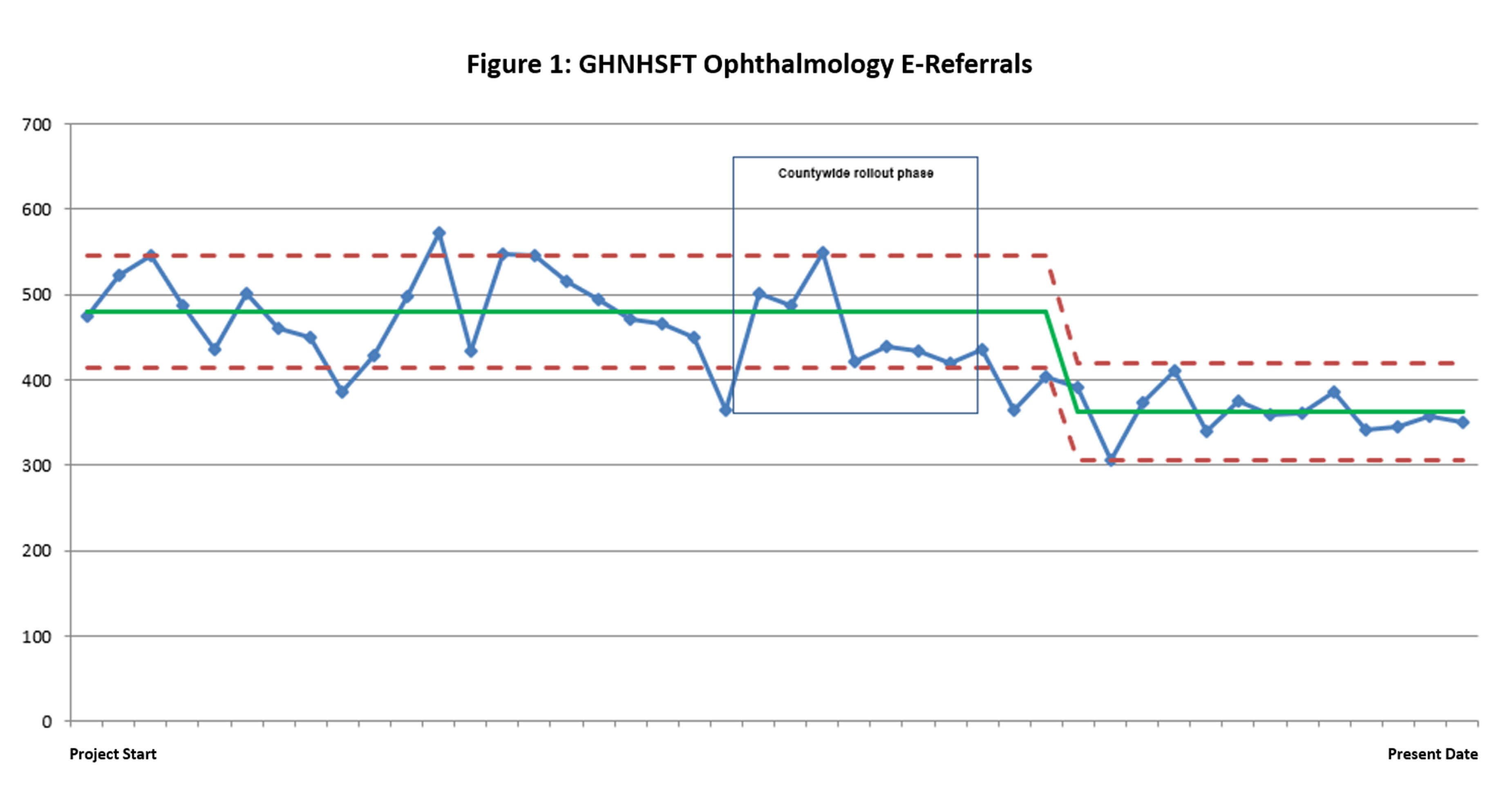
GHNHSFT ophthalmology e-referrals.
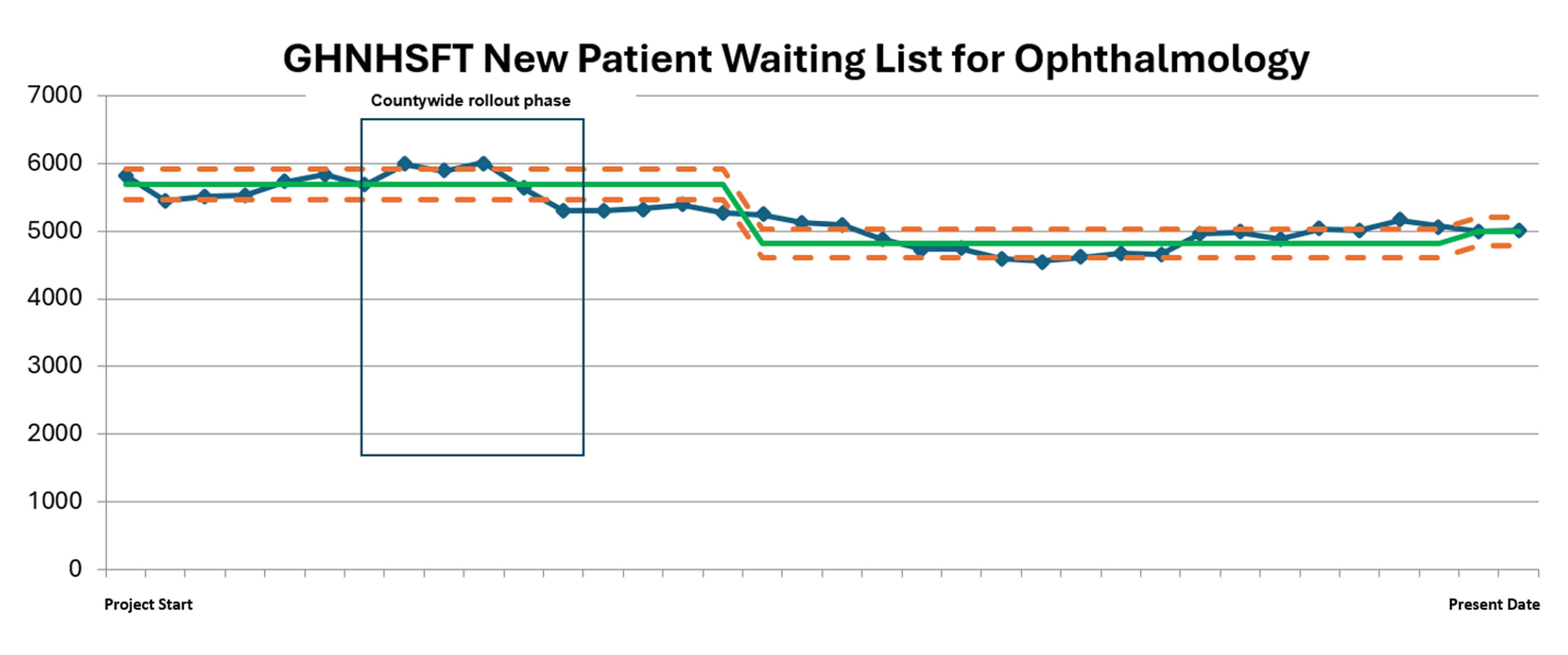
GHNHSFT new patient waiting list for ophthalmology.
Beyond financial savings
While the financial and operational benefits are substantial, the impact on clinical care, patient experience, and professional satisfaction has been equally compelling. Patient feedback has been overwhelmingly positive:
- 96% believed COL helped them receive the best care for their eyes
- 98% felt it made a positive difference to their eyecare
- 92% expressed no concerns about optometrists accessing hospital records.
Patient comments praised the system’s ability to prevent unnecessary hospital visits, enhance continuity of care and reduce errors in complex cases.
Clinicians echoed these sentiments. In optometrist feedback, 100% reported that COL supported their clinical practice. Comments highlighted its impact on professional confidence, efficiency and the ability to reassure patients with accurate, up-to-date information.
One notable example involved an emergency consultation where an optometrist, initially suspecting wet age-related macular degeneration (AMD), accessed COL and discovered a prior AMD diagnosis. This enabled an accurate differential diagnosis of a stroke, resulting in an immediate and appropriate emergency referral – potentially life-saving.
Improved system-wide efficiency
The COL has addressed a major inefficiency: time lost by community optometrists in sourcing data from hospitals or GPs. By giving direct access to complete ophthalmic records, COL allows faster, safer decision making. In turn, this improves the quality of referrals, reduces unnecessary appointments, and ensures clinics are populated by patients who truly require specialist care.
Hospital administrative and clinical staff benefit by focusing on relevant referrals. Consultant ophthalmologists can streamline documentation, confident that discharged patients will continue receiving appropriate follow-up in the community. This creates a virtuous cycle: enhanced patient outcomes, reduced clinical risk, and a more sustainable eyecare system.
Collaborative development and rollout
The project originated within Gloucestershire’s Regional Eye Health Clinical Programme Group – a multi-stakeholder team including clinicians, commissioners, optometrists, patient representatives, and national sight loss charities like the RNIB and Macular Society. This early collaboration ensured shared ownership and full alignment with clinical and patient needs.
Stakeholder mapping and phased implementation using Plan-Do-Study-Act cycles helped ensure a smooth rollout. Pilot practices tested system functionality and provided feedback, leading to refinements before a full-scale deployment across the region – all completed within five months.
The partnership with NHS Gloucestershire was central to success. The Integrated Care Board provided clear clinical and technical guidance, ensured inclusive communication and championed a patient-centred approach throughout. The result is a robust, future-proof system with broad professional and public support.
A scalable national model
The issue of digital disconnection between primary and secondary eyecare is not unique to Gloucestershire – it is a nationwide challenge.
What sets COL apart is its unique vendor-agnostic, non-proprietary architecture. It can integrate seamlessly with any imaging or diagnostic system, regardless of manufacturer or device type, and display data in its original, uncompressed format. This ensures clinicians always view accurate, high-resolution images in a user-friendly interface. Records can be accessed securely from clinics or even remote locations, making it suitable for virtual clinics and teleophthalmology.
“...this 100% uptake occurred despite no financial reimbursement for record access, highlighting the perceived value and necessity of the system”
This flexibility makes the platform scalable at local, regional or national level, with the potential to significantly reduce referrals and costs across England. National modelling suggests that scaling COL could prevent over 120,000 unnecessary referrals annually, saving the NHS more than £20 million per year.
Looking ahead
Phase 2 of the project is already underway in Gloucestershire, focusing on enabling the safe discharge of stable HES patients to community-based optometric care via COL as well as enabling a structure advice and guidance and referral handling pathway. With secure access to hospital data, optometrists can confidently manage ongoing care, freeing up secondary services for complex or urgent cases.
The Gloucestershire experience has demonstrated that transformational change is possible through collaborative working, clear clinical leadership and smart use of technology. By connecting primary and secondary care, the COL is not only improving efficiency and outcomes – it is redefining what integrated care can look like across the NHS.
Declaration of competing interests: None declared.




