
The Spine
2 paddington Village
Liverpool
L7 3FA
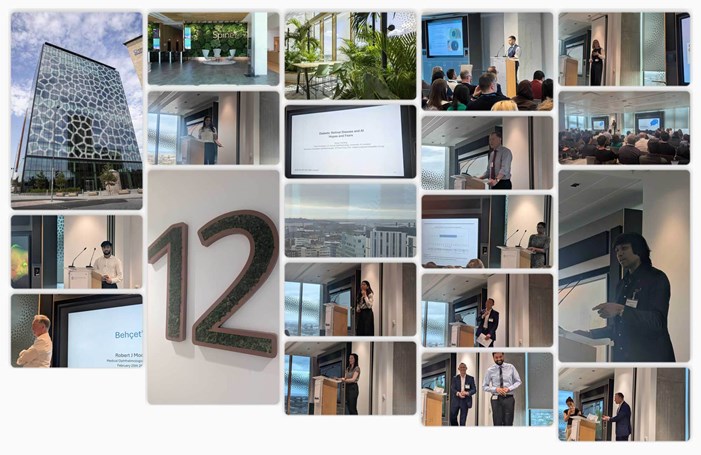
On the 25th February 2026, Medical Ophthalmology Society UK (MOSUK) gathered for a highly successful 27th annual meeting at the striking RCP Spaces at The Spine in Liverpool. Hosted by Dr Greg Heath and Dr Nima Ghadiri, both chairing sessions alongside Dr Amira Stylianides, the event served as a brilliant showcase of medical ophthalmology and the intricate eye-systemic axis.
Liverpool’s credentials were laid out first: St Paul’s Eye & Ear Infirmary (1871) founded as a charity service by George Edward Walker; the Liverpool School of Tropical Medicine (1898) the first in the world; and the city’s long tradition of 'port-city medicine' where imported infections shaped a systemic approach to diagnosis that naturally included the eye. This included infectious-disease pioneers associated with Liverpool (Ross, Dutton, Boyce) serving a reminder that the oculo-systemic axis is part of the city’s clinical inheritance.
Morning momentum: IIH
The tone was set early with idiopathic intracranial hypertension (IIH) – an update in treatment, bringing medical and surgical perspectives into sharp focus. Anita Krishnan spoke compellingly on IIH and headache, and Catherine McMahon covered the surgical landscape, the 'when' and 'why' of intervention, and how timely escalation can protect both vision and quality of life. Together, the talks captured the recurring theme of the day, and this interdisciplinary specialty: outcomes improve when we stop working in parallel and start working together.
Diabetes and the eye: where language, technology, and AI collide
After the break, Symposium 2 moved into one of the most important systemic-ophthalmic interfaces in modern healthcare: diabetes and diabetic retinopathy.
Prof Partha Kar delivered an energetic tour through what he called the new world of “tongue-twisters and gizmos,” capturing, with humour and pace, how diabetes care is evolving through novel therapies, devices and increasingly sophisticated patient-facing technologies.
Then, Prof Simon Harding brought the auditorium into the future with “hopes and fears” for diabetic retinal disease and AI: what machine learning might genuinely add, where the risks lie and why the human clinical lens still matters when the stakes are life-changing vision loss. Appropriately, Liverpool’s own contribution to diabetic eyecare formed part of the meeting’s historical thread, reminding delegates that innovation is not new here.
Free papers: the next generation thinking systemically
The afternoon free paper session showcased exactly what MOSUK does best: spotlighting work that sits across boundaries, whether genetic, neurological, immunological or service-based.
The Free Paper Prize was awarded to Lucy Li for a striking case-based presentation on bradyopsia, a rare cause of unexplained visual loss where the fundus can look deceptively normal and diagnosis hinges on recognising the characteristic electrophysiology phenotype, supported by targeted genetic testing. The message was clear: when structure doesn’t explain symptoms, physiology and history can be decisive. Runner-up Alaeldin Nour presented a fascinating mini-series on neuro-ophthalmic disease as an early signal of hidden systemic pathology, using three contrasting cases to highlight the real-world complexity of autoimmune and paraneoplastic reasoning: non-classical antibodies that still track with malignancy, “suggestive” imaging that turns out inflammatory rather than oncological, and the crucial reminder that seronegativity does not exclude serious systemic disease.
Behçet’s multi-system symposium: Liverpool’s centre of gravity
The day’s final scientific session was a Behçet’s multi-system symposium, anchored in Liverpool’s unique legacy and leadership in this space. It began with Robert Moots, founder and lead of the National Behçet’s Centre in Liverpool, setting the rheumatology framework and reminding the room how Behçet’s demands coordinated care across specialties and across time. From there, Ian Coulson mapped the dermatological landscape with clarity and clinical pragmatism; Nima Ghadiri explored the ophthalmic end of the disease, where relapses can be sudden and consequences permanent; and Emma Morgan brought oral medicine into focus, completing a genuinely multi-system picture that felt greater than the sum of its parts.
The day concluded with closing remarks from President Greg Heath. A massive thank you is owed to all the speakers, delegates, and the welcoming staff at RCP Spaces. Special gratitude goes to MOSUK admin Lindy Gee for her flawless logistical coordination, and to the generous sponsors.
The energy of the event seamlessly transitioned into the following two days, as the venue hosted MOSUK's sister meeting, UKNOS – The UK Neuro-Ophthalmology Society, featuring an incredibly opportune crossover theme: 'Inflammatory Comments' in neuro-ophthalmology. Both meetings will similarly take place next year in London.
For more information from the society, click here.


