Ophthalmic surgery is a specialty of small volumes, clear fluids and unforgiving anatomy. In cataract, glaucoma and vitreoretinal surgery, a theatre trolley may contain several syringes that look almost identical: balanced salt solution (BSS), lignocaine, intracameral mydriatic, phenylephrine, antibiotic, dye, viscoelastic-associated fluids, gas or other adjuncts. The volume may be 0.1ml. The consequence may be permanent visual loss.
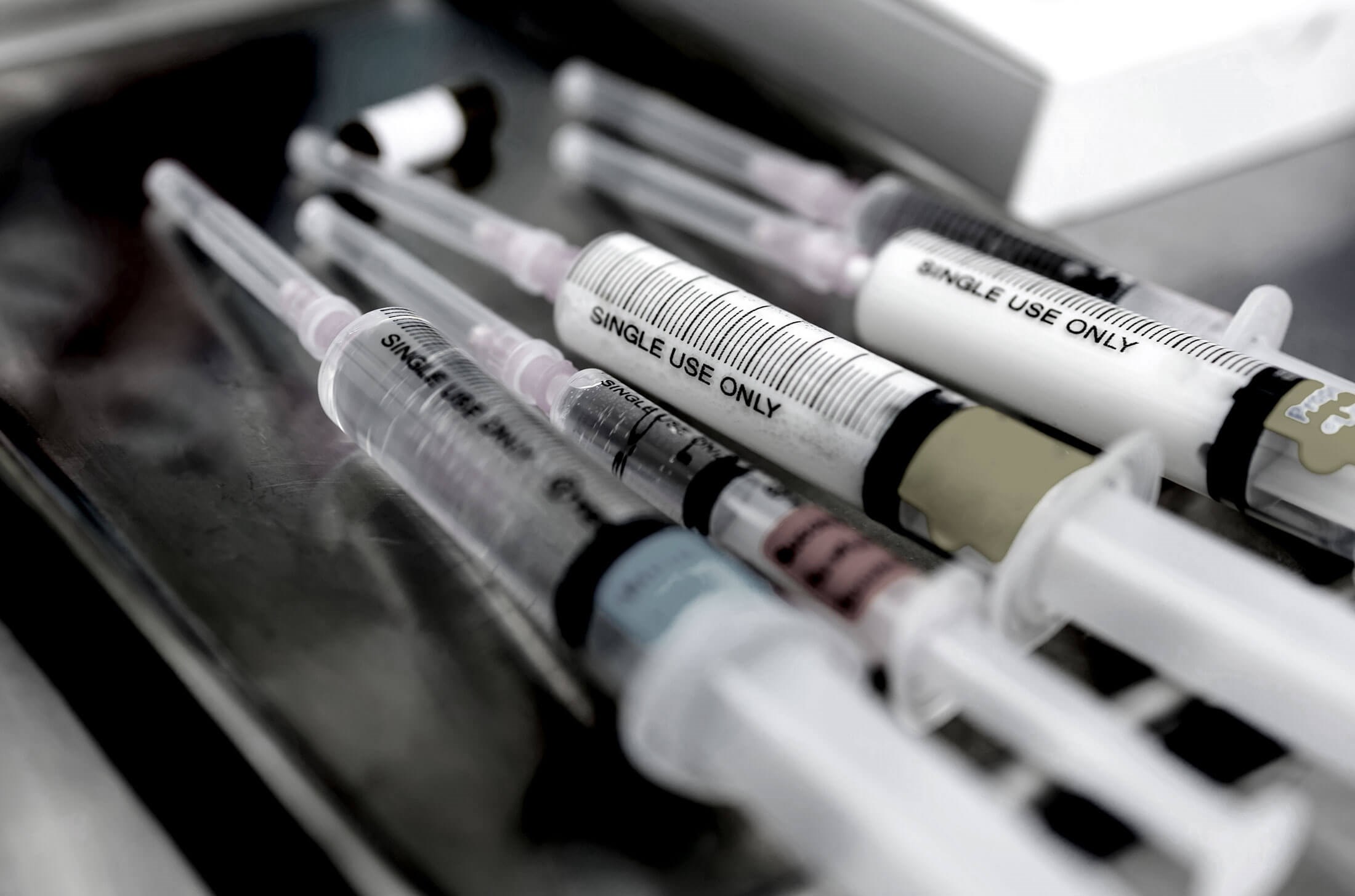
It is therefore surprising that, in many ophthalmic theatres, the culture around labelling syringes on the sterile field has historically been less rigorous than in anaesthesia and other surgical specialties. The assumption is often that “the scrub nurse knows,” “the surgeon knows,” or “there is only one syringe in use at a time.” That assumption is unsafe. It is also increasingly difficult to defend medicolegally.
The wider surgical problem
Medication errors in surgery are not theoretical. They occur because the operating theatre is a complex, high-pressure environment in which drugs are removed from their original packaging, drawn up into secondary containers, placed on sterile fields, passed between staff and administered rapidly. A syringe is no longer self-identifying once it has been separated from the ampoule or vial.
The available perioperative evidence shows that compliance with sterile-field labelling is imperfect. Jennings and Foster observed 127 procedures in which medications were transferred to the sterile field. Only 59% were labelled. When pre-printed labels were available, labelling improved to 74%; when only blank labels were available, compliance was 40% [1]. Brown-Brumfield and DeLeon later reported approximately 70% adherence to a sterile-field medication and solution labelling protocol, with variation between specialty areas and staff groups [2]. A recent orthopaedic quality improvement project showed that a baseline compliance rate of 10% could be improved to over 90% by introducing sterile stickers, pens, a pause and check, and staff education [3].
The lesson is not that staff are careless. The lesson is that systems must make the right action easy and the wrong action difficult. Pre-printed sterile labels, standardised layouts and mandatory verbal read backs are simple, low-cost safety interventions.
The regulatory and professional standard
The Joint Commission National Patient Safety Goal NPSG.03.04.01 is explicit. In perioperative and procedural settings, all medications, medication containers and other solutions must be labelled on and off the sterile field. Medication containers include syringes, cups and basins. The requirement applies even if only one medication is being used, unless the drug is prepared and administered immediately without any break in the process [4].
The Institute for Safe Medication Practices gives similar guidance. Syringes should remain labelled up to the point of administration. Sterile pre-printed labels should be used on the sterile field whenever possible. Labelling is required even if only one medication or solution is present on the sterile field [5].
ISO 26825:2020 addresses user-applied labels for syringes containing drugs used during anaesthesia. It specifies requirements for colour, size, design, general label properties and typographical features, so that the syringe contents can be identified immediately before use [6]. The standard is aimed at anaesthesia, but the principle is directly relevant to ophthalmic surgery. If anaesthetists have accepted that an unlabelled syringe is unsafe, ophthalmologists should not be working to a lower standard. We do not need the same drug labels or colour coding. For us, simply knowing the class of drug in the syringe will be enough to ensure safety. We typically only utilise one dose of a medication and therefore dosages and concentrations are not as important for us. The notable exception is cefuroxime for intracameral injection however the error in dosage would occur in the drawing up and dilution process rather than the use of a wrong syringe. Any concentration error would not be prevented as the label would have been incorrect in any case.
The Australian national standard on user-applied labelling of injectable medicines, fluids and lines is also instructive. It recognises inconsistent labelling on sterile fields as a risk and notes that pre-printed labels improve correct labelling of medicines and containers, including syringes [7]. These documents may not all have direct regulatory force in every jurisdiction, but they collectively define what modern safe practice looks like.
Why ophthalmology is uniquely vulnerable
Ophthalmology has a particular problem: many of our intraoperative agents are colourless. BSS, lignocaine, intracameral cefuroxime, moxifloxacin, phenylephrine, adrenaline, acetylcholine, intracameral mydriatic combinations and some diluted agents may all look like water. Even dyes can be confused if drawn up outside the surgeon’s direct view. In vitreoretinal surgery, gas concentration and identity matter. In cataract surgery, 0.1ml of the wrong substance may be enough to cause toxic anterior segment syndrome, retinal toxicity, uncontrolled pain, poor mydriasis or loss of infection prophylaxis.
There is also a cultural problem. Ophthalmology is often performed under local/topical anaesthetic, through small incisions, in high-volume lists. Familiarity can create complacency. A routine cataract list may appear lower risk than major abdominal or cardiac surgery. Yet, from the patient’s perspective, the eye being operated upon may be their only seeing eye. A ‘minor’ medication error can become a life-changing event.
Ophthalmic examples of medication error
The literature contains sobering examples. A Health and Disability Commissioner report from New Zealand described blindness following the use of undiluted gas in eye surgery. The expert evidence in that case recorded that, at the time, labelling syringes within the ophthalmic sterile field was not standard practice in some ophthalmology theatres. The case is a reminder that historical custom is not the same as safe practice [8].
Incorrect gas concentration has also been reported in vitreoretinal surgery. A case series of inappropriate SF6 concentration described the risks of using the wrong intraocular gas mixture during vitrectomy [9]. The details differ between cases, but the safety principle is the same: a gas syringe must be identified by contents and concentration before it enters the eye.
In cataract surgery, inadvertent intracameral gentamicin has caused severe toxicity. Ha, et al. reported inadvertent anterior chamber and corneal stromal injection of high-dose gentamicin and dexamethasone during cataract surgery [10]. Koban, et al. described toxic anterior segment syndrome after phacoemulsification secondary to overdose of intracameral gentamicin prepared for subconjunctival use [11]. Gentamicin is not simply ‘another clear fluid’. In the wrong place, at the wrong concentration, it can be disastrous.
Preservatives are another danger. Bielory, et al. reported three patients who developed corneal decompensation and anterior uveitis within 24 hours of cataract surgery after inadvertent intracameral administration of lidocaine 1% and phenylephrine 2.5% preserved with benzalkonium chloride. Two patients required corneal transplantation [12]. This is particularly relevant to theatres where similar-looking topical, subconjunctival and intracameral preparations coexist.
Cefuroxime is a further example. Intracameral cefuroxime has strong evidence for reducing post-cataract endophthalmitis and has become part of routine practice in many settings [13]. However, the safe dose is small, and dilution errors have repeatedly caused harm. Delyfer, et al. reported six cases of ocular toxicity after very high intracameral cefuroxime doses, in the region of 40–50mg rather than the intended 1mg [14]. Qureshi and Clark reported macular infarction after inadvertent intracameral cefuroxime [15]. Çiftçi, et al. described haemorrhagic retinal infarction in four patients after cefuroxime overdose in complicated cataract surgery [16]. The Royal College of Ophthalmologists has issued a safety alert noting serious ocular adverse reactions following intracameral use of cefuroxime sodium compounded from vials intended for intravenous or intramuscular administration [17].
Other dye-related errors have been described. Methylene blue has been accidentally used instead of trypan blue for capsular staining and is toxic to ocular tissues [18]. Reviews of toxic anterior segment syndrome describe multiple potential causes, including abnormal pH BSS, contaminated solutions, preservatives, high-osmolality agents and accidental intraocular entry of inappropriate drugs [19].
The point is not that every wrong syringe causes blindness. Some will cause no lasting harm. But absence of harm does not make the practice acceptable. If a surgeon asks for lignocaine and is given BSS, the patient may experience pain because adequate anaesthesia has not been delivered. If a surgeon asks for a mydriatic agent and is given BSS, the pupil may not dilate or may constrict during surgery, increasing the risk of complications. If a surgeon asks for intracameral antibiotic and is given phenylephrine instead, the patient may leave theatre without the intended endophthalmitis prophylaxis. Even when the patient escapes injury, the system has failed.
The medicolegal implications
From a medicolegal perspective, an unlabelled syringe on the ophthalmic sterile field is difficult to defend. The relevant question will not be, “Did most ophthalmologists historically do this?” It will be, “Was there a recognised risk, and was there a reasonable, available step that would have reduced it?” The answer is yes.
The surgeon may not personally draw up every syringe, but the surgeon is the clinician performing the procedure and the person ultimately introducing the substance into the eye. The ‘captain of the ship’ analogy is sometimes overused and should not be treated as a precise statement of UK law. Modern healthcare liability recognises multidisciplinary systems, employer responsibility and the duties of individual practitioners. Nevertheless, the analogy remains practically important. The operating surgeon leads the procedure. If a syringe is handed to the surgeon and injected into the eye, it will be difficult for the surgeon to say that the identity of that syringe was someone else’s problem.
A court or regulator would be likely to consider the whole system: local policy, staff training, availability of labels, whether syringes were labelled, whether the label identified drug and concentration, whether there was a verbal read-back, whether the surgeon checked before administration, whether an incident was disclosed and whether learning occurred afterwards. A unit that has no labelling policy, no sterile labels and no audit trail will look poor. A unit that has a policy but ignores it may look worse.
There is also a consent and candour issue. Patients do not and cannot consent to avoidable wrong-drug administration. If a medication error occurs, even if no harm results, it may require disclosure, documentation, incident reporting and explanation. The fact that ‘nothing happened’ is not a defence to poor practice.
What should we do?
Ophthalmology should move towards 100% compliance with sterile-field syringe and fluid labelling. That does not require complex technology. It requires a change in expectation.
- All ophthalmic procedure packs should include sterile labels and a sterile marking pen, or preferably pre-printed sterile ophthalmic labels for common agents: BSS, lignocaine, phenylephrine, mydriatic, cefuroxime, moxifloxacin, adrenaline, acetylcholine, trypan blue, SF6, C3F8 and other locally used preparations. Where concentration matters, it should be written clearly.
- A syringe should be labelled immediately after it is filled. Empty syringes should not be pre-labelled in anticipation. Unattended unlabelled syringes should be discarded.
- The scrub practitioner and surgeon should use a verbal and visual check before intraocular administration: drug name should and could easily be confirmed. This should become as routine as checking the IOL model and power.
- High-risk agents should be standardised. Intracameral antibiotics should be supplied in licensed or pharmacy-prepared ready-to-use formulations where possible. Concentrated stock solutions and preserved preparations should not be present on the sterile field unless there is a specific reason and clear segregation.
- Compliance should be audited. A simple denominator-based audit, for example number of syringes/containers on the field and number correctly labelled, would provide data that incident reporting cannot.
- Near misses should be treated as learning opportunities. If BSS is almost injected instead of lignocaine, or phenylephrine almost given instead of antibiotic, that should be discussed openly.
Conclusion
Ophthalmologists rightly pride themselves on precision. We measure axial length to fractions of a millimetre, calculate lens power to decimal points and inject tiny volumes into delicate intraocular spaces. Yet a syringe of clear fluid without a label asks the surgeon to rely on memory, assumption and theatre choreography.
That is not good enough. The standard in other procedural settings is clear: label the syringe, know what is in it, verify it before use. Ophthalmology should hold itself to the same standard. An unlabelled syringe in the sterile field is not a harmless shortcut. It is an avoidable medication risk, a patient safety issue and a medicolegal vulnerability. We can do better, and we should now aim for nothing less than complete compliance.
References
1. Jennings J, Foster J. Medication safety: just a label away. AORN J 2007;86(4):618–25.
2. Brown-Brumfield D, DeLeon A. Adherence to a medication safety protocol: current practice for labeling medications and solutions on the sterile field. AORN J 2010;91(5):610–7.
3. Sweetman B, Younis Z, Khan S, et al. Labelling of fluids in the sterile field during orthopaedic surgery: a quality improvement initiative. Cureus 2024;16(10):e72250.
4. www.jointcommission.org/en-us/standards/
national-performance-goals/effectively-managing-medications
5. www.ismp.org/system/files/resources/2022-08/
ISMP198-Periop-Guidelines-FINAL.pdf
6. www.iso.org/standard/76678.html
7. www.safetyandquality.gov.au/resources/national-standard
-user-applied-labelling-injectable-medicines-fluids-and-lines
8. www.hdc.org.nz/decisions/search-decisions/2002/00hdc04660
9. Kanclerz P, Grzybowski A. Case series of inappropriate concentration of intraocular sulfur hexafluoride. Case Rep Ophthalmol 2018;9(2):405–10.
10. Ha BJ, Lee SH, Kim YM, et al. A case of inadvertent anterior chamber and corneal stromal injection with high-dose gentamicin and dexamethasone during cataract surgery. Korean J Ophthalmol 2006;20(4):241–5.
11. Koban Y, Genc S, Bilgin G, et al. Toxic anterior segment syndrome following phacoemulsification secondary to overdose of intracameral gentamicin. Case Rep Med 2014:2014:143564.
12. Bielory BP, Shariff A, Hussain RM, et al. Toxic anterior segment syndrome: inadvertent administration of intracameral lidocaine 1% and phenylephrine 2.5% preserved with benzalkonium chloride during cataract surgery. Cornea 2017;36(5):621–4.
13. ESCRS Endophthalmitis Study Group. Prophylaxis of postoperative endophthalmitis following cataract surgery: results of the ESCRS multicenter study. J Cataract Refract Surg 2007;33(6):978–88.
14. Delyfer MN, Rougier MB, Leoni S, et al. Ocular toxicity after intracameral injection of very high doses of cefuroxime during cataract surgery. J Cataract Refract Surg 2011;37(2):271–8.
15. Qureshi F, Clark D. Macular infarction after inadvertent intracameral cefuroxime. J Cataract Refract Surg 2011;37(6):1168–9.
16. Çiftçi S, Çiftçi L, Dağ U. Hemorrhagic retinal infarction due to inadvertent overdose of cefuroxime in cases of complicated cataract surgery. Am J Ophthalmol 2014;157(2):421–5.
17. www.rcophth.ac.uk/news-views/ophthalmic
-safety-alert-intracameral-cefuroxime
18. Brouzas D, Droutsas D, Charakidas A, et al. Severe toxic effect of methylene blue 1% on iris epithelium and corneal endothelium. Cornea 2006;25(4):470–1.
19. Park CY, Lee JK, Chuck RS. Toxic anterior segment syndrome: an updated review. BMC Ophthalmol 2018;18(1):276.
[All links last accessed June 2026]
Declaration of competing interests: The Author is developing a safety device to prevent harm from cannula detachment during intraocular surgery and that device has a labelling system incorporated.