Ophthalmology training in Syria has long followed a rigorous residency model, preparing medical graduates for specialist practice through surgical experience and formal examinations. Yet in recent years, the combination of conflict, resource shortages and emigration of medical professionals has created unprecedented challenges for trainees and practising ophthalmologists.
In Syria, medical graduates typically enter a five-year ophthalmology residency after completing their medical degree. Residencies are offered through university hospitals in cities such as Damascus, Aleppo and Homs [1]. In theory, the programme follows international standards, with rotations through subspecialties, hands-on surgical training and formal examinations. In practice, however, opportunities and resources vary widely. Many trainees report limited access to essential equipment such as phacoemulsification machines, lasers or high-quality microscopes. The quality of training often depends on the hospital of assignment and the availability of experienced mentors [2].

Damascus, Syria. © Vyacheslav Argenberg, CC BY 4.0.

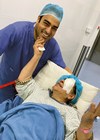
SOI surgical missions in Syria.
Before the war, Syria produced a steady supply of ophthalmology specialists. Today, hospitals face critical shortages of staff, equipment and medication. Over 20,000 doctors fled the country during the conflict, leaving major gaps in specialist care [3]. Hospitals and clinics have also been directly targeted, restricting safe practice locations. For ophthalmologists, career opportunities are unpredictable. Residency placements may be influenced by personal connections or political factors, surgical experience often depends on relationships with senior staff rather than formal rotations, and advancement can be shaped more by local hierarchies than by merit.
Recent wins in Syrian ophthalmology
Organisations such as the Syrian American Medical Society have recently delivered intensive, retina focused training at Aleppo University Hospital, equipping dozens of master’s students with advanced surgical skills in managing retinal detachment and diabetic retinopathy [4]. In parallel, key infrastructure improvements are beginning to make a clear impact on patient care. One initiative successfully provided a full phacoemulsification system to Al Mouwasat University Hospital, increasing its cataract surgery capacity from just 3 to 55 operations per week [5].
The Syrian Ophthalmology Initiative
The Syrian Ophthalmologists Initiative (SOI) is also playing a leading role in advancing ophthalmic care, education and humanitarian support across Syria. As part of its ongoing efforts to restore and improve eyecare services in the country, the Initiative participated in the ‘Restoring Vision’ campaign in November 2025, during which 14 corneal transplantation surgeries were performed in Damascus and Homs alongside practical surgical training for young Syrian ophthalmologists. A further successful corneal transplant mission in May 2026 was done in partnership with the Arab European Ophthalmology Society (AEOS), funded by German Federal Ministry for Economic Cooperation and Development and organised by the GIZ, at Al-Mouasat Hospital in Damascus.
Building on these efforts, SOI is currently fundraising to equip the Eye Surgical Hospital in Homs under the Ministry of Health, with essential ophthalmic devices, including a phaco machine and a YAG laser, aiming to benefit more than 200 patients each month. The hospital serves the largest governorate in Syria and one of the region’s most severely affected by the war, where surgical demand remains extremely high while access to advanced ophthalmic equipment remains limited.
Alongside its humanitarian and clinical work, in 2025 SOI launched a comprehensive Arabic-language basic and clinical ophthalmology programme delivered by Arab ophthalmologists from around the world. The programme has now surpassed more than 100 talks in all the subspecialties of ophthalmology, targeted at ophthalmologist trainees in Syria. It has become the principal and possibly the only comprehensive Arabic ophthalmology educational resource currently available for Syrian ophthalmology trainees. Furthermore, SOI collaborated with AEOS, to organise the first Arab-European Ophthalmology Conference, which will be held in Damascus in July 2026 under the patronage of the Syrian Ministries of Higher Education and Health.
Continuing its educational mission, SOI has increasingly expanded its focus on research development in Syria. Current research activities within the initiative are focusing on strengthening medical research capacity in Syria, training ophthalmology residents in research methodology and scientific writing, and conducting national surveys and studies assessing the state of healthcare and ophthalmology services across the country.

The hospital of Sednaya, Syria. © High Contrast, CC BY 3.0 DE.


SOI clinic during their mission which focused on complex ophthalmological presentations.
Conclusion
All of this is proof that despite the hardships, recent advances in training, international collaboration and renewed access to modern surgical techniques signal a cautious but promising revival for Syrian ophthalmology. Cities like Aleppo and Damascus are gradually re-emerging on the global ophthalmology stage – plans are underway for the International Summit on Ophthalmology and Vision Innovation in Aleppo, at the end of 2026. In addition, local training programmes, for the first time, received accreditation from the German Medical Association, enabling Syrian trainees to earn internationally recognised ‘continuing medical education’ credits [6,7].
References
1. Soqia J, Yakoub-Agha L, Mohamad L, et al. Syrian crises effect on specialty choice and the decision to work in the country among residents of six major hospitals in Syria, Damascus. PLoS ONE 2024;19(2):e0295310.
2. Abbara A, Alkhalil M, Wihba K, et al. (2025). Syrian refugee and diaspora healthcare professionals: Case studies from the eastern mediterranean and European regions. J Migr Health 2025;11:100298.
3. Al-Jaber A. A Nation Without Healers: Syria’s Medical Workforce in Crisis. 963+ English (2025) [Online]:
https://963media.com/en/17/04/2025/a-nation
-without-healers-syrias-medical-workforce-in-crisis
4. https://sams-usa.net/press-releases
5. Awwad D. The Syrian Ophthalmologists Initiative (SOI): A lifeline to the future of ophthalmology in Syria. Eye News (2025) [Online]:
www.eyenews.uk.com/news/post/the-syrian-ophthalmologists
-initiative-soi-a-lifeline-to-the-future-of-ophthalmology-in-syria
6. https://a-eos.org
7. https://sgma-med.org/en/about
[All links last accessed June 2026]
Declaration of competing interests: None declared.